In the upper tier of travel, the true destination is no longer a dot on the map—it is a state of ease, precision, and privacy that begins long before wheels touch a runway. Exclusive resorts are not merely places to stay; they are private operating systems built around a guest’s unspoken preferences. To understand them is to understand how time, space, and service can be quietly re-engineered for people who are accustomed to having options—and even more accustomed to saying very little.
Below are five exclusive insights that serious luxury travelers will recognize immediately, even if they would never discuss them aloud.
1. The Real Luxury Is the Architecture of Time
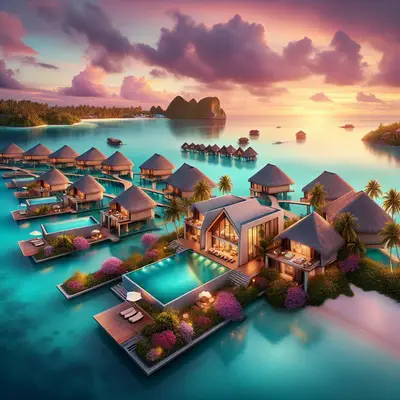
At the highest levels, the most coveted amenity isn’t the overwater villa or the infinity pool; it is the deliberate redesign of your schedule. Elite resorts now curate “temporal privacy” as thoughtfully as they design suites.
It begins with arrival: private air-side transfers, customs fast-tracking, and staggered check-in windows ensure that you never encounter a crowd, let alone a queue. Housekeeping is synced not to a generic timetable, but to your specific rhythms—spa treatments anchored around your peak energy hours, private fitness sessions scheduled when the resort is statistically at its quietest, and room servicing coordinated during pre-confirmed away times, so that you return to refreshed spaces without interruption.
Some properties work with in-house or partnered concierges to audit your entire stay before you arrive: when you prefer to dine, whether you like to “front-load” activities or extend mornings with no commitments, how many “unprogrammable” hours you require per day. The result is an itinerary that feels unplanned, yet runs with the precision of a well-rehearsed performance, where you are the only audience.
Luxury here is the absence of friction: no waiting for a table, no overlapping spa bookings, no rushed transfers. Instead, time is sculpted into a series of unhurried transitions that feel natural, inevitable, and entirely your own.
2. Geography Is Just the Canvas; Access Is the Art
Two properties can share the same coastline and yet offer profoundly different experiences. In the contemporary world of exclusive resorts, geography is the starting point—but curated access is the differentiator.
High-level guests are not simply buying a room with a view; they are buying the keys to a micro-universe. Private-use coves and time-locked beach access ensure that a stretch of sand becomes effectively yours for a morning. Mountain properties now offer “closed trail” hours or guided dawn ascents where a peak—one that hundreds will visit later in the day—remains, for a time, solely your domain.
Increasingly, leading resorts negotiate with local institutions for private access to culture: after-hours gallery viewings, museum wings opened exclusively for a couple of guests, or historical sites lit and staffed for a single evening. On islands, this may translate into chartered boats, temporary mooring rights in otherwise off-limits bays, or access to marine biologists who guide you through reefs before the day’s first dive group arrives.
For the discerning traveler, the question is no longer “Where is this resort?” but “What can this resort unlock that is unavailable to the general luxury market?” The answer is often more compelling than the destination itself.
3. Personalization Has Evolved from Gesture to Infrastructure
Monogrammed pillows and preferred champagne labels are now table stakes. The new frontier of personalization in exclusive resorts is infrastructural—systems quietly designed around your patterns rather than one-off surprises.
Certain resorts construct detailed preference profiles over multiple stays, with your consent: how far you like your room from the main hub, your sensitivity to noise and light, whether you prefer direct or indirect contact with staff, even the type of flooring you favor under bare feet. Over time, this becomes architecture: you are intentionally assigned to suites in quieter wings, on specific exposures, with lighting scenes pre-set to your taste the moment you enter.
Culinary personalization goes beyond dietary notes. Chefs may track not just what you eat, but when you deviate from your usual choices, inferring mood or energy levels. A week-long stay can evolve from lighter, recovery-focused cuisine at the start to more indulgent, experimental tasting menus at the end, mirroring your shift from decompression to celebration.
Meanwhile, wellness offerings merge medical-grade insights with hospitality. Some resorts partner with physicians, sports scientists, and sleep specialists to integrate health data (again, with explicit permission) into your environment: mattress firmness adjusted to your recovery needs, ambient temperatures tuned to optimize sleep, and spa treatments sequenced to match circadian rhythms rather than just available slots.
In this world, personalization is not about being impressed; it is about being seen—accurately, consistently, and without the need to explain yourself twice.
4. Privacy Has Grown More Sophisticated Than Isolation
Privacy in luxury travel is often misunderstood as mere seclusion. The elevated resorts have moved beyond the binary of “public” versus “private” to offer layered, nuanced privacy that adapts to how you travel.
Physical privacy can certainly include standalone villas, private pools, and dedicated entryways. Yet the more refined dimension is social privacy: the ability to control how visible you are, and to whom. Some properties offer “discreet mode,” where you are quietly routed through side pathways and back-of-house lifts, limiting encounters to a minimal, highly curated staff. Others allow you to choose how you appear in the property’s internal ecosystem—anonymous initial, alias, or full identity—especially relevant for public figures and family offices.
Privacy today also encompasses data and digital space. Leading resorts are investing in secure connectivity that is fast yet insulated: segregated networks, dedicated VPN options, and guest policies designed to minimize unwanted digital exposure. Staff are trained not just in discretion, but in information hygiene—no casual sharing of guest itineraries, no unverified third-party requests, and strict protocols around photography and social media by on-site vendors.
The most subtle layer is emotional privacy: staff who intuit when you wish to be left alone, when you are open to conversation, and when you want immersion in local culture without spectacle. This kind of privacy does not make you invisible; it gives you the power to decide when and how you appear in your surroundings.
5. The New Benchmark: Resorts That Think in Journeys, Not Stays
For many guests at this level, a resort is not an isolated event; it is a chapter in a continuous narrative of movement. The most accomplished properties now position themselves not simply as places you visit, but as intelligent nodes in a broader travel ecosystem.
This shift is visible in how they collaborate. Resort concierges increasingly coordinate directly with private aviation teams, yacht captains, security details, and family offices. Luggage can be shipped, cleared, and pre-organized into your suite wardrobe. A multi-city or multi-island itinerary can be orchestrated as one uninterrupted flow, with each property briefed on your preferences before you arrive.
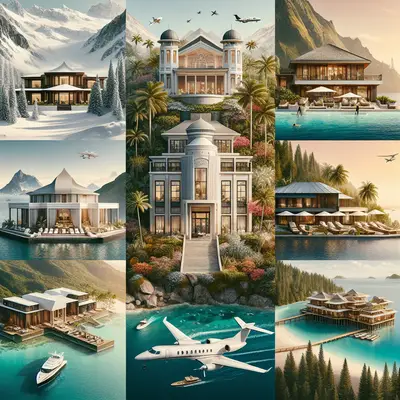
Seasoned travelers should look for properties that hold membership in strong networks—whether formal consortiums or deeply developed informal alliances. These relationships often translate into harmonized standards: familiar service philosophies, consistent approaches to privacy, and interoperable guest profiles that travel with you from alpine lodge to tropical hideaway.
Perhaps the most telling sign of a resort operating at this level is what happens after departure. The relationship is maintained, but lightly—notes on what worked or didn’t, invitations to experiences that genuinely align with your tastes, and, when you return, a sense that time has passed but nothing important has been forgotten.
In this view, an exclusive resort is less a destination than a partner in how you prefer to live—temporarily removed from home, yet not from your standards.
Conclusion
Exclusive resorts today are defined less by visible opulence and more by the invisible discipline required to orchestrate comfort, privacy, and precision at scale for a very small audience. For those who travel not to be seen but to feel subtly, expertly accommodated, the real markers of excellence are quiet: time curated with intent, access crafted with care, personalization embedded into the infrastructure, privacy treated as a multi-layered art, and journeys designed as a continuous, coherent experience.
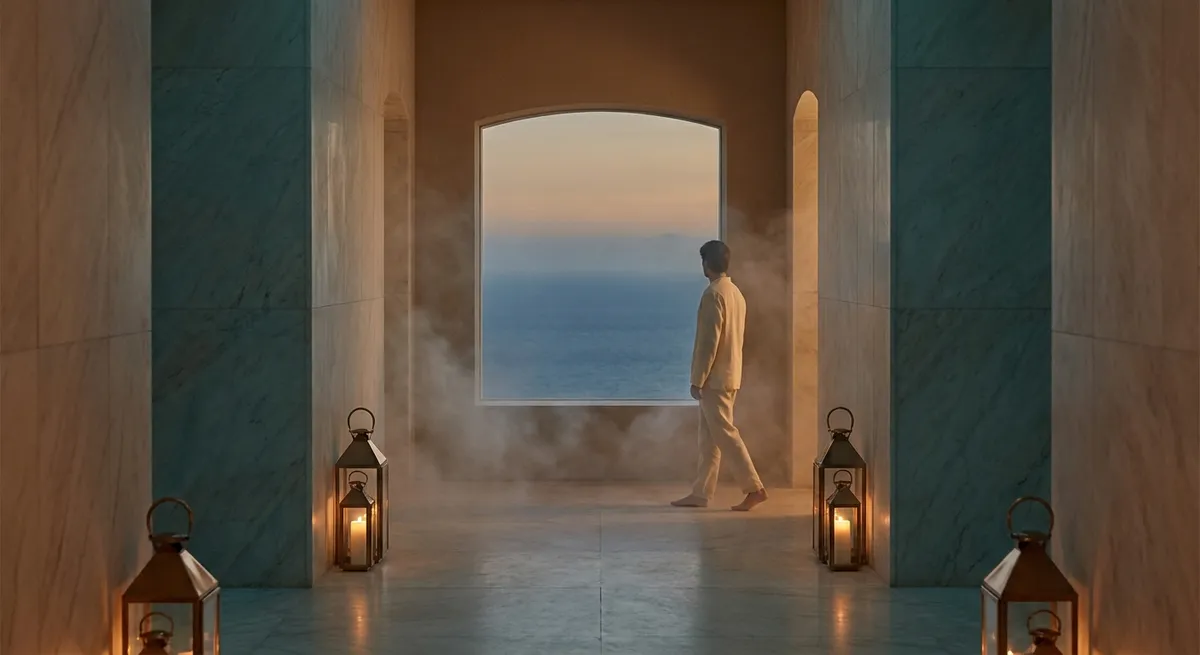
For luxury travelers who recognize these patterns, the destination is simply where the plane lands. The true experience begins in the quiet corridors and infinite horizons that only a certain kind of resort knows how to create.
Sources
- Virtuoso – 2024 Luxe Report - Insights into evolving preferences and behaviors of high-net-worth travelers
- Forbes Travel Guide – What Makes a Five-Star Hotel - Detailed criteria for top-tier hospitality, including privacy and service standards
- Condé Nast Traveler – The Future of Luxury Travel - Analysis of trends such as personalization, wellness integration, and exclusive access
- Skift Research – The Business of Luxury Travel - Industry-focused report on how luxury hospitality is repositioning around experience and discretion
- American Express – Global Travel Trends Report 2024 - Data on affluent traveler priorities, including privacy, time optimization, and curated experiences
Key Takeaway
The most important thing to remember from this article is that this information can change how you think about Exclusive Resorts.