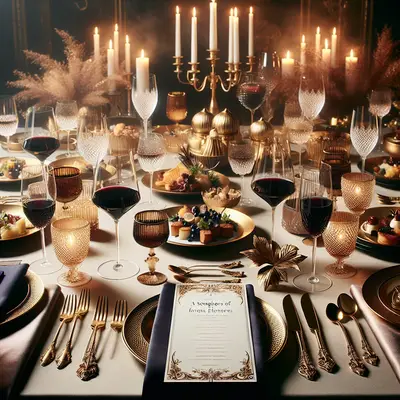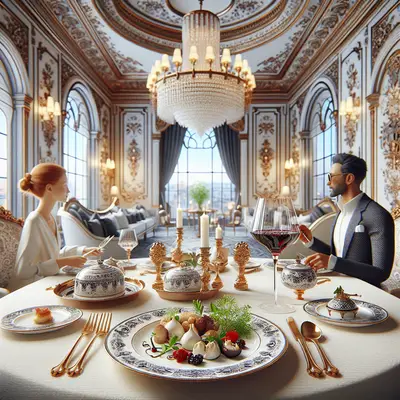
Fine dining has shifted from spectacle to subtlety. The most coveted tables are no longer defined by white tablecloths and tasting-menu theatrics alone, but by a deeper grammar of discretion, provenance, and precision. For luxury travelers, understanding this landscape is less about chasing the “best restaurant in the world” and more about recognizing the quiet signals that distinguish a merely expensive meal from an unforgettable, meticulously crafted experience.
Below, five exclusive insights reveal how fine dining truly speaks to those who travel well—and expect their plates to do the same.
The Chef’s Real Signature Is Time, Not Truffle
For travelers accustomed to premium experiences, truffle shavings and caviar are no longer persuasive on their own. What matters is how a chef deploys something rarer: time.
In the world’s most compelling dining rooms, the most memorable dishes are not necessarily the most costly, but the most time-intensive. A deceptively simple broth clarified over 48 hours, a sauce slowly reduced to a single concentrated spoonful, bread made from a living starter older than the restaurant itself—these are the quiet flexes of high craft.
Luxury travelers increasingly ask about techniques and timelines: how long a miso has been aged, whether a duck has been dry-hung, how many seasons of refinement stand behind a signature dish. This is not performative curiosity; it is a way of mapping a restaurant’s seriousness. When time is treated as an ingredient, the kitchen signals that it values depth over decoration—and that is the true hallmark of elevated dining.
Provenance Has Evolved: It’s Now About Relationships, Not Just Regions
Once, the name of a region—Burgundy, Alba, Tsukiji—was enough to confer instant prestige. Today’s most discerning guests look further, asking not only where ingredients originate, but who stands behind them.
The most forward-thinking fine dining teams now curate networks of growers, foragers, and small-scale producers with the same rigor once reserved for wine lists. The menu’s real narrative lies in these relationships: the biodynamic farmer who plants specifically for the restaurant’s upcoming season, the coastal fisherman who agrees to catch only on certain tides, the cheesemaker who adjusts aging parameters for a single dining room’s microclimate.
Savvy travelers listen for the specificity of proper nouns and personal stories: the producer’s name, the family, the terrain, the method. This isn’t romanticism—it’s a quality control system. When a restaurant can trace a dish back to an individual rather than an abstract region, you are no longer just experiencing “local sourcing.” You are entering a private ecosystem built around consistency, trust, and shared standards of excellence.
The Most Valuable Seat Is Often Not in the Dining Room
Luxury travelers have long known that a standard reservation is only the beginning of what a restaurant can offer. Increasingly, the most revealing experiences are found away from the main floor: at kitchen counters, test kitchens, private salons, or off-menu collaborations that never make it to the website.
A chef’s counter or atelier table, when it exists, is less about proximity to the stove and more about proximity to process. You see how a dish moves from idea to plate, how a brigade communicates with minimal words, how the chef tastes and corrects in real time. For guests who understand operations—hotels, aviation, yachting—this is where the restaurant’s true discipline becomes visible.
Even more discreet are fully bespoke services: a one-off menu built around a guest’s cellar bottles; a lunch crafted to mirror a specific destination on the traveler’s itinerary; a late-night service for arrivals via private jet, coordinated with the hotel concierge. These privileges are rarely advertised. They are unlocked through introductions, consistent patronage, and the quiet understanding that the relationship is long-term, not transactional.
Service Choreography: Reading the Invisible Script
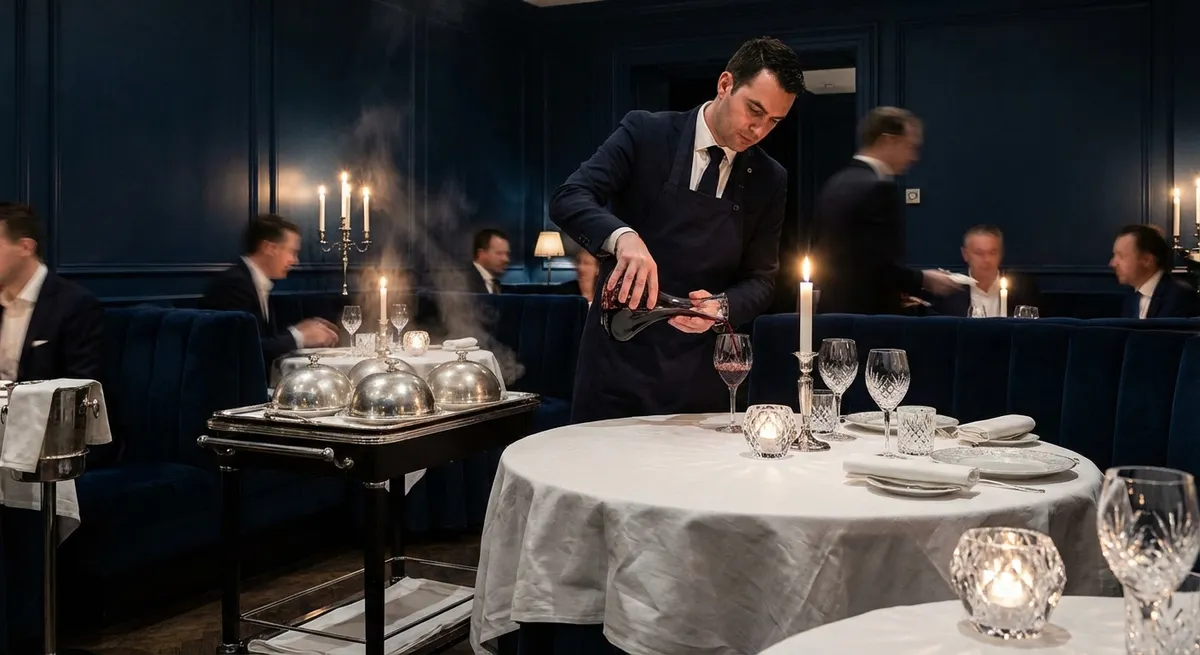
At a certain level, every fine dining room offers competent service. What separates the exceptional is not ostentatious attentiveness, but choreography so precise it becomes almost invisible.
Experienced luxury travelers notice how a team moves as a single organism. Plates land simultaneously without a verbal cue. A glass is refreshed not when empty but exactly before you think to reach for the bottle. The pacing is tuned to your conversation—courses slow gently when a discussion deepens, then tighten subtly when energy rises.
The most refined service anticipates preference without assumption. If your first wine choice reveals a preference for structure over fruit, the sommelier calibrates the next pairing accordingly. If you quietly push aside a component on your plate, it disappears from future courses without a word. This isn’t surveillance; it’s deep, respectful observation.
The true luxury here is psychological ease. In the best dining rooms, you never have to ask twice, and you never feel watched. Service becomes a protective shell around your evening—seamless, controlled, and entirely at your disposal, yet never demanding your attention.
The Future of Fine Dining Is Intimate, Not Inflated
As luxury travelers become more global, the appetite for “grand” dining temples is gently receding in favor of smaller, sharper, more personal rooms. The new pinnacle of fine dining is often an unassuming space with fewer seats, fewer courses, and far more intention.
These restaurants cultivate a kind of quiet intensity. Menus are shorter but change more frequently. Tasting sequences shrink from fourteen courses to eight, even six, with each plate more focused and less ornamental. Wine lists may become narrower yet deeper, curated around a philosophy—organic growers, low-intervention, or a single region interpreted across decades.
Sustainability, once a marketing word, becomes part of the operational backbone. Kitchens work with whole animals instead of prime cuts alone, reduce waste through fermentation and secondary preparations, and design menus that follow their producers rather than the calendar of food guides. For the luxury traveler, this is not about virtue signaling; it’s about confidence that a restaurant is built to endure, not simply to be photographed.
Increasingly, the most sophisticated guests seek restaurants that feel less like stages and more like salons—intimate spaces where culinary craft, personal connection, and a clear point of view converge. In this setting, luxury is not loud; it is distilled.
Conclusion
For those who travel well, fine dining is no longer a checklist of starred addresses. It is a search for places where time is treated as a precious ingredient, where relationships shape every plate, where the most meaningful seat may be away from the spotlight, where service is choreographed with near-invisible fluency, and where the future of luxury is defined by focus rather than excess.
Recognizing these signals transforms a meal into something more enduring than an evening out. It becomes part of the traveler’s private map of the world—an atlas not of restaurants, but of rooms where craft, intention, and discretion quietly align.
Sources
- Michelin Guide – Understanding the Michelin Star - Explains the criteria and philosophy behind Michelin recognition, including quality, technique, and consistency
- World’s 50 Best Restaurants – The Future of Fine Dining - Discusses emerging trends in global gastronomy and the shift toward more intimate, sustainable models
- Harvard T.H. Chan School of Public Health – Sustainable Diets - Provides insight into sustainability practices that increasingly influence high-end restaurant sourcing and menu design
- New York Times Food Section - Regular coverage of fine dining, chef culture, and evolving restaurant practices in major culinary capitals
- San Pellegrino Young Chef Academy – Fine Dining Trends - Highlights global perspectives on innovation, chef-driven concepts, and the next wave of fine dining experiences
Key Takeaway
The most important thing to remember from this article is that this information can change how you think about Fine Dining.