Luxury travel has stepped beyond the obvious markers of opulence. The most discerning guests are no longer chasing square footage or logo-heavy spectacle; they are seeking rarefied environments that feel almost unlisted, calibrated to their personal rhythm rather than a generic idea of indulgence. In this discreet tier of hospitality, value is measured in privacy, intentional design, and the kind of thoughtful service that anticipates needs without ever announcing itself. This is the evolving world of exclusive retreats—where privilege is felt, not displayed.
Redefining Privacy: From Seclusion to Intelligent Discretion
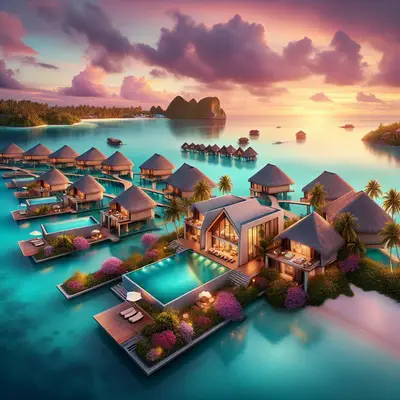
In exclusive resorts today, privacy is no longer simply a distant villa or a private pool; it is a carefully engineered ecosystem of intelligent discretion. Architecture is oriented to sightlines, soundscapes, and natural barriers so that neighboring guests seem to vanish, even at full occupancy.
Staff scheduling is orchestrated to minimize visible movement, with housekeeping and butler teams using back-of-house pathways and cloud-based coordination tools to appear only when needed and disappear the moment their presence risks intruding. The most sophisticated properties now treat data privacy with the same gravity as physical seclusion: encrypted guest profiles, minimized data retention, and strict access protocols govern everything from dietary preferences to travel aliases.
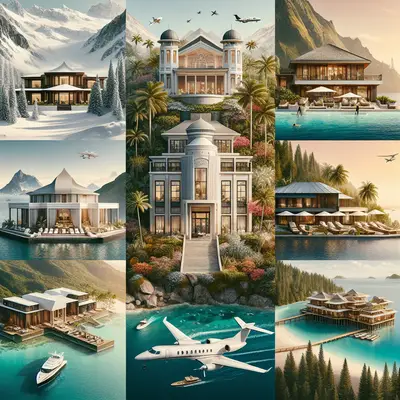
This redefinition of privacy also extends to arrival and departure. Private check-in lounges, in-villa registration, and direct transfers from jet to residence are quietly becoming the standard for ultra-high-net-worth travelers. Done well, the guest never feels managed; they simply notice an absence of frictions, bottlenecks, and public exposure. True exclusivity is no longer advertised—it is architected into the resort’s invisible layers.
The Art of the Understated Arrival
The arrival sequence at a truly exclusive retreat has become a refined choreography designed to decompress the mind as much as the body. Rather than a grand, echoing lobby and an entourage of greeters, the experience might begin with a softly lit library, a shaded courtyard, or a private salon where check-in takes place over a quiet tea or a bespoke non-alcoholic infusion.
Scent, sound, and temperature are managed as meticulously as service protocols. A subtle signature fragrance—never overpowering—repeats in gentle variations across arrival points, spa corridors, and private suites, tying the estate together sensorially. Music, if present at all, tends to be curated soundscapes aligned with time of day and natural surroundings rather than generic playlists.
Transportation, too, is part of the narrative. Electric vehicles, hybrid yachts, or even silent, low-illumination night transfers are used not only for sustainability but for ambiance and discretion. Luggage appears in the suite as if it traveled ahead of you; door handles feel cool to the touch; welcome amenities are aligned with stated preferences rather than seasonal clichés. The arrival becomes less of a check-in and more of a soft landing into a different operating speed.
Beyond Amenities: Bespoke Rituals Instead of Standard Perks
Where traditional luxury revolves around lists of amenities, the most exclusive resorts are now curating personal rituals. These are not one-size-fits-all “experiences,” but recurring, highly customized moments that anchor a guest’s stay and can be refined over time across repeat visits.
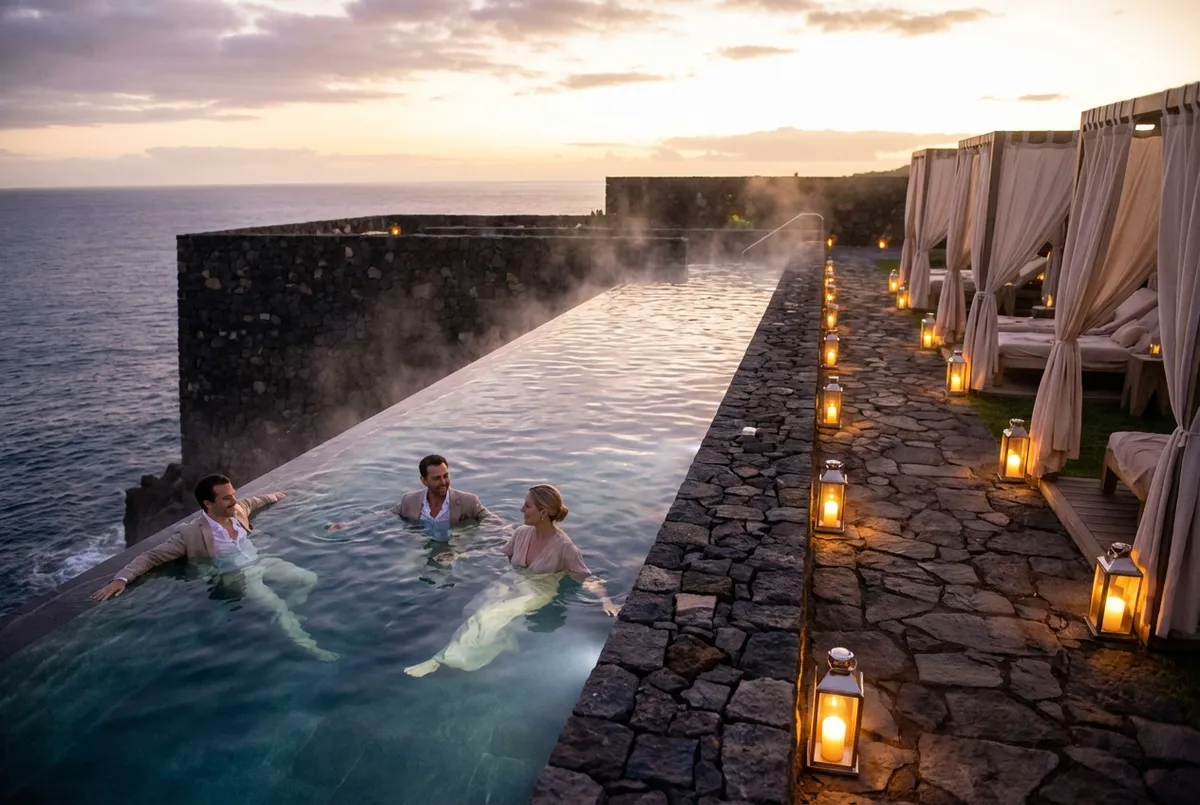
For one traveler, this might be a post-flight recalibration ritual: a specific herbal steam, a custom-blended tonic, and a guided breathwork session delivered at the same hour upon every arrival, whether in the Alps or on an atoll. For another, it could be a pre-dawn coffee service delivered in complete silence, the terrace staged to face a particular constellation or sunrise angle, complete with a bookmarked newspaper section or encrypted tablet news brief tailored to their interests.
These rituals are made possible by discreet, longitudinal guest profiling that transcends a single property. Some resort collections are quietly building internal “continuity dossiers” that capture not just allergies and room-temperature preferences, but pacing—how quickly a guest wishes to be approached, their preferred level of conversation, even how they like a room staged for thought-intensive work versus restorative idleness. Amenities can be copied; rituals, when crafted with this level of intimacy and nuance, cannot.
Micro-Geographies: Carving Out Your Own Private World
Modern exclusive resorts understand that even on a sizable estate, guests crave a sense of “micro-territory”—a world-within-a-world that feels informally theirs. The most advanced properties now treat their grounds as micro-geographies, mapping them not solely by function (spa, beach, restaurant) but by mood, privacy level, and sensory profile.
A single shoreline, for instance, might be divided into unspoken zones: a near-silent reading cove, a more animated water-sport stretch, and an entirely off-program section that can be reserved for a private chef’s table or unstructured family time. Trails are designed with intentional forks that allow guests to choose between a contemplative path through shaded forest, a visually dramatic cliff walk, or a quick, direct link to a helipad—all without ever encountering more than a passing wave from another guest.
Some properties are now leveraging technology subtly to support these micro-geographies. Internal apps or private concierge messaging let guests indicate their preferred “tone” for the day—social, solitary, or somewhere in between—allowing the resort to quietly route them toward spaces and time slots that match, minimizing unwanted overlap. In peak season, this intelligent dispersion is what preserves the illusion of scarcity: the sensation that an entire coastline, vineyard, or desert plateau is momentarily yours alone.
Authenticity with a Curated Edge: Locality Without the Performance
The new luxury traveler is acutely sensitive to manufactured “local color.” They recognize when culture is being performed for their benefit, rather than shared with genuine pride. Exclusive resorts that resonate most deeply are those that have moved past token gestures—occasional folk performances, a predictable “market tour”—toward a more integrated, respectful articulation of place.
Design is the first, quiet signal. Instead of sweeping away local building methods in favor of imported marble and glass, leading properties now collaborate with regional artisans, architects, and cultural historians to create spaces that feel indigenous yet elevated. Materials are sourced with traceable transparency; craftsmanship is credited; and decorative elements tell authentic stories rather than presenting an anonymous “tropical” or “Mediterranean” aesthetic.
Culinary programs have followed suit. The emphasis has shifted from showpiece tasting menus toward ingredient narratives: hyper-local sourcing, regenerative agriculture partnerships, and seasonal menus that respect local foodways while applying global technique. Guests might visit the actual farmers, ceramicists, or perfumers behind what they experience on property—on their terms, in real working environments rather than staged vignettes.
Perhaps most importantly, authentic exclusivity now involves restraint. Not every tradition needs to be packaged as an “experience.” The true luxury is in being given access—quietly, humbly—to the genuine pace and texture of a place, with the understanding that you are a guest in a living culture, not the center of a curated performance.
Conclusion
Exclusive resorts are no longer defined by how loudly they can declare their luxury, but by how deftly they can withdraw from view, replacing spectacle with precision and noise with intentional quiet. Intelligent privacy, understated arrivals, deeply personal rituals, thoughtfully composed micro-geographies, and a curated yet authentic sense of place now form the grammar of this uppermost tier of travel.
For the traveler who values refinement over recognition, these properties offer something rare: the sense that the world has been gently edited on your behalf, without ever feeling manipulated. In that delicate balance—between invisibility and exacting care—the future of exclusive retreats is being written.
Sources
- [Luxury Hospitality’s Shift Toward Personalization](https://hbr.org/2017/01/know-the-customers-you-want-to-serve) - Harvard Business Review analysis on understanding and serving high-value customers, relevant to personalization and guest profiling
- [Global Luxury Travel Market Insights](https://www.mckinsey.com/industries/travel-logistics-and-infrastructure/our-insights/the-trends-defining-postpandemic-travel) - McKinsey & Company report on post-pandemic travel trends, including luxury and experiential demand
- [Sustainable Luxury Hospitality Practices](https://www.unwto.org/sustainable-development) - UN World Tourism Organization resources on sustainability, increasingly central to high-end resort development
- [Designing for Privacy and Wellbeing in Hospitality](https://www.gsd.harvard.edu/project/well-being-and-hospitality/) - Harvard Graduate School of Design project exploring how built environments shape human experience, applicable to resort architecture and seclusion
- [Consumer Preferences in High-End Tourism](https://www2.deloitte.com/global/en/pages/consumer-business/articles/global-state-of-the-consumer-tracker.html) - Deloitte’s ongoing consumer tracker providing insight into evolving expectations in premium travel and hospitality
Key Takeaway
The most important thing to remember from this article is that this information can change how you think about Exclusive Resorts.