There is a moment, just after the cabin door opens and before your phone reconnects to the world, when the promise of a place feels almost cinematic. For the true luxury traveler, the destination is no longer defined by square footage or thread count, but by how precisely it anticipates a life lived at altitude—where time, privacy, and texture are curated with the focus of a private collection.
Exclusive resorts are evolving into discreet ecosystems built around the traveler’s inner world rather than their outward performance. This new chapter in high-end hospitality isn’t loud, logoed, or easily replicated. It is quiet, deliberate, and deeply personal—crafted for guests who value subtle orchestration over spectacle.
Below are five emerging insights reshaping what “exclusive” really means for those who board from a private terminal and arrive expecting nothing less than seamless, invisible perfection.
1. The Micro-Footprint Masterpiece: Fewer Keys, Higher Calibration
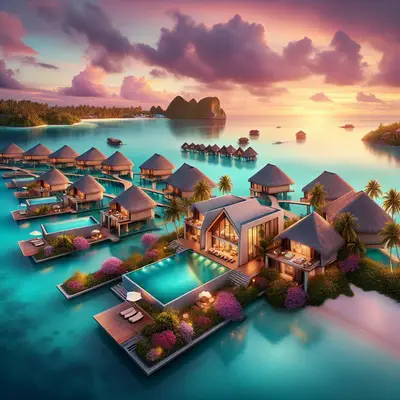
Ultra-exclusive no longer means sprawling compounds; it means exacting control over every variable. The most coveted new resorts are intentionally intimate—sometimes under 20 keys—where the architecture is designed not for scale, but for nuance. Corridors vanish in favor of direct villa access, and public spaces are deliberately under-programmed to avoid chance crowding, preserving the illusion that the property exists solely for you.
In these environments, the ratio that matters isn’t staff-to-room, but detail-to-guest. Lighting is tuned to align with circadian rhythms; scent is curated per villa; acoustic privacy is engineered so that neighboring suites may as well be on a different continent. Instead of a grand lobby, guests move through a series of quiet thresholds—private arrival courtyards, concealed lounges, and secluded terraces—each one calibrated to transition you from transit mode to sanctuary. The result is not just privacy, but a sense of ownership, as if you have temporarily acquired a small, perfectly run estate and everyone within it already understands your preferences.
2. The Precision Butler: From Service to Subtle Stewardship
The archetype of the butler polishing silver in the background has been replaced by something far more sophisticated—a discreet steward who operates at the intersection of etiquette, data, and intuition. At leading exclusive resorts, your “butler” is closer to a private chief of staff, orchestrating your stay with an understanding that extends beyond the property lines and into your broader lifestyle ecosystem.
These professionals study your preferences from previous stays—how you take your coffee, your preferred spa therapist, your aversion to overly scripted social encounters—and translate them into a seamless narrative, without ever announcing what they are doing. They coordinate with pilots, personal assistants, security teams, and private chefs, ensuring that everything from timing runway transfers to sourcing a rare vintage feels frictionless. Thoughtful restraint is their signature: a favorite book appears by your bedside without explanation; your morning swim is uninterrupted because housekeeping has already learned your routine. The true luxury is never needing to ask twice—or at all.
3. Immersive Privacy: Architecture That Edits the Outside World
In the new era of exclusive resorts, privacy is not simply about walls and gates; it is architected as a layered experience. Design teams now think in terms of visual, auditory, and digital privacy, crafting spaces that protect guests not only from being seen and heard, but from being interrupted by the noise of the external world.
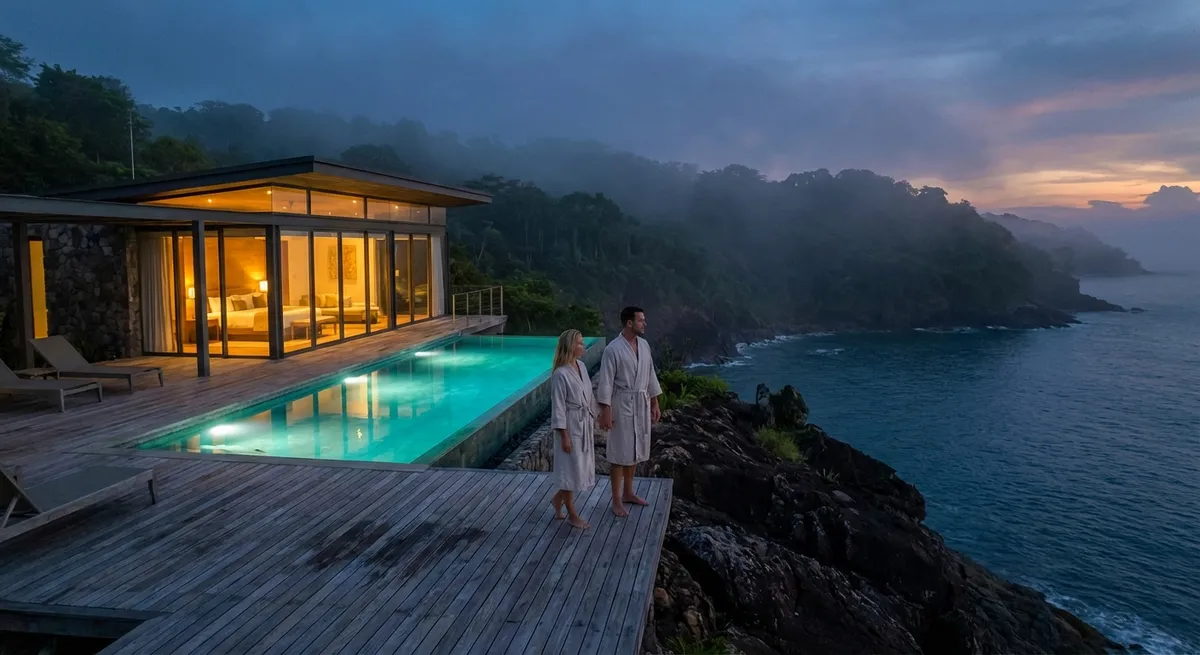
Villas are sited with meticulous attention to natural landforms, vegetation, and viewsheds, so that terraces, plunge pools, and outdoor showers are naturally shielded from any possible sightline. Soundscapes are intentionally composed—water features, native planting, and architectural angles collaborate to dissolve ambient noise and create what feels like an acoustic sanctuary. Even digital exposure is tightly curated: network layouts that segregate guest connections, secure “dark” zones where devices are gently discouraged, and private rooms designed specifically for confidential calls or negotiations. The most forward-thinking resorts are not just beautiful backdrops for a week away; they are temporary off-grid headquarters where you can live, decide, and unwind beyond the radius of scrutiny.
4. The Curated Off-Menu: Experiences That Never Touch a Brochure
For the truly high-end traveler, the real story of a resort is often told in what never appears on the website. The most exclusive properties now operate with a layered experience structure: a public-facing narrative for the general luxury market, and a private, invitation-only stratum of offerings reserved for guests who arrive by jet or referral.
This hidden tier might include sunrise access to normally closed heritage sites, private time with regional winemakers whose allocations never reach retail, or entirely bespoke itineraries designed around a guest’s personal passions—wildlife conservation, contemporary art, horology, or rare spirits. None of it is packaged; all of it is contextually rich. Instead of “activities,” you receive chapters in a quietly designed story, each connected to local people of substance—restorers, collectors, chefs, scientists—rather than influencers or generic guides. The message is clear: you are not buying experiences; you are being admitted into carefully chosen circles, however briefly.
5. The New Sustainability: Silent Stewardship as a Marker of Taste
Sustainability has shifted from marketing talking point to sophisticated, behind-the-scenes choreography—something felt rather than broadcast. At exclusive resorts operating at the highest level, environmental and social responsibility are no longer presented as virtue-signaling; they are a form of taste, expressed through restraint, intelligence, and long-term commitment.
You notice it in the details: local stone and timber used with architectural discipline, not as rustic décor; energy systems designed to be invisible yet resilient; water programs that allow private pools and lush landscaping without depleting local resources. Supply chains are quietly edited—linen woven in-region, ceramics commissioned from nearby artisans, botanicals sourced from on-site gardens. The staff you meet are not seasonal transients but long-term collaborators invested in the property’s evolution. The resort doesn’t ask you to applaud its efforts; it has simply woven responsible practice into the aesthetic and operational fabric so seamlessly that anything less would feel gauche.
Conclusion
For the traveler who moves through the world by private jet, the definition of “exclusive” has matured. It isn’t about display; it’s about discernment. The most compelling resorts today function less as destinations and more as finely tuned instruments—spaces where architecture, service, privacy, and purpose are orchestrated to your individual frequency.
In this quiet frontier of luxury, the ultimate privilege is not being seen, but being understood: having an entire property, and a highly trained team, move subtly around you in perfect alignment, so that your time—your most finite asset—is spent exactly as you intend, with nothing extraneous and everything quietly, impeccably in place.
Key Takeaway
The most important thing to remember from this article is that this information can change how you think about Exclusive Resorts.