In the upper tier of travel, “exclusive” is no longer a synonym for gold-plated excess. It is a shorthand for privacy engineered with precision, service that anticipates rather than reacts, and experiences designed to feel unrepeatable. Today’s most discerning travelers are not chasing spectacle; they are curating ease. For guests who move fluidly between continents, an exclusive resort is less a destination than a finely tuned operating system for a life lived in motion.
Below are five quietly powerful insights that define how the most refined travelers now evaluate, select, and experience the world’s most private retreats.
1. The Architecture of Invisibility
For the premium traveler, the true luxury is not being seen—it is seeing everything without being observed. The world’s most discreet resorts are increasingly defined by what you don’t notice: sightlines that make neighboring villas disappear, circulation routes that allow staff to move silently, and landscaping that feels organic but is, in reality, choreographed with the precision of a stage set.
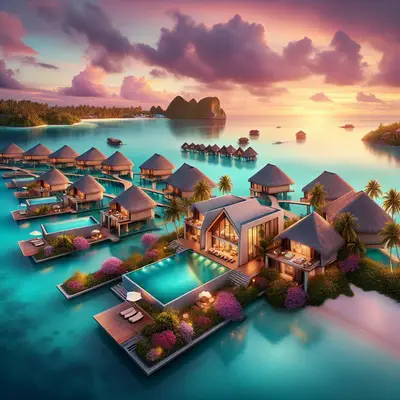
Across destinations from the Caribbean to the Maldives, leading properties are investing not just in beautiful design, but in spatial intelligence. Rooms angle away from public spaces to avoid direct eye contact with other guests. Arrival and departure points are sheltered, sometimes with private bypasses to avoid main lobbies. Even the placement of infinity pools, terraces, and outdoor showers is carefully modeled to ensure that moments of leisure never feel like a performance. For the seasoned traveler, these subtleties matter more than marble or chandeliers; they are the difference between a stay and a sanctuary.
2. Service that Edits, Not Overwhelms
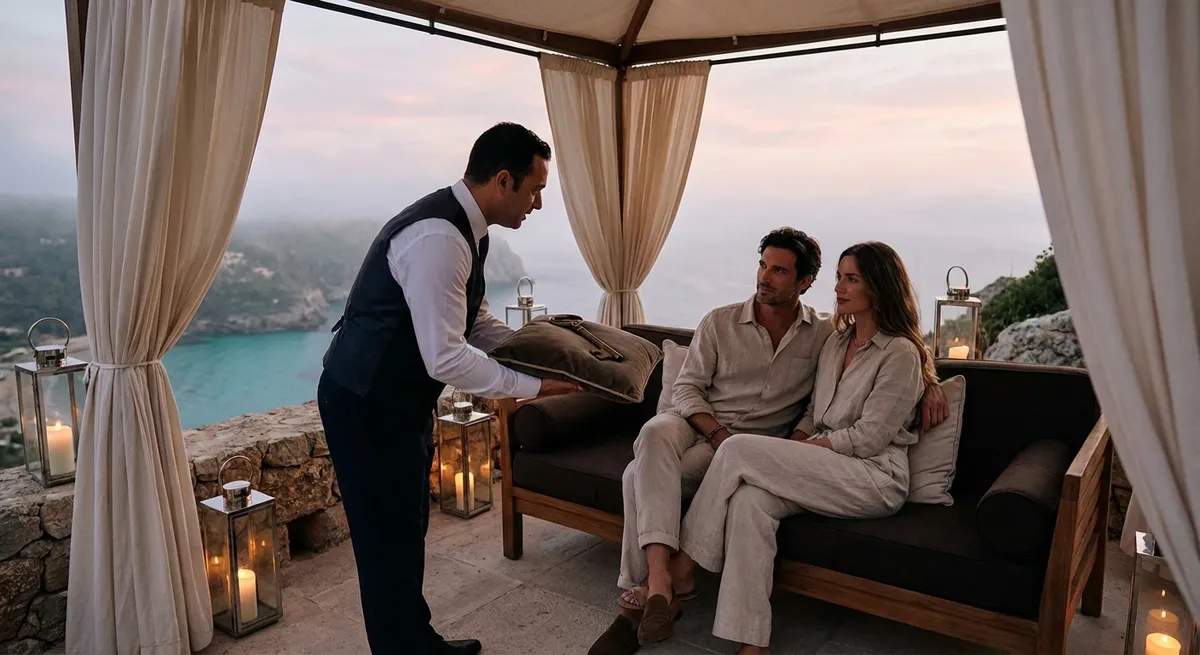
The most sophisticated guests are not impressed by armies of staff; they are impressed by staff who know when not to appear. At leading exclusive resorts, the era of over-attentive formality is giving way to a more intelligent minimalism in service design. High-end travelers now expect a profile of their preferences—temperature, lighting, mini-bar habits, wellness routines—to be remembered and quietly executed, not repeatedly requested.
Technology enables this discretion but does not dominate it. Secure guest profiles, connected room systems, and seamless communication tools allow staff to pre-empt needs without intruding. A villa may feel as though it runs itself—curtains adjusting with the sun, music calibrated to the hour, amenities rotated just before they are missed—yet behind the scenes, an invisible operations grid is constantly learning and refining. The experience is not about being pampered loudly; it is about friction quietly disappearing.
3. Time as the Ultimate Private Amenity
At the highest levels of travel, time has more value than any physical upgrade. The most exclusive resorts are responding not with simply faster check-ins, but with thoughtfully restructured timelines that compress hassle and expand unstructured hours. This begins before arrival: dedicated pre-arrival concierges coordinate visas, transfers, and health requirements, ensuring that the journey feels like a soft descent rather than a logistical climb.
On property, time is treated as a curated resource. Spa and wellness experiences are scheduled with enough buffer to avoid rushing between treatments and commitments. Dining is orchestrated around guest rhythm rather than restaurant convenience—late arrivals from private flights can be accommodated with full menus, not limited “after-hours” offerings. Even departure can be designed as a slow exhale instead of a hard stop: extended use of facilities after checkout, staggered transfers, and quiet spaces for last calls or virtual meetings. For travelers accustomed to calendars measured in six-minute increments, a resort that returns them large, undisturbed blocks of time offers a form of luxury that no material object can match.
4. Bespoke Experiences with a Gentle Hand
The world’s most exclusive resorts now understand that their guests have already seen the standard repertoire of “exclusive” experiences. Helicopter transfers, private beach dinners, and sunset cruises are no longer differentiators; they are table stakes. What resonates today are experiences that feel intimately attuned but never forced—quietly ambitious rather than theatrically extravagant.
This might be a private tasting with a local winemaker whose bottles rarely leave the region, a dawn paddle through waters typically only seen by researchers, or a one-on-one session with a visiting wellness practitioner whose clientele is deliberately limited. The art lies in how these possibilities are offered. Instead of overwhelming guests with menus and options, the most refined resorts present a handful of precisely relevant suggestions—curated from a deeper, unseen catalog—based on who the guest is, not just what the destination has. The experience feels less like buying an activity and more like being invited into a chapter of the place’s ongoing story.
5. Sustainability as an Unspoken Standard, Not a Slogan
For the modern high-net-worth traveler, environmental responsibility is not a marketing angle; it is a baseline expectation. Yet the most exclusive properties understand that luxury guests are not interested in lectures or performative “green” gestures. They expect sustainability to be structurally embedded, elegantly invisible, and quietly verifiable.
This is shaping how new resorts are conceived and how established icons are reimagined. Renewable energy sources, advanced water treatment, and low-impact materials are built into the infrastructure, not showcased as novelties. Food programs emphasize short supply chains and local producers because the ingredients are better, not because the menu needs an “eco” badge. Marine and wildlife conservation initiatives are funded and maintained over decades, occasionally opened to guests in thoughtfully designed, small-scale ways—guided reef monitoring, for instance, or private briefings with on-site scientists. What earns the respect of sophisticated travelers is not the presence of a sustainability page in the brochure, but the quiet consistency of practices that will still be there in ten years.
Conclusion
The new vocabulary of exclusive resorts is written in small, deliberate gestures: a path that bends away from noise, a staff member who appears at precisely the right moment, an experience that feels as if it could only have happened to you, in that place, at that time. For the refined traveler, luxury is no longer measured in visual spectacle or the conspicuous display of status; it is measured in the seamlessness of movement, the depth of privacy, the intelligence of service, and the integrity with which a property lives within its environment.
Those who understand this shift are not simply booking resorts. They are assembling a personal constellation of places around the world that function as extensions of their own standards—quiet, exacting, and exquisitely attuned to a life lived discreetly at altitude.
Sources
- UNWTO – Tourism for Sustainable Development - Overview of how high-end tourism is integrating sustainability into operations and experiences
- Virtuoso – 2024 Luxe Report - Insights into evolving preferences of luxury travelers and what they value in exclusive stays
- Forbes Travel Guide – What Makes a Great Luxury Hotel - Criteria and service standards that define top-tier hotels and resorts globally
- Condé Nast Traveler – How Luxury Hotels Are Rethinking Sustainability - Examples of discreet but robust environmental practices at high-end properties
- Cornell University – Center for Hospitality Research - Research and reports on hospitality operations, service design, and guest experience at premium properties
Key Takeaway
The most important thing to remember from this article is that this information can change how you think about Exclusive Resorts.