A certain kind of traveler no longer asks, “Where is it?” but rather, “What does it change in me to arrive there?” Exclusive resorts—those quietly guarded addresses passed along in low voices and short messages—have become less about surface spectacle and more about deeply considered experiences. They are not merely destinations; they are calibration tools for how one rests, reconnects, and moves through the world.
For guests who are already fluent in luxury, the real value now lives in details that are rarely advertised: the choreography behind privacy, the invisible stitching between wellness and pleasure, the subtle ways a property anticipates your next move before you have articulated it. Below are five exclusive insights that discerning travelers increasingly use to read between the lines—and select resorts that feel less like products and more like private operating systems for how they wish to live.
1. The Real Luxury Is the Perimeter, Not the Postcode
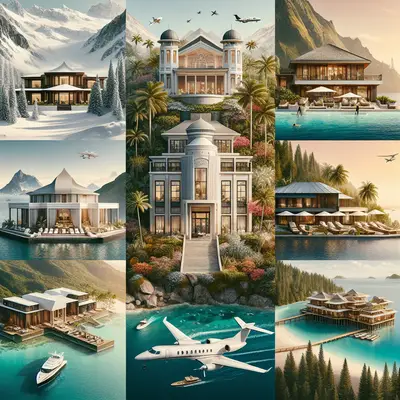
Exclusive resorts have long traded on location, but sophisticated travelers now look beyond coordinates. The address matters less than the perimeter: the quality of the buffer between you and the rest of the world. This is where true exclusivity reveals itself—not simply in a remote island or alpine ridge, but in the way access is curated, screened, and discretely managed.
A property’s perimeter is psychological as much as physical. It might be a long, unmarked drive where the noise of the main road falls away, or a private marina that bypasses crowded public docks. It may be the resort’s ability to control photography policies so that phones never become the main event, or the way staff discreetly redirect media or drones from adjacent properties. For seasoned guests, these details matter more than marble and thread counts.
The most forward-thinking resorts design their perimeters as filtration systems: every threshold you cross—gate, lobby, villa gate, private deck—reduces friction and exposure. This layered privacy allows guests to slip into a different tempo within minutes, and maintain it without constant negotiation. When assessing a resort, the sophisticated question is not just “Where is it?” but “What does it keep out, and how gracefully?”
2. Anticipation Is the New Amenity
The most exclusive resorts are quietly moving beyond standardized “signature experiences” toward a more nuanced luxury: anticipatory design. The goal is not simply to respond quickly, but to arrange your stay so that most requests never need to be voiced at all.
This begins long before arrival. Subtle pre-arrival questionnaires, discreet cross-referencing of past stays, and careful interpretation of preferences allow the team to construct a stay that feels improbably tailored: the precise firmness of pillows, a minibar that is edited rather than stocked, lighting pre-set to your circadian rhythm upon landing, room scents that shift from invigorating in the morning to grounding at night. None of this is announced with fanfare; it simply appears, as if the resort has always known you.
On property, anticipation can be read in micro-gestures. A poolside attendant who replaces your water before it empties, without hovering. A buggy that appears just as clouds gather, with a soft blanket already on the back seat. A concierge who adjusts your dinner time by fifteen minutes because they know your helicopter transfer tends to land slightly late—and the chef was already quietly informed.
In this environment, “service” becomes something subtler than friendliness or speed. It is choreography written around your energy, your habits, your silences. For the well-traveled guest, this level of preemption is the difference between feeling accommodated and feeling understood.
3. High-Functioning Seclusion: Where Connectivity Is Curated, Not Cut
The myth that true escape requires total disconnection no longer holds for many high-performing guests. The most compelling exclusive resorts now practice a more intelligent form of seclusion: environments where connectivity is not denied, but masterfully controlled.
Instead of bluntly marketed “digital detox” packages, the leading properties offer bandwidth as a design element. Wi-Fi is flawless yet tactically invisible: no blinking routers, no clutter of cables. Workspaces—if you need them—are acoustically and visually discreet, often integrated into private villas or library-like salons where productivity can exist without breaking the atmosphere. The resort becomes a place where you can close a transaction in twenty minutes, then disappear again into the pool, the spa, or the terrace without psychic whiplash.
Thoughtful resorts also curate where connectivity is softened. Public spaces may subtly discourage laptop culture; signal strength might intentionally drop near spa pools or cliffside decks, inviting presence without imposing it. Staff are trained to recognize when a guest is emerging from a high-focus moment and adjust tempo accordingly, allowing decompression instead of immediate engagement.
For guests whose lives require a degree of perpetual reachability, the luxury lies in an environment that allows them to remain connected on their own terms—never overwhelmed by either notifications or idealistic rules about disconnection. The resort becomes a buffer, not a barrier, between their public obligations and private restoration.
4. Wellness Without Evangelism
Wellness at the highest end is undergoing a quiet refinement. The new luxury guest is often already versed in cold plunges, IV drips, and sleep metrics. What they seek from exclusive resorts is not another manifesto, but a calm, rigorously constructed ecosystem where well-being is integrated, not performed.
At this level, spa menus read more like tailored prescriptions than encyclopedias. Rather than overwhelming guests with dozens of treatments, the best resorts offer a handful of deeply researched, culturally grounded rituals that can be combined into a coherent arc for the length of your stay. Nutrition is elevated beyond “healthy options”: tasting menus that calibrate macro- and micronutrients without sacrificing pleasure, low-intervention wines chosen as thoughtfully as the yoga instructors, hydration considered from room temperature water to post-flight herbal infusions.
The most compelling wellness programs are anchored in credible partnerships—with medical advisors, research-backed sleep specialists, or serious movement experts—quietly backing the experience with science rather than slogans. Sessions begin on time, spaces are acoustically and thermally impeccable, and recovery is given as much thought as exertion.
For the experienced traveler, the signal is in the resort’s restraint. There is no pressure to “opt in” to every program, no judgment if you alternate morning sound baths with late-night cocktails. Wellness is treated as a set of refined tools at your disposal, not a moral hierarchy. The resort’s true offering is optionality: the ability to move smoothly between discipline and indulgence without narrative conflict.
5. The Discreet Economy of Access
Exclusive resorts have always been about access—private beaches, members-only lounges, villas that do not appear on public booking engines. But the new generation of high-end travelers has become more attuned to how that access is structured, priced, and protected over time.
The most sophisticated properties now operate less like conventional hotels and more like private clubs with a hospitality arm. Membership models, fractional ownership, and curated guest lists allow them to maintain a consistent community and service level across seasons. Access is no longer defined purely by what you can pay today, but by how you fit into the ecosystem over years: your travel patterns, your privacy needs, your willingness to engage lightly with fellow guests, or not at all.
For the luxury traveler, understanding this discrete economy means recognizing what you are actually buying. You are not just reserving a villa; you are purchasing entry into an infrastructure of preferences that will remember you—perhaps for decades. Your favorite villa orientation, your family’s travel rhythms, your tolerance for visibility: all of it becomes data, managed like a private ledger of how you prefer to inhabit the world.
The highest expression of this is continuity. A general manager who has quietly followed your career across three continents. A butler who recalls the exact tea you drank on a previous stay and has it ready at the right hour, without mentioning why. A property that can extend your stay or arrange a last-minute transfer when your schedule shifts, not because you are important in the abstract, but because you are part of their long-term architecture of guests.
In this context, exclusivity stops being about who is kept out, and becomes about how precisely—and sustainably—you are held within.
Conclusion
Exclusive resorts, at their most evolved, resist easy photography and fast description. Their value is coded into perimeters that protect rather than isolate, into a service culture that anticipates rather than announces, into a version of connectivity that enhances rather than intrudes. They treat wellness as a quiet, rigorous infrastructure, not a performance, and they structure access as a long conversation rather than a single transaction.
For luxury travelers already accustomed to abundance, the rarest currency is thoughtful calibration: environments that adjust to you with minimal instruction, and that leave you slightly re-edited—clearer, quieter, more precise—when you depart. In a world saturated with destinations, it is this invisible cartography that distinguishes an address worth returning to from one that exists only for the photograph.
Sources
- Forbes Travel Guide: What Makes a Five-Star Hotel - Outlines the service and design standards behind top-tier luxury properties, including anticipatory service and privacy
- American Express Travel: 2024 Global Trends Report - Offers insights into evolving luxury traveler preferences, including wellness, personalization, and exclusivity
- Skift Research: The Outlook on Luxury Travel - Analyzes current dynamics in high-end travel, such as demand for privacy, curated experiences, and membership-style models
- Global Wellness Institute: Wellness Tourism - Provides data and analysis on how wellness is being integrated into premium hospitality and resort design
- Harvard Business Review: The Secret to Great Customer Experiences - Explores anticipatory service and experience design principles that underpin high-end resort hospitality
Key Takeaway
The most important thing to remember from this article is that this information can change how you think about Exclusive Resorts.