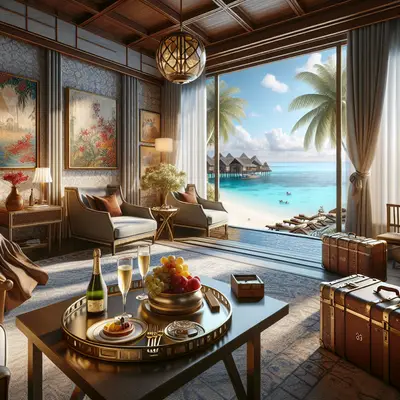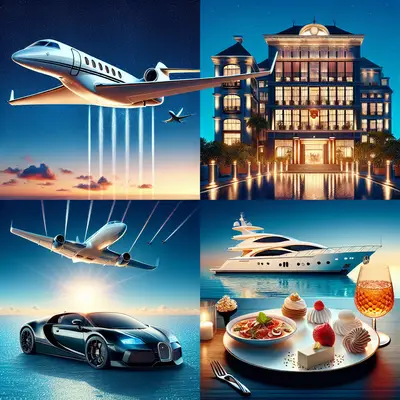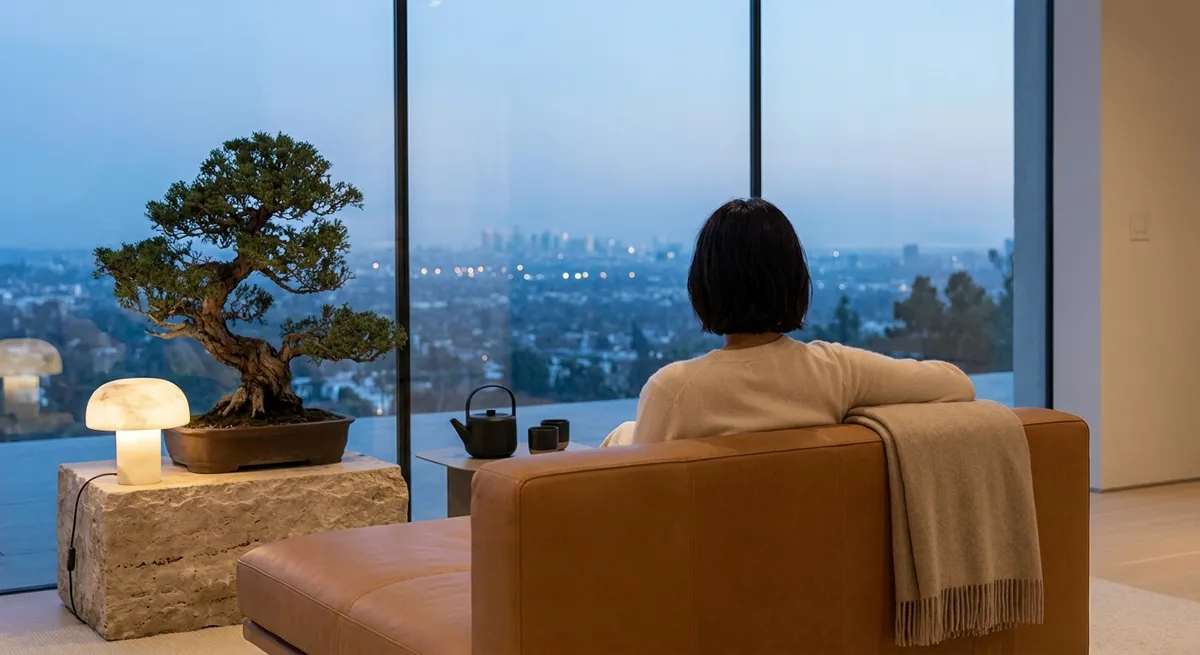
Luxury today is less about what is seen and more about how it feels. For the most discerning travelers, the true markers of a premium life are increasingly precise, discreet, and deeply personal—measured not in logos or square footage, but in acoustics, air quality, and the caliber of attention paid to the smallest rituals of daily comfort. Jet Ready’s audience knows: the real currency is not time saved, but quality gained in every moment that remains.
Below, five under-the-radar insights shaping how sophisticated travelers are quietly redesigning what “premium” means—on the ground, in the air, and everywhere in between.
1. The Acoustics of Ease: Curating Sound as a Luxury Material
For high-end travelers, silence is no longer a welcome bonus; it is a deliberate design objective. The most considered suites, villas, and jets are now tuned with the precision once reserved for concert halls: layered insulation, hidden acoustic panels, quiet HVAC systems, and door seals engineered to soften even the most errant hallway whisper.
In aviation, cabin noise reduction is now a defining marker of premium experience—not just for comfort but for cognition. Lower decibel levels reduce fatigue, improve concentration, and subtly elevate mood on long-haul flights. A silent cabin is also a more private one, where a confidential conversation need not compete with engine hum or clinking glassware.
On the ground, sophisticated travelers are beginning to treat sound as carefully as scent. Custom-curated playlists change with the time of day and destination, balancing alertness with calm. White and pink noise generators are quietly requested to mask urban soundscapes. Even workout spaces are selected as much for their acoustic character as for their equipment.
For the truly meticulous, sound is now a palette: the soft thud of slippers on thick wool carpet, the near-silent glide of automated blinds, the muffled closure of a well-built door—all signals that the environment has been engineered to protect their mental clarity as much as their physical comfort.
2. Oxygen as a Status Marker: Elevating Air, Not Just Altitude
Premium travelers have long prioritized space and privacy; now, they are quietly prioritizing the invisible—air quality—as a measure of care and sophistication. High-end hotels, private jets, and exclusive residences are increasingly defined by what you cannot see: purified, humidified, and carefully oxygenated environments tailored to reduce fatigue and enhance recovery.
Advanced HEPA and activated carbon filtration systems are no longer a niche technical detail; they are becoming a subtle expectation. Some long-haul aircraft cabins are pressurized to levels closer to those of lower altitude cities, reducing dehydration and jet lag. Boutique hotels and wellness-focused retreats are installing sensors that continuously monitor particulate matter, CO₂ levels, and humidity—adjusting in real time to keep cognitive function sharp and sleep quality high.
For global travelers shifting quickly between climates and time zones, optimal air is a strategic asset. Enhanced humidity protects skin during overnight flights. Cleaner air mitigates the impact of urban pollution upon arrival. Those in the know increasingly inquire—not about thread counts—but about filtration standards, ventilation design, and whether windows can be opened to admit fresh air when desired.
In the most refined circles, discussing “how you slept” is quietly giving way to a more telling question: how did the room breathe?
3. The Precision of Frictionless Transitions
The true signature of a premium lifestyle is not what happens at the destination—it is how seamlessly every transition in between is orchestrated. Discerning travelers now evaluate services less by amenities and more by the absence of micro-frictions: waiting, repeating, fumbling, explaining.
The most elevated experiences are those in which your preferences appear before you articulate them. Your driver knows which side of the car you prefer to enter from. Your room temperature, lighting level, and pillow type are quietly aligned with your last visit, even if it was in another city within the same brand ecosystem. A pre-dawn departure is met with a perfectly timed, light breakfast that respects your usual choices and your circadian rhythm.
Subtle choreography is everything. Bags that transition from jet to suite without claim tags or visible handling. Check-in procedures that migrate to private lounges or in-room tablets, avoiding queues altogether. In-flight connectivity that recognizes your device and restores your last browsing state. Each reduced friction point restores mental bandwidth, allowing you to arrive composed rather than depleted.
The truly premium experience is not fast for speed’s sake; it is precisely paced to your preference. A late checkout that you never had to request. An airport transfer that departs not at the generic recommended time, but at the moment perfectly calibrated to your tolerance for risk and your need for unhurried calm. In this realm, luxury is less a collection of objects than a well-edited sequence of transitions that feel inevitable, yet never rushed.
4. Curated Interfaces: When Technology Learns to Disappear
Advanced technology is now a given at the top end of travel and lifestyle; what differentiates the truly premium is how little of that technology you are forced to see. Luxury travelers are increasingly intolerant of clumsy interfaces—overly bright screens, intrusive notifications, or apps that demand more attention than they save.
The new standard is intelligent invisibility. Lighting that subtly shifts temperature and intensity based on time of day and guest behavior, with minimal manual adjustment required. In-room control systems that respond to natural-language voice commands without forcing guests through layers of menus. Wellness amenities that track sleep or activity only when invited, with data presented in elegant, concise formats rather than overwhelming dashboards.
Most importantly, the most sophisticated environments now respect attention as their primary scarce resource. Flight updates appear when needed, then disappear. Dining recommendations are context-aware, offering suggestions that reflect not only location but recently expressed moods or dietary choices. Even entertainment systems are becoming more considerate, remembering where you paused a film on board and offering a seamless continuation in your hotel suite.
For high-end travelers, the question is no longer, “How much technology is there?” but “How little am I asked to manage?” Premium living is defined by systems that exert significant intelligence behind the scenes, while preserving an ambience of calm, analog simplicity on the surface.
5. The Art of Precision Personalization (Without Performance)
Personalization has become a buzzword; for luxury travelers, it is evolving into something more exacting: personalization without performance. The expectation is not that a brand demonstrate how much it knows about you, but that it uses that knowledge sparingly—and with impeccable taste.
The most refined expressions of this are subtle. A minibar edited to remove what you consistently ignore, rather than ostentatiously stocked with your full historical preferences. A wine list where a sommelier quietly narrows options to three that align with your profile, instead of reciting a lengthy biography of each label. A wellness program that suggests one or two precisely selected treatments that harmonize with your travel schedule, sleep pattern, and climate exposure.
Crucially, premium travelers now value discretion alongside personalization. They expect their patterns to be understood without being discussed. Data storage, privacy standards, and the restraint with which personal information is used have become quiet differentiators between merely expensive services and truly premium ones.
In this emerging code of luxury, the highest compliment is not that a property or service “knows everything” about you—but that it seems to know exactly enough, and not a detail more.
Conclusion
The future of premium lifestyle is being written in quiet increments: decibel levels, air quality metrics, milliseconds of interface friction, and the restrained use of personal data. For the globally mobile, these elements accumulate into something much larger—a pervasive sense that their environment is not simply beautiful or exclusive, but deeply aligned with their biology, their attention, and their need for mental clarity.
At Jet Ready, we recognize that the new markers of true luxury are often invisible to the untrained eye. They live in the calm of a well-insulated cabin, the lightness you feel stepping off a long-haul flight, the elegance of a stay in which nothing jars, nothing demands, and everything seems to unfold precisely as you would have arranged it—if only you had the time.
These are the new coordinates of a premium life: quieter, sharper, and more deliberately attuned to the traveler who values refinement in every unspoken detail.
Sources
- World Health Organization – Environmental Noise Guidelines - Provides research on how noise levels affect health, sleep quality, and cognitive performance
- Federal Aviation Administration – Cabin Air Quality - Outlines considerations and standards related to air quality and pressurization in aircraft cabins
- Harvard T.H. Chan School of Public Health – The Impact of Air Quality on Cognitive Function - Discusses how cleaner air improves cognition and performance, relevant to premium travel environments
- MIT Sloan Management Review – The Next Competitive Advantage: Personalization - Explores sophisticated personalization strategies and their implications for high-end services
- McKinsey & Company – The Future of Hospitality: Personalization, Technology, and Experience - Analyzes evolving expectations in luxury hospitality, including seamless journeys and discreet use of technology
Key Takeaway
The most important thing to remember from this article is that this information can change how you think about Premium Lifestyle.