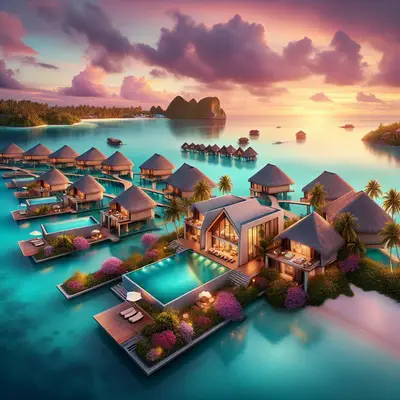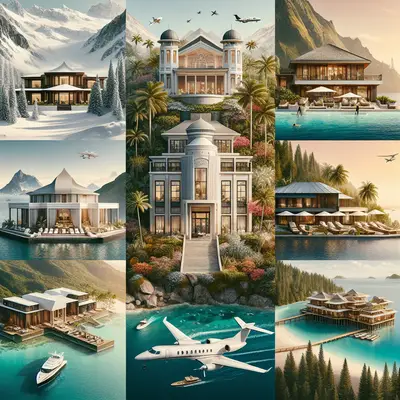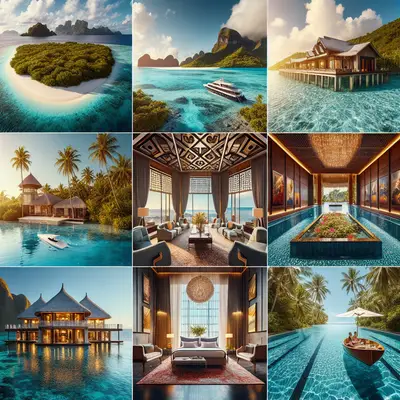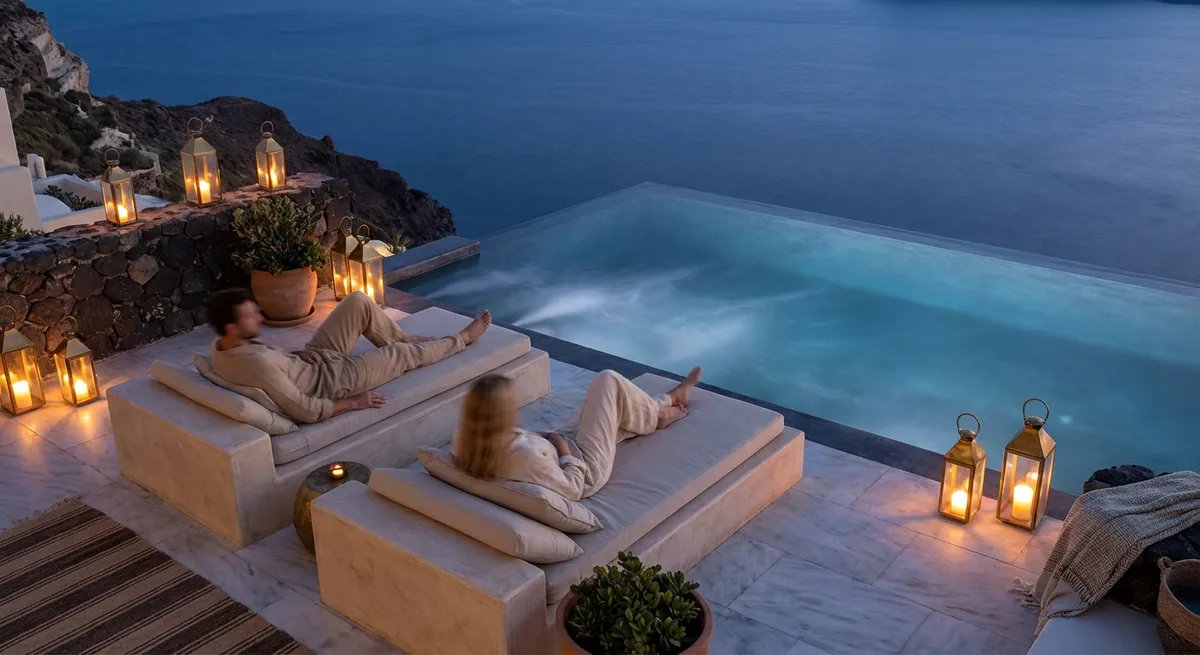
There is a moment, somewhere between the final descent and the first step onto unfamiliar stone, when the world narrows to essentials: light, air, silence, and the sense that everything is already taken care of. The best exclusive resorts are designed for that moment. Not simply as destinations, but as finely tuned ecosystems of privacy, precision, and understated comfort. For the luxury traveler, the question is no longer where to go, but how a place thinks, feels, and behaves around you.
Exclusive resorts today operate less like hotels and more like private clubs with a global footprint. Their value lies not in spectacle, but in orchestration: the invisible systems that protect your time, your preferences, and your privacy. Below are five discreet but powerful dimensions of this world—details that shape experiences you remember long after the luggage has been unpacked.
The Intelligence Behind the Welcome
A refined resort stay begins long before arrival. In the upper tier of hospitality, the pre-arrival process feels more like joining a conversation than filling out a form. Elite concierges and guest experience teams study your preferences with almost forensic precision: how you structure your day, whether you prefer a late breakfast or a sunrise run, if your idea of evening is a tasting menu or room service and a book.
What separates a truly exclusive property is not simply the ability to remember your pillow preference; it is the intelligence behind how that information is used. An allergy noted once becomes a non-issue across all outlets. A mention of a child learning to swim quietly transforms into a private pool slot with a specialist instructor, scheduled at a time you never had to suggest. The property becomes a living memory of your past visits—and, increasingly, of your future needs.
Technology powers much of this subtlety. Secure guest profiles, integrated across a brand’s portfolio, allow for consistency whether you arrive in St. Barths or Lake Como. Yet the best resorts know that data alone is not luxury. It is the human interpretation—the decision not to interrupt your terrace breakfast with a cheerful greeting, the choice to place the yoga mat in the one spot that catches the morning light—that differentiates an efficient stay from an exceptional one.
Privacy as a Design Principle, Not a Policy
In the world of exclusive resorts, privacy is no longer a line in the brochure; it is a structural decision. The most discreet properties are designed from the ground up to manage sightlines, sounds, and circulation so that guests can share a relatively intimate space without ever feeling observed.
Architecture plays a quiet but critical role. Private entrances bypass main lobbies. Suites are oriented to avoid direct terrace-to-terrace visibility. Landscaping is not decorative, but strategic—a living barrier that filters noise, perfumes the air, and provides visual separation without sacrificing views. Sound engineering is deployed as deliberately as lighting; the placement of a water feature or the choice of building materials becomes part of a broader privacy strategy.
For high-profile travelers, this design intelligence translates into ease: being able to walk from residence to spa without a performance, to dine outdoors without a wall of phones raised as you stand. But even for those who travel incognito, the psychological effect is profound. You move differently in spaces that have been deliberately shaped to keep you at the center of your own experience, not on the periphery of someone else’s spectacle.
The Art of Curated Stillness
Exclusive resorts have moved beyond the idea of “amenities” as a checklist. Infinity pool, fine dining, spa—these are baseline expectations. The new luxury is curated stillness: a deliberate, highly considered environment where your mind can actually decelerate.
This is not the performative wellness of endless programming. Instead, it is an ecosystem where spaces are choreographed to accommodate different frequencies of energy throughout the day. A quiet library with serious books and real newspapers appears where you might expect a boutique. A cliffside lounge is purposely left unadorned, so the horizon is the only décor. In certain villas, televisions are concealed by default, revealed only on request.
The best properties understand that rest is personal. For some, it is a perfectly tempered room and blackout shades that actually work; for others, it is access to a private stretch of sea at off-peak hours, a steam room waiting at the end of a solitary hike, or an on-call practitioner for truly restorative treatments, not just polished spa menus. What looks simple—an empty cabana, a perfectly timed turndown, the absence of noise when you need it—requires complex orchestration behind the scenes.
Dining as a Dialogue, Not a Display
In exclusive resorts, cuisine has shifted from spectacle to conversation. The days of elaborate tasting menus designed primarily for social media are giving way to a quieter, more thoughtful approach where ingredients and context matter as much as presentation.
The most refined properties move beyond generic “international menus” and curate experiences that reflect both place and palette. Menus are often written around the rhythms of local producers and the personal preferences of returning guests. A chef might know that you prefer your tasting menus shorter, that you favor vegetable-forward dishes, or that you are deeply curious about regional wines beyond what appears on the printed list.
The luxury here lies in the subtlety of options. Perhaps a formal dining room for one evening, followed by a chef’s-table style experience in a working kitchen, and then a simple grilled fish served on your terrace at sunset with nothing more theatrical than the sound of the sea. Service is attentive but tuned to your energy: invisible when you are engaged in conversation, immediately present when you simply glance toward an empty glass. What you remember is not an Instagram-perfect plate, but a series of meals that feel like they could only have happened there, in that particular place, at that particular time.
Membership, Not Just a Reservation
The highest tier of exclusive resorts increasingly operates less like a hotel booking and more like a membership ecosystem. This is not about loyalty points; it is about access—to homes, experiences, and communities that exist largely out of public view.
For many luxury travelers, the appeal lies in continuity. A network of private residences and resort villas, each with a consistent standard of service, allows for a seamless life lived across geographies. One month in a hillside estate in Tuscany, the next in a beachfront villa in Turks and Caicos, with the same level of housekeeping, wellness access, and concierge intelligence following you across continents.
Membership-style models offer an additional advantage: a curated guest community. You are less likely to encounter rowdy bachelor parties and more likely to share space with travelers who value similar things—privacy, discretion, and a certain level of behavioral fluency. Events, if offered, tend to be intimate: a vintner hosting a quiet tasting at a private home, a local architect leading a walk through the property’s design narrative, a visiting chef preparing an off-menu dinner for a handful of guests.
Behind all of this is a complex lattice of ownership structures, booking privileges, and long-term relationships with the brand. For the luxury traveler, the benefit is singular: the sense that, wherever you go within the network, you are not starting from zero. The staff know how you live, what you value, and how you prefer your world to be arranged.
Conclusion
The essence of an exclusive resort is not found in a single feature, but in an attitude toward your time and attention. It is the precision of a pre-arrival note that anticipates a late landing, the view revealed exactly as the curtains open, the spa therapist who already understands your threshold for conversation, the villa that feels curiously familiar even on your first night.
Luxury travel today is defined less by conspicuous indulgence and more by the quiet elimination of friction. The most sophisticated resorts have embraced this shift, building environments where privacy is structural, stillness is curated, cuisine is intimate, and membership means never feeling like a stranger in a polished lobby. For those who move frequently, across borders and time zones, these places offer something exceedingly rare: the feeling of being exactly where you are meant to be, with nothing left to explain.
Sources
- [Forbes Travel Guide – What Makes a Hotel Truly Luxurious](https://www.forbes.com/sites/forbes-travel-guide/2019/04/24/what-makes-a-hotel-truly-luxurious/) - Insight into the standards and service philosophies that define high-end hospitality
- [Condé Nast Traveler – The Future of Luxury Travel](https://www.cntraveler.com/story/the-future-of-luxury-travel) - Explores evolving expectations of affluent travelers and how top properties are adapting
- [Virtuoso – Luxury Travel Trends Report](https://www.virtuoso.com/travel/articles/luxury-travel-trends) - Data-driven perspective on what high-net-worth travelers value in exclusive experiences
- [Harvard Business Review – The New Science of Customer Emotions](https://hbr.org/2015/11/the-new-science-of-customer-emotions) - Explains how emotional connection and personalization drive loyalty in premium services
- [American Express Travel – 2024 Global Travel Trends](https://www.americanexpress.com/en-us/travel/discover/get-inspired/articles/global-travel-trends-report/) - Highlights key shifts in luxury travel behavior, including privacy, personalization, and wellness
Key Takeaway
The most important thing to remember from this article is that this information can change how you think about Exclusive Resorts.