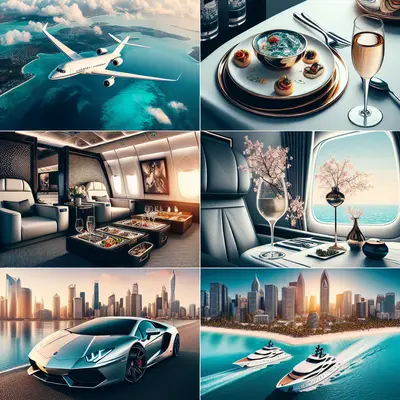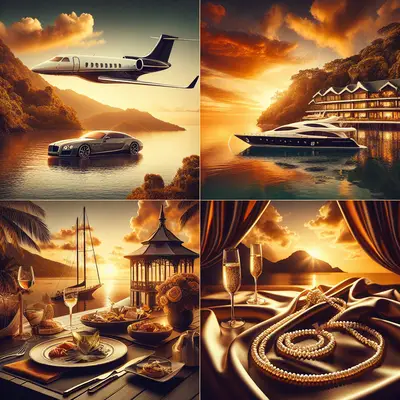
The new language of luxury travel is no longer fluency in logos, room categories, and restaurant waitlists. It is an unspoken grammar of precision, timing, and intentional absence—of crowds, of friction, of compromise. For the modern Jet Ready traveler, the most coveted asset is not a table at the “it” restaurant, but the ability to recalibrate a journey mid-flight, to orchestrate a week away that feels as though it were tailored for one person only: you.
This is luxury not as spectacle, but as calibration. Below, five exclusive insights that define how the world’s most discerning travelers are quietly reshaping the notion of what it means to go somewhere well.
The New Luxury Itinerary: Built Around Your Natural Rhythm
The most refined itineraries are no longer built around check-in times and restaurant reservations; they are built around your personal circadian rhythm, energy patterns, and cognitive peaks.
Elite travelers now coordinate flights to align with their natural sleep windows, shortening subjective jet lag by treating departure times as a performance schedule rather than a mere transportation slot. Private transfers are not just about comfort, but about controlling light exposure, screen use, and meal timing between airport and hotel to smooth the physiological transition into a new time zone.
In-destination experiences are similarly paced. Morning is reserved for high-focus pursuits—private gallery access before opening hours, a quietly choreographed meeting in a suite overlooking the city—while late afternoons are designed for decompression: a hydrotherapy circuit, an in-room tasting with a visiting chef, or a guided architectural walk with minimal social demand. The result is an itinerary that respects the body as much as the passport.
For those who move frequently between continents, their travel advisors maintain a private dossier of preferred sleep environments: firm-leaning mattress specifications, preferred pillow density, blackout standards, room orientation away from morning sun, and even optimal humidity ranges. True luxury, in this paradigm, is stepping into a suite in Tokyo, São Paulo, or Capri and feeling as though your nervous system has arrived ahead of you.
Mastering the Invisible Upgrade: Experience Over Category
The most sophisticated travelers have quietly moved beyond the visible upgrade—bigger suite, higher floor, better category—toward what might be called the invisible upgrade: the orchestration of micro-details that transform the texture of a stay without ever appearing on a rate sheet.
This might mean securing a room at the end of a corridor not because it is larger, but because it places you furthest from the housekeeping service route. It is reserving a signature suite not for its square footage, but for its adjacency to a little-used staircase, allowing you to circulate through the property without crossing lobby traffic at peak times.
In the air, it is less about the headline seat and more about the micro-context: choosing a specific side of the aircraft to minimize light disruption on a red-eye, requesting a modified service flow so that meals are aligned with your personal time zone strategy, or securing a cabin configuration that allows a traveling partner to sleep undisturbed while you work.
At restaurants, the invisible upgrade is the table that is not on the floor plan, held back for regulars and those whose travel advisors know to ask. It is the option to dine off-menu with ingredients quietly sourced based on your profile rather than the market’s trends. In all cases, the code is the same: the most meaningful upgrades are rarely visible in photographs, but they are unmistakable in how you feel.
Precision Privacy: Designing Space Without Isolation
For the modern luxury traveler, privacy is less about hiding and more about curating who and what has access to your time and attention. The most astute itineraries weave together layers of controlled exposure, allowing you to move seamlessly between visibility and seclusion without abrupt transitions.
In urban destinations, this might manifest as a three-part choreography: arrival through a discreet side entrance with private check-in; curated exposure at a single, highly visible restaurant or cultural event; and an immediate retreat to a rooftop or members’ club where social demands soften into low-pressure conversation and measured silence.
At resorts and villas, precision privacy is encoded into the topography of the stay. Pool placement, pathways that bypass main thoroughfares, and the positioning of outdoor lounging spaces become as critical as thread count. Children’s spaces are near enough to supervise, but sufficiently buffered to preserve adult quietude. Workspaces are acoustically protected but open to natural views, so that productivity does not come at the cost of environment.
Even wellness appointments are timed and located with privacy in mind: spa treatments held in standalone pavilions reached by private buggy, personal trainers who meet you in a secluded corner of the gym outside standard hours, in-suite practitioners who blend seamlessly into your schedule. The true measure of privacy is not how unseen you are—but how deliberately you decide when, where, and by whom you are seen.
Culinary Intelligence: Beyond Reservations and Star Ratings
Sophisticated travelers have graduated from simply collecting Michelin stars to cultivating what might be called culinary intelligence: an understanding of how food, place, and time of day converge to define a destination on your own terms.
Rather than treating dining as a nightly headline event, elite travelers map their appetite across the day and across the stay. A late-arrival evening might call for a quietly elevated in-suite supper—simple, clean, and restorative—while the following day’s lunch becomes the true culinary centerpiece, scheduled when your palate is most awake and your energy profile most receptive.
This culinary intelligence extends well beyond the restaurant list. It involves private kitchen access to observe a chef’s mise en place before service, a pre-opening market walk with the hotel’s culinary director, or a late-night pastry tasting in the bakery when the kitchen is technically closed. It might mean requesting a “palate-neutral” breakfast to support a high-profile lunch, or pre-arranging that alcohol-free pairings be built with as much creativity as the wine list.
Importantly, culinary luxury is increasingly defined by continuity rather than occasion. Travelers now expect their dietary preferences, intolerances, and wellness protocols—low-glycemic mornings, plant-forward lunches, measured indulgence at dinner—to follow them seamlessly from jet cabin to hotel to yacht. The modern mark of a premium operation is not just a chef’s signature dish, but the property’s ability to recognize your preferences on your second visit without being reminded.
The Art of Frictionless Transitions: Where True Luxury Now Lives
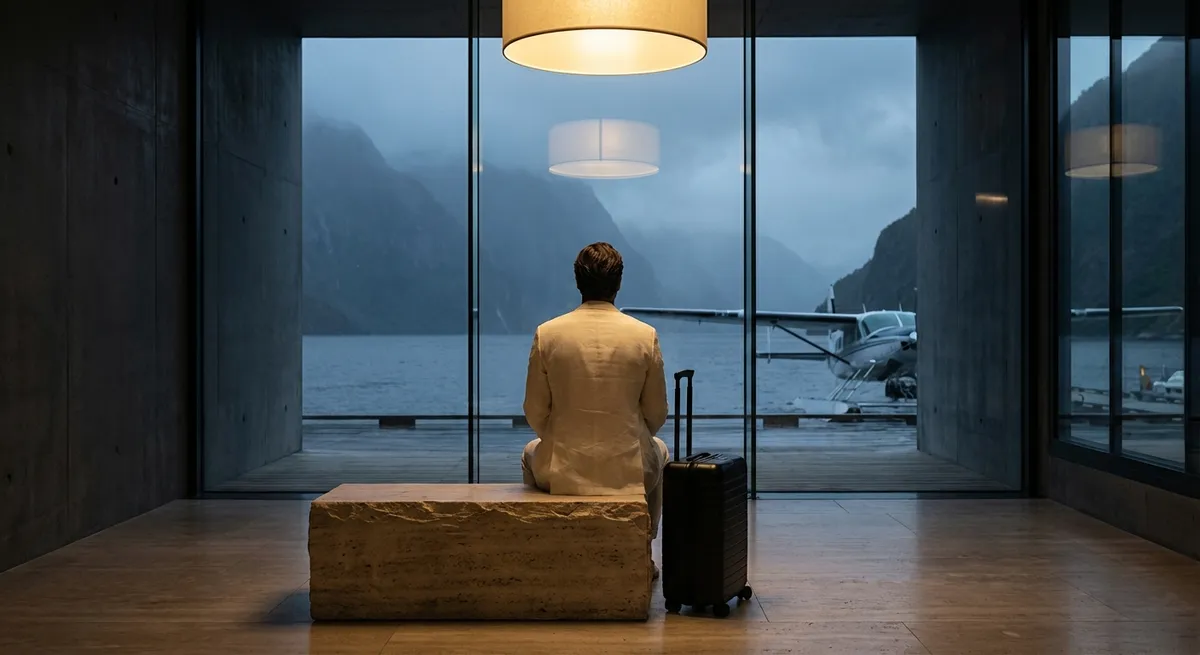
For many of the world’s most seasoned travelers, the journey is now measured less in miles and more in transitions—those liminal moments when one environment, role, or tempo dissolves into another. This is where the new frontier of luxury resides: not in the villa itself, but in the passage from aircraft to villa; not in the boardroom, but in the soft landing that follows it.
The most refined trips choreograph these transitions with the precision of a ballet. Arrival is designed in layers: airside meet-and-greet, expedited formalities, a quiet car configured to your sensory preference (temperature, music, lighting), then a non-performative welcome at the property—cool towel, minimal chatter, immediate access to a shower and a change of clothes. Only once the nervous system has leveled does any narrative, sales pitch, or activity briefing begin.
Within the stay, frictionless transitions might include a “buffer hour” built into your schedule between heavy meetings and social commitments, during which a massage, quick swim, or silent reading session is protected as seriously as a formal engagement. Moving between cities, a stopover is elevated from inconvenience to curated interlude: a three-hour layover becomes a precisely timed spa visit, a tasting of local specialties at the airport’s best-kept secret, or a brief art immersion in a lounge curated by a major gallery.
Upon departure, the transition home is treated not as an afterthought but as the closing chapter. Luggage is pre-routed, in-flight dining simplified to support re-entry, and arrival support at home—grocery delivery, home temperature reset, laundry services—coordinates with touchdown. The unsurprising conclusion: the more elegantly your transitions are handled, the less “recovery” you require, and the more your travel begins to feel like an extension of your best everyday life rather than an interruption of it.
Conclusion
The contemporary luxury traveler is not chasing novelty for its own sake, nor collecting destinations as if they were trophies. Instead, they are refining an ecosystem of experiences that feel ever more precisely attuned—to their body, their time, their appetite for connection, and their threshold for noise.
In this world, true privilege expresses itself quietly: in an itinerary that matches your natural rhythm rather than distorting it; in upgrades that are felt, not flaunted; in privacy that protects your bandwidth without isolating you; in culinary experiences that reveal a place rather than merely impress; and in transitions so carefully designed that you almost forget you are moving at all.
For those ready to travel this way, luxury stops being a set of features and becomes something far more elusive: a standard of feeling you carry with you, wherever in the world you choose to land.
Sources
- [World Tourism Organization (UN Tourism)](https://www.unwto.org/global-and-regional-tourism-performance) - Data and insights on global tourism trends, including the growth of high-spend and luxury segments
- [McKinsey & Company – The Future of Luxury: Bouncing Back but Different](https://www.mckinsey.com/industries/retail/our-insights/the-future-of-luxury-bouncing-back-but-different) - Analysis of evolving luxury consumer expectations and behaviors
- [Condé Nast Traveler – What Luxury Travelers Want Now](https://www.cntraveler.com/story/what-luxury-travelers-want-now) - Editorial perspective on current preferences in luxury travel experiences
- [Harvard Business Review – The New Science of Customer Emotions](https://hbr.org/2015/11/the-new-science-of-customer-emotions) - Research on emotional drivers of premium experiences and loyalty
- [International Air Transport Association (IATA) – Business Travel Insights](https://www.iata.org/en/policy/business-travel/) - Industry information on premium and business travel patterns and expectations
Key Takeaway
The most important thing to remember from this article is that this information can change how you think about Luxury Travel.