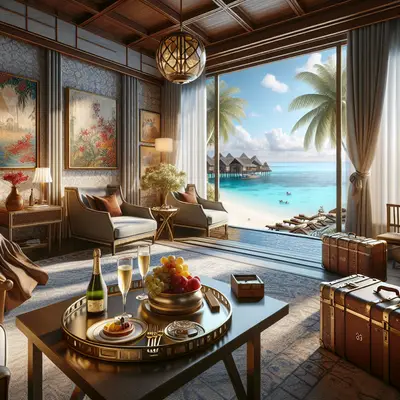
A premium lifestyle is rarely about what is seen first. It is expressed in the details that unfold slowly: the way time is structured, how environments are curated, and the degree of intention invested in each movement from one place to the next. For luxury travelers, the real privilege is not simply access, but control—of tempo, atmosphere, and experience. This is where the quiet mastery of a premium life truly begins: not in spectacle, but in precision.
Below are five exclusive, less-discussed insights that resonate deeply with those who move through the world with discernment—and expect their journeys to match the sophistication of their lives.
1. The Geometry of Time: Designing Your Personal Travel Rhythm
For the seasoned luxury traveler, time is not a constraint; it is a material to be shaped.
Rather than compressing experiences into an itinerary, premium travelers design a personal “travel geometry” that respects natural rhythms: arrival, adjustment, exploration, and retreat. This means scheduling transit to align with personal energy patterns—choosing flights that arrive when the body is most receptive, not merely most convenient. It might mean building in deliberate “shadow time”: unscheduled hours after landing in a new city where nothing is planned except recalibration.
High-end travelers increasingly treat time-zone shifts as projects to manage, not inconveniences to endure—pre-adjusting sleep by 30–60 minutes over several days, curating light exposure to manipulate circadian rhythms, and arranging in-room spa services or private wellness sessions within the first 24 hours on arrival. What appears effortless from the outside is, in fact, carefully orchestrated.
The result is an unhurried presence that feels immediately at home in any city, any resort, any terminal. A premium lifestyle is measured less in how much one can fit into a journey, and more in how gracefully one moves through it.
2. Curated Environments: Treating Every Space as a Signature Suite
For those accustomed to the world’s best hotels and residences, the true luxury is consistency—an aesthetic and sensory continuity that travels with you.
Discerning travelers increasingly “pack an atmosphere” instead of just belongings. This can be as subtle as a single, consistent scent—an atelier candle or travel-sized fragrance oil that turns a new suite, yacht cabin, or villa into an extension of home. It might be a portable soundscape: a carefully designed playlist calibrated not for entertainment, but for transition—boarding, ascent, arrival, and evening unwinding.
The most refined travelers also pay acute attention to light. They request rooms based on orientation (morning light for early risers, late-afternoon sunsets for slow starters), travel with compact, high-quality reading lamps, or use warm-spectrum lighting to counter harsh overheads. They evaluate a space not just on design, but on acoustics: where sound collects, how it travels, and how privacy is experienced.
A premium lifestyle rests on the idea that every environment—temporary or permanent—should meet a personal standard of calm, beauty, and function. Hotels and residences become collaborators in that standard, not the sole arbiters of it.
3. Invisible Infrastructure: Building a Personal Network of Certainty
At the highest tiers of travel, comfort and elegance are expected. What distinguishes a truly premium life is the invisible infrastructure that supports it.
Behind every seemingly spontaneous weekend in Paris or last-minute island escape lies a quiet architecture: a trusted travel advisor who understands personal patterns, a small circle of preferred drivers and local hosts in key cities, and a network of concierges, private members’ clubs, and boutique operators who share a common vocabulary of discretion and efficiency.
Luxury travelers often maintain a personal “operational file” that includes known preferences for pillow types, minibar configurations, in-room workout needs, and dietary nuances. This file is not a list of demands; it is a language of continuity, discreetly shared with properties and services that earn long-term loyalty.
Digital infrastructure matters as much as human. Encrypted communication channels, secure document storage, and carefully controlled digital footprints are part of the premium mindset. The objective is not paranoia, but peace of mind: knowing that reservations, transfers, last-minute changes, and sensitive details are handled with quiet competence.
In this world, true luxury is not the rare champagne in the suite, but the calm certainty that everything essential has already been considered.
4. The Art of Selective Exposure: Access Without Overexposure
Modern luxury is no longer about being everywhere; it is about being precisely where one chooses to be, under conditions that feel appropriate.
Seasoned travelers are increasingly discerning about when and how they engage with a destination. They may skip peak “must-see” hours in favor of curated access before opening or after closing. They use private guides not simply for information, but for insulation from friction—navigating lines, attention, and unnecessary noise.
Equally important is the art of limiting digital exposure. Many premium travelers now practice a form of selective visibility: sharing only fragments of their journeys on social platforms, or delaying posts until after departure. The objective is twofold—protecting privacy and preserving the integrity of the experience itself.
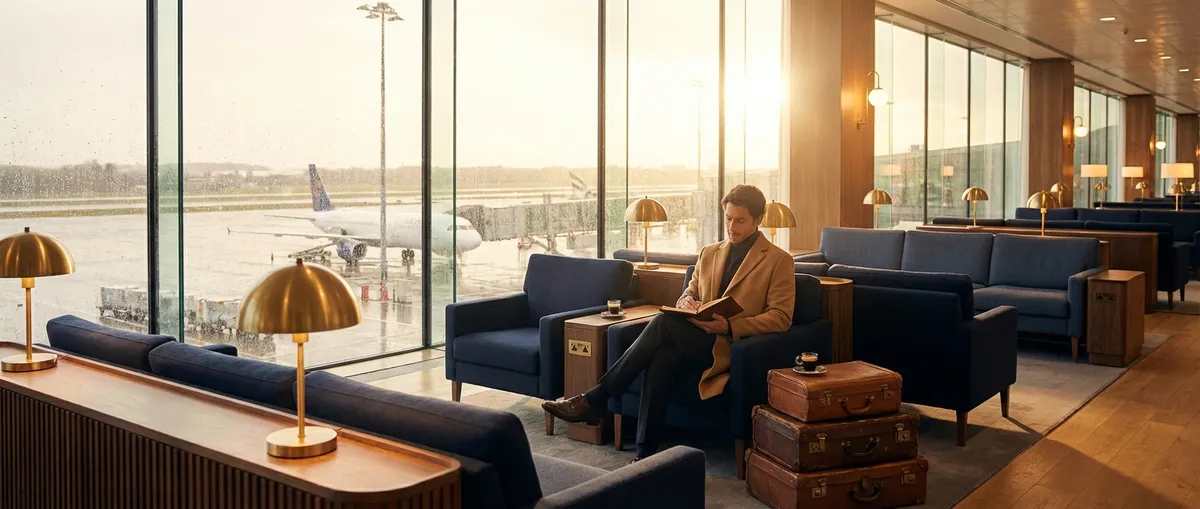
This extends to social exposure in physical spaces. Access to elite lounges, private terminals, or invitation-only salons is valued less for status and more for control: fewer interruptions, more space to breathe, work, or simply observe.
In a world that rewards constant display, the premium traveler values the right not to be constantly seen.
5. Elegant Redundancy: The Quiet Security of Being Overprepared
There is a particular kind of refinement in appearing entirely at ease while having quietly prepared for what might go wrong.
Luxury travelers build “elegant redundancy” into their routines: duplicate essentials in a secondary carry-on, an extra set of critical chargers and adapters that never leave their travel kit, a minimalist yet tailored change of clothing that can move from lounge to dinner without compromise. Important documents live in both encrypted digital form and one physical backup, never kept in the same place.
Some arrange overlapping protections—premium travel insurance with medical evacuation coverage, cards with built-in travel benefits, and embassy registrations for extended stays in more complex regions. Others maintain a secondary communications option: an eSIM preloaded for key regions or a spare device configured solely for travel.
The point is not anxiety; it is composure. When luggage is delayed, connections are missed, or plans shift unexpectedly, the premium traveler retains their calm because they have quietly anticipated the variables. The journey remains elegant not because everything goes perfectly, but because the experience feels intact even when it does not.
Conclusion
A premium lifestyle, especially in motion, is less about visible extravagance and more about refined control over the invisible layers of experience: time, environment, infrastructure, exposure, and contingency. For luxury travelers, these five insights are not rules, but lenses—a way to reframe travel from a series of logistics into a personally curated continuum.
What emerges is a way of living where every journey, no matter how brief, is aligned with one’s deepest preferences and priorities. The true privilege is notjust where you can go—but how completely the world can be shaped to receive you.
Sources
- [U.S. National Library of Medicine – Circadian Rhythms](https://www.ncbi.nlm.nih.gov/books/NBK279392/) - Scientific overview of circadian biology and how timing and light exposure affect sleep and alertness
- [Harvard Business Review – Manage Your Energy, Not Your Time](https://hbr.org/2007/10/manage-your-energy-not-your-time) - Insight into structuring work and travel around personal energy patterns
- [Forbes – Why Luxury Travelers Now Value Privacy Over Opulence](https://www.forbes.com/sites/forbesbusinesscouncil/2023/06/22/why-luxury-travelers-now-value-privacy-over-opulence/) - Context on the growing emphasis on discretion and controlled exposure in luxury travel
- [Condé Nast Traveler – How to Beat Jet Lag Like a Frequent Flyer](https://www.cntraveler.com/story/how-to-beat-jet-lag) - Practical strategies used by experienced travelers to manage time-zone shifts
- [U.S. Department of State – Traveler’s Checklist](https://travel.state.gov/content/travel/en/international-travel/before-you-go/travelers-checklist.html) - Official guidance on documentation, safety, and contingency planning for international trips
Key Takeaway
The most important thing to remember from this article is that this information can change how you think about Premium Lifestyle.