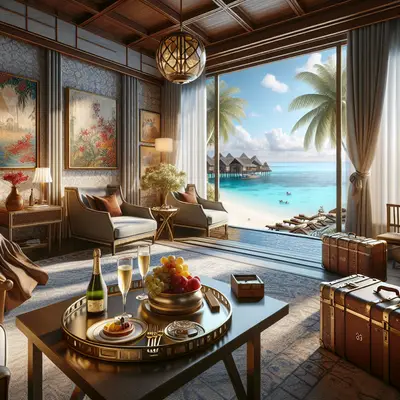
Luxury, at its highest expression, is no longer a matter of logos, room categories, or seat numbers. It is a choreography of details so precise they almost disappear—until you notice that your day has unfolded without a single point of friction. For the seasoned traveler, true premium living reveals itself not in spectacle, but in the quiet certainty that everything has been anticipated.
This is where the elevated journey lives: in refined decisions, discreet systems, and a kind of invisible architecture around your time. Below are five exclusive insights that serious luxury travelers already lean on—unspoken codes that turn “a nice trip” into something quietly flawless.
1. Designing Time, Not Itineraries
The most sophisticated travelers do not “fill” an itinerary; they compose a rhythm for their days. Instead of planning around check-in times and restaurant reservations, they design around their own energy curve.
This means structuring arrivals for recovery, not activity: a late-morning landing, a quiet transfer, a suite that’s pre-conditioned to your preferences, and a few hours of deliberate stillness before you engage with the destination. It’s the difference between simply being upgraded and being genuinely restored.
Elite planners now work in time blocks rather than activity lists—light, medium, and high-engagement segments across the day. A light morning might be spa, terrace breakfast, and reading in filtered natural light. A medium block: a private gallery visit or architect-led walking tour. High engagement: a tasting menu, performance, or hosted dinner. The sequence is intentional: no sharp transitions, no rushed crossings of the city, no “one more thing” at the expense of sleep.
The premium traveler protects temporal margins with almost religious discipline: 20–30 unscheduled minutes between transfers; one evening with nothing on the calendar; arrivals planned to avoid peak traffic flows. Abundance comes not from doing more, but from feeling as if the entire city has adapted itself to your pace.
2. Curating Invisible Comfort: The Sensory Baseline
At the highest level, luxury becomes sensory engineering. The best travelers establish a personal “comfort baseline” that follows them from aircraft to hotel to car, creating a continuous sense of ease.
This begins with light and air. Suites are chosen not just for views, but for orientation to the sun, window treatment quality, and sound insulation. A corner suite facing a quieter courtyard may, in practice, be more luxurious than a high-floor panorama above a busy avenue. True comfort is silent.
Temperature, fragrance, and texture are similarly curated. Frequent travelers standardize a small “comfort kit” that travels with them: preferred pillow spray or fragrance, a familiar fabric (throw, scarf, or shawl), and a compact speaker for consistent soundscapes—jazz in the morning, ambient in the evening, or simply curated white noise. Over time, these elements form a portable sense of home that turns any space into something instantly familiar.
On the move, sensory decisions are equally deliberate. The choice of airport lounge is based on acoustics and layout, not just champagne labels; the car service is selected for suspension quality and driving style, not just badge and model. The objective is simple: never having your nervous system pulled into alertness unless you choose it.
3. Building a Private Network of Human Gateways
The most valuable “status level” is no longer platinum, black, or titanium—it is having the right human beings one message away. Private luxury today is, in many ways, a carefully cultivated network of experts whose sole function is to remove friction and open discreet doors.
For frequent travelers, this network often includes:
- A lead contact at a preferred hotel group or collection, who understands your preferences at a granular level and can quietly influence room allocation, amenity selection, and privacy measures.
- A trusted ground operator in key cities—someone who can adjust transfers, secure last-minute changes, or arrange a quiet escort through congested environments.
- A medical concierge or global health service that can provide 24/7 access to top-tier care, telehealth consultations, or emergency support across borders.
- A cultural or culinary insider—an art advisor, sommelier, or local curator who can transform a generic “tour” into a private, deeply contextual experience.
What distinguishes the premium traveler is how this network is maintained: not as a transactional roster of “fixers,” but as an ecosystem of professionals treated with respect and long-term reciprocity. Relationships are sustained with thoughtful feedback, clear communication, and trust. Over time, what emerges is something rare: a world that feels quietly tailored to your presence, wherever you choose to land.
4. Discreet Technology: Silent Infrastructure, Not Visible Gadgetry
In refined travel, technology is infrastructure, not theatre. Devices and apps should vanish into the background, supporting a sense of ease without ever drawing attention to themselves.
Seasoned luxury travelers often maintain a tightly edited tech stack: one secure password manager, one encrypted messaging app for sensitive communication, and one primary travel tool that consolidates flights, hotels, and transfers into a single clean interface. Notifications are ruthlessly pruned; only truly time-sensitive alerts are allowed through.
Wearables are used for insight, not vanity: sleep metrics to adjust next-day plans, recovery data to decide between a late dinner or an early night. eSIMs are preloaded so connectivity is instant upon landing, and local ride and delivery apps are set up in advance to avoid awkward fumbling with payments or language.
The most thoughtful touch is the creation of a “digital deceleration plan.” This might include automatic activation of focus modes after check-in, a pre-scheduled email informing key contacts of slower response times, and a set window each day for structured digital catch-up. The result: you remain reachable where it matters, yet the trip is not colonized by the constant hum of incoming demands.
5. The Art of Leaving Gracefully
Few things feel more luxurious than a departure that is as composed as the arrival. The sophisticated traveler treats departure not as an afterthought, but as the final, decisive chapter of the experience.
This begins 24–36 hours in advance: confirming ground transfers, re-checking flight times, and quietly settling any hotel matters. Laundry is timed so that everything is dry, packed, and unhurried; outfits for travel day are pre-selected to balance comfort, climate transitions, and the likelihood of early check-in delays on arrival.
On departure day, the room is left in a state that signals respect: no last-minute chaos, no frantic calls to the front desk. The buffer between checkout and departure is generous enough to allow for a calm farewell lunch, a final walk, or simply a quiet hour in the lounge with a proper drink and no screens.
The most refined travelers also practice what might be called “trace minimization.” Personal data is quietly cleaned from in-room devices; printed boarding passes or luggage tags with barcodes and reservation codes are disposed of securely; any local contacts are thanked and closed out with clarity. The emotional residue is as curated as the physical: no lingering unresolved logistics, no half-finished disputes, no administrative clutter carried home.
Leaving gracefully ensures that when the door closes behind you, the journey feels concluded, not abandoned.
Conclusion
In an era where luxury is loudly advertised yet rarely felt, the most elevated journeys are almost invisible from the outside. They are defined not by spectacle, but by the precision with which your time, senses, relationships, technology, and departures are handled.
For those who travel often—and expect more than a generic idea of “premium”—the true privilege is not access alone. It is the quiet certainty that the world you move through has been composed with care: your pace, your privacy, your preferences, all anticipated before you ever need to ask.
Sources
- [Forbes Travel Guide – What Makes a Five-Star Hotel](https://www.forbestravelguide.com/about/forbes-travel-guide-star-rating) – Explains the service and design standards behind top-tier hospitality
- [Virtuoso – The Future of Luxury Travel](https://www.virtuoso.com/travel/articles/future-of-luxury-travel) – Industry insights into how high-end travelers redefine luxury experiences
- [Condé Nast Traveler – The Rise of Slow Travel](https://www.cntraveler.com/story/slow-travel) – Explores time-focused, less frenetic approaches to premium journeys
- [Harvard Business Review – Manage Your Energy, Not Your Time](https://hbr.org/2007/10/manage-your-energy-not-your-time) – Foundational ideas on structuring days around energy, relevant to luxury travel design
- [Mayo Clinic – Sleep and Travel Health](https://www.mayoclinic.org/healthy-lifestyle/adult-health/in-depth/jet-lag/art-20032662) – Evidence-based guidance on recovery and circadian rhythm, informing high-comfort travel planning
Key Takeaway
The most important thing to remember from this article is that this information can change how you think about Premium Lifestyle.