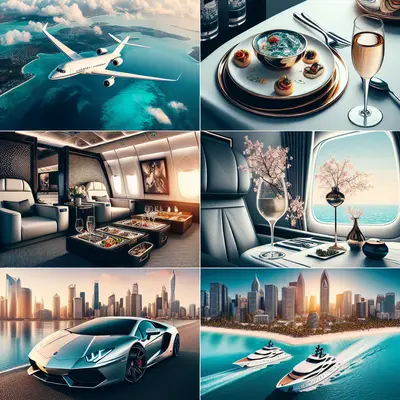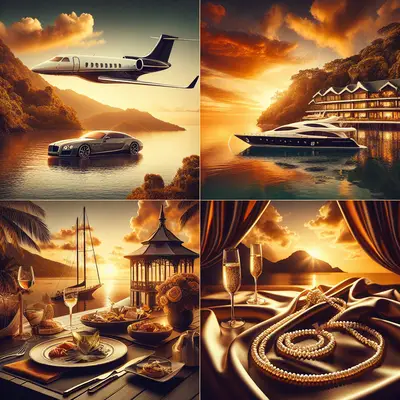
In the upper tier of travel, luxury is less about gold leaf and more about what never needs to be asked for. It is coded into how your preferences precede you, how time bends subtly around your schedule, and how access appears precisely where crowds fade. Today’s most discerning travelers are no longer collecting room keys or airline tags; they are curating a rhythm of movement that feels almost orchestral—measured, precise, and effortlessly in tune with their lives.
Below, we explore five exclusive insights shaping this new language of luxury—subtle advantages and refined decisions that quietly separate the merely expensive from the genuinely exceptional.
1. The New Metric of Luxury: Control Over Time, Not Things
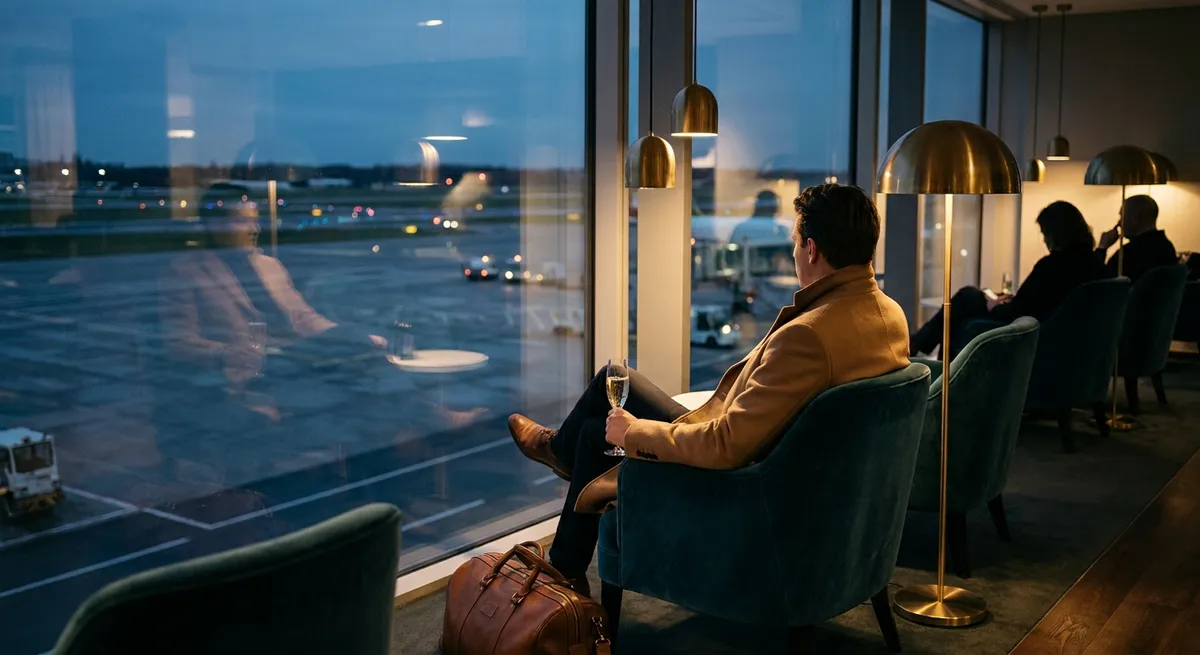
For serious travelers, the true luxury isn’t the suite category or how many threads lie beneath the sheets. It’s command over time. The most coveted itineraries are designed to eliminate friction—shorter transfer windows without anxiety, private customs channels, and check-in procedures that feel more like a discreet welcome than an administrative task.
This starts long before departure. Elite flyers increasingly leverage flexible booking classes, airline concierge teams, and private transfers that account not just for distance, but for rhythm: the time of day they prefer to land, how long they need to recompose after a red eye, whether they’d rather arrive before or after the city wakes. The itinerary becomes a choreography, not a list.
Even on the ground, time is curated as carefully as design. Private early access to galleries, first seating at must-book restaurants, and late-night spa appointments after the city has emptied all serve a single purpose: ensuring experiences unfold on your terms, not on a public timetable. When done well, you never feel rushed, nor idle—you simply feel precisely in step with your own life, wherever you are.
2. The Power of Invisible Infrastructure: Relationships You Never See
The most refined journeys are rarely defined by what you can photograph. They are underpinned by invisible infrastructure: the network of fixers, concierges, private guides, and aviation specialists who make everything appear inevitable.
In luxury travel, “who you know” has evolved into “who knows you.” Top-tier hotel concierges coordinate with private drivers, restaurant maître d’s, and even boutique owners to ensure that when you arrive, doors open with minimal formality. Your favored champagne finds its way to a terrace at sunset without a word. A quiet corner table becomes your default in three cities across two continents.
The most valuable relationships often aren’t the obvious ones. They’re the discreet art consultant in Paris who arranges a private viewing before an auction, the villa manager who knows which local yacht captain actually respects privacy, the airport meet-and-greet team who expedite your passage without fluorescent vests or fanfare.
Savvy travelers recognize that this infrastructure is an asset to be tended: returning to properties where service teams know their habits, maintaining relationships with trusted local experts, and allowing a small circle of professionals to own the details. In this world, loyalty programs matter—but personal continuity matters more.
3. Privacy by Design: Choosing Spaces That Don’t Need to Hide
True privacy isn’t achieved by hiding in the most remote corner of a property; it is achieved by choosing spaces thoughtfully designed so you never feel observed in the first place. The new standard of discreet luxury favors architecture and layouts that prioritize natural separation—careful sightlines, staggered terraces, private entrances—over overt gestures of exclusivity.
Instead of grand lobbies and ostentatious arrivals, many high-end travelers now prefer boutique properties, private residences, or smaller villa collections integrated into major brands. These environments offer the same level of service, but with intentional anonymity. Staff remember your name, but the property never feels like it’s performing your presence.
On yachts and in private villas, this principle extends to how spaces flow. Separate staff access routes, quiet service intervals, and well-considered acoustics create an atmosphere where you feel alone even when a team is fully operational in the background. This is privacy as architecture, not as attitude.
The refined traveler learns to read these design cues: how far the pool is from the main thoroughfare, whether breakfast can be served unobtrusively on a terrace, how many points of approach a suite actually has. What looks beautiful in photographs is one thing; what lives beautifully, unobserved, is another.
4. Curated Locality: When “Authentic” Becomes Precisely Filtered
In an age saturated with “authentic local experiences,” the sophisticated traveler has grown wary of anything too loudly labeled as such. Instead, the premium approach is curated locality: immersing in a destination’s true character, but with considered filters that preserve both privacy and quality.
Rather than joining group tours, luxury travelers lean into private, context-rich experiences: a chef-led market visit followed by an intimate tasting in a closed kitchen, a historian’s personal walk through a neighborhood before opening hours, a studio visit with an artist whose work is rarely seen outside the region. This is not about box-ticking; it is about depth over volume.
Even something as simple as where you drink your morning coffee becomes intentional. It might mean bypassing the city’s most Instagrammed café in favor of a quiet, owner-run spot introduced by your concierge—somewhere with real local cadence but aligned with your preference for space and calm.
The key is curation: leaning on experts who understand both your standards and the city’s undercurrent. The best luxury itineraries no longer try to “do it all”; they edit ruthlessly so the few experiences you do have are resonant, private, and unmistakably anchored in place.
5. Elegant Redundancies: Building Resilience Into a Seamless Journey
What often differentiates a pleasant trip from a truly refined one is not how often things go right—but how elegantly they are allowed to go wrong. The most seasoned luxury travelers subtly design redundancies into their journeys so disruptions are absorbed without drama.
This begins with layered logistics: a backup transfer option, flexible flights that can move a day earlier or later, and accommodations structured so that an additional night can be added without disrupting the entire itinerary. When relying on private aviation, it might mean choosing operators with broader fleet access, allowing substitutions without compromising standards.
On the ground, restaurant reservations are staggered—an early primary choice and a later secondary option elsewhere in case a meeting runs long. Spa appointments are booked with just enough buffer to account for traffic without wasting your day. Even baggage plans may include strategic carry-on setups so an evening event is never at risk if luggage is delayed.
To the outside world, the trip appears perfectly linear. Internally, it is built like a finely engineered system with quiet contingencies. This is luxury not as excess, but as assurance: the steady knowledge that while the world remains unpredictable, your experience will remain composed.
Conclusion
Modern luxury travel is increasingly defined not by spectacle, but by subtlety. It lives in the choreography of time, the integrity of private spaces, the quiet power of relationships, the precision of curated experiences, and the resilience built into every transition.
For those who move frequently—and expect each journey to feel both effortless and singular—the true indulgence lies in how little needs to be explained, requested, or defended. The most premium experience is not the loudest option; it is the one that feels uncannily, consistently aligned with who you are, wherever in the world you choose to be.
Sources
- Virtuoso: 2024 Luxe Report - Insights from a leading luxury travel network on current high-end travel trends and preferences
- Forbes Travel Guide - Authoritative standards and commentary on global luxury hotels, restaurants, and spas
- Condé Nast Traveler – The Future of Luxury Travel - Editorial perspective on how luxury travel expectations are evolving
- International Air Transport Association (IATA) - Information on passenger experience initiatives and premium travel services in aviation
- Skift Research: The State of Premium Travel - Industry analysis and reporting on the business and behavior of luxury and premium travelers
Key Takeaway
The most important thing to remember from this article is that this information can change how you think about Luxury Travel.