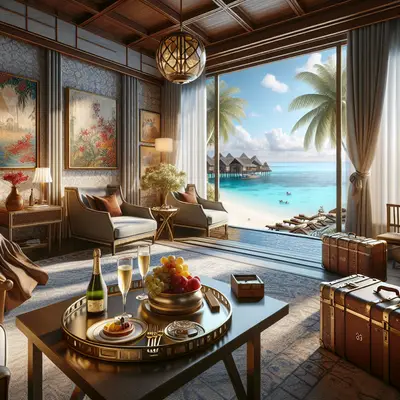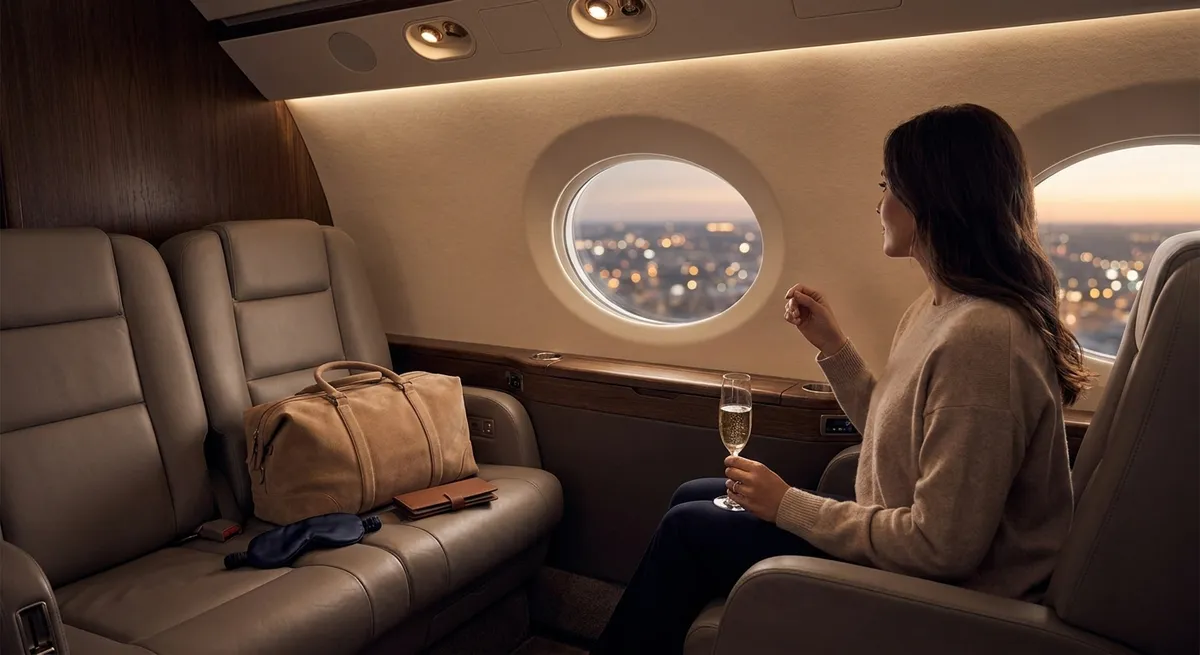
For those who move easily between time zones and continents, “premium” is no longer a label—it is a language. The contemporary luxury traveler is not chasing upgrades or collecting brand names; they are curating continuity, subtlety, and a sense of control in motion. This is a world defined less by spectacle and more by quiet privileges: the details that are rarely advertised, often unspoken, and instantly recognized by those who live in transit with intention.
Below are five discreet, high‑value insights designed for travelers who view every journey as an extension of their personal standard, not a departure from it.
1. The Unpublished Layer: Negotiating Beyond the Public Offering
The most interesting tier of luxury travel rarely appears on a website or in an app. It lives in unpublished advantages—inventory, access, and arrangements reserved for those who understand how to ask, and whom to ask.
A seasoned traveler knows that a preferred reservationist at a flagship property can be more powerful than any status tier. Direct email relationships with a hotel’s director of rooms, a boutique airline’s VIP desk, or a private aviation broker often open access to suites that aren’t visible online, preferred aircraft rotations, or transfer options that don’t officially “exist.” The language is low‑key and specific: mentioning a previous stay by date, referencing a particular suite line, or noting a precise aircraft configuration signals you’re not casually browsing.
True leverage is quiet: pairing a focused, repeat pattern of spend with a minimal footprint of requests. When a property or operator understands your preferences—light touch housekeeping, a specific pillow density, a certain champagne label on ice on arrival—they begin to anticipate rather than react. At that point, you’re operating in a different layer of service altogether: tailored, discreet, and increasingly off‑menu.
2. Time as the Primary Luxury: Designing Travel Around Energy, Not Geography
High‑end itineraries are still too often plotted on a map instead of a calendar. Those who travel well understand that the most finite resource on any journey is not budget—it is alert, high‑quality hours in each place.
Seasoned travelers reverse‑engineer trips from how they want to feel at certain points in time. A 24‑hour business sprint in London may be followed by a deliberately under‑scheduled 36 hours in a quieter destination—not as indulgence, but as strategy. Red‑eye flights are evaluated less by departure time and more by their impact on arrival performance: Does this seat and cabin configuration genuinely allow for restorative sleep? If not, a slightly less convenient schedule with better rest is often the true upgrade.
Premium travelers also calibrate their “activation window” on arrival. Instead of forcing productivity on day one, they may establish a ritual: a particular spa treatment to counteract dehydration, a light meal tailored to local time, and daylight exposure to reset circadian rhythm. Over time, this personal protocol becomes as valuable as any elite status—your own repeatable method for landing in a new city feeling composed, not depleted.
3. Curation Over Excess: Editing Your Environment With Precision
The new luxury is less about abundance and more about edit. A carefully constrained environment—physical and digital—moves with you and keeps every space you occupy feeling distinctly yours.
In practice, this means traveling with a minimal, highly considered toolkit: noise‑isolating earbuds that render aircraft cabins and lounges acoustically neutral; a single, impeccably chosen carry‑on that can integrate into both black‑car trunks and helicopter holds; a portable tech ecosystem that avoids cable chaos and enables a seamless transition from aircraft seat to boardroom to beach terrace. Your selection of objects becomes a mobile ecosystem, not a pile of belongings.
Premium travelers also edit their digital surroundings. Notifications are aggressively filtered. Devices are configured so that boarding passes, secure documents, and essential local data (maps, reservations, key contacts) sit in a dedicated “travel mode” environment. This deliberate curation of both the analog and digital worlds has a single objective: to preserve cognitive bandwidth for what matters—negotiations, relationships, and experiences—rather than logistics and clutter.
4. Invisible Safety: Sophisticated Security Without Spectacle
For those who move frequently through unfamiliar environments, true luxury is not a visible security presence; it is the ease of never having to worry in the first place. Sophisticated travelers approach safety as a design problem, not a reaction.
Before arrival, this often means quiet due diligence: consulting official travel advisories for political or health updates, verifying local healthcare standards, and confirming that transfers and drivers are vetted through high‑reliability providers rather than generic ride‑sharing. In select destinations, engaging a premium security consultancy or hotel security liaison can be as unremarkable—and as vital—as hiring a driver.
On the ground, the approach is understated. Rooms are selected not only for view, but for layout and access: floors with controlled elevator security, proximity to stairwells, and solid door hardware are quietly prioritized over theatrically large suites in suboptimal positions. Personal data is similarly protected: use of privacy‑respecting payment methods, secure communications channels, and well‑chosen travel insurance shifts risk onto systems designed to carry it, instead of onto the individual. The effect is subtle: you appear effortlessly at ease because the groundwork has been deliberately laid.
5. Hospitality as Partnership: Treating Properties and Crews as Your Global Team
The most rewarding luxury experiences are rarely transactional. They emerge when a traveler views airline crews, concierges, and property teams not as staff, but as collaborators in a shared objective: a frictionless, memorable stay.
This begins with clarity and respect. Communicating your needs in advance—quiet floors, specific dietary guidelines, a preferred room orientation—enables a hotel or villa team to engineer your stay precisely. Being consistent in your preferences across visits and brands allows their systems (and memories) to recognize you more quickly. Over time, a pattern develops: you are seen as someone who knows what they need, treats teams well, and does not waste their time. In return, they do not waste yours.
Gratitude, expressed with intention, also compounds. Thoughtful tipping aligned with local norms, handwritten notes to recognize exceptional individuals, and calm, solution‑oriented feedback when issues arise signal that you value professionalism. This is how you build a global lattice of people who will quietly take care of you: making impossible last‑minute reservations happen, holding back their favorite room for your dates, or ensuring your luggage meets you at the jet bridge instead of the carousel. At this level, loyalty flows in both directions.
Conclusion
Modern luxury travel is not defined by logos, square footage, or theatrical displays of access. It is measured in subtler currencies: control of your time, precision in your environment, invisible safety, and relationships that transcend transactions. The most discerning travelers understand that the real upgrade is not to a larger cabin or a higher floor—it is to an ecosystem that moves with them, anticipates them, and protects their bandwidth for what they value most.
For those who live frequently in motion, these quiet privileges are not extravagances. They are the architecture of a life that remains composed, deliberate, and distinctly personal, no matter the airport code on the boarding pass.
Sources
- World Travel & Tourism Council – Luxury Travel Trends - Industry insight into how luxury travel is evolving toward personalization, privacy, and experience‑driven journeys
- Harvard Business Review – Manage Your Energy, Not Your Time - Explores why high performers increasingly design schedules around energy management rather than hours alone
- U.S. Department of State – International Travel - Authoritative resource for travel advisories, safety considerations, and country‑specific guidance for global travelers
- International Air Transport Association (IATA) – Travel Regulations & Health - Provides up‑to‑date information on health, documentation, and regulatory requirements that affect premium and frequent travelers
- Cornell University School of Hotel Administration – Hospitality Research - Research on service excellence, guest experience, and the evolving nature of high‑end hospitality
Key Takeaway
The most important thing to remember from this article is that this information can change how you think about Premium Lifestyle.