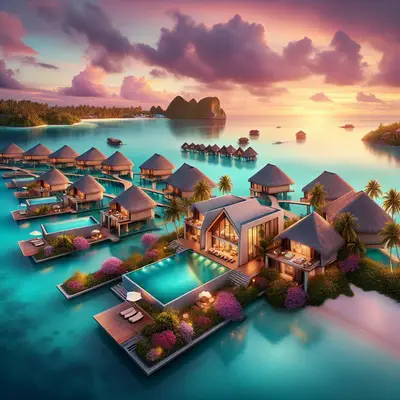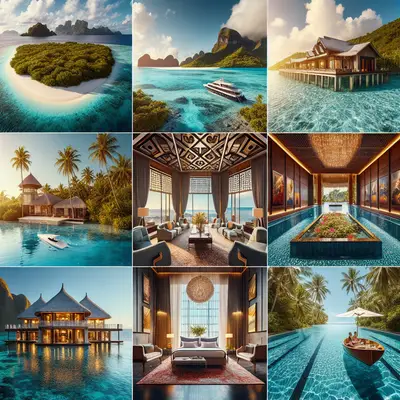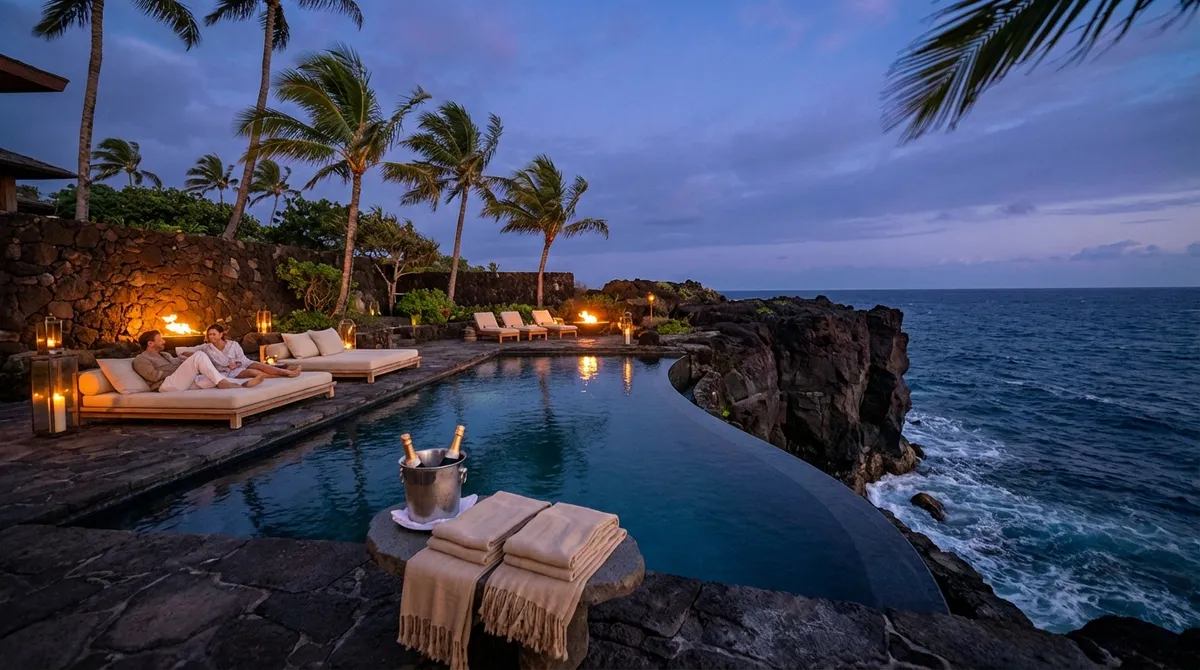
There is a layer of travel that never appears on booking platforms or glossy brochures—a world where discretion is the primary amenity and every detail feels both effortless and impossibly considered. For the serious luxury traveler, exclusive resorts are less about spectacle and more about precision: a choreography of privacy, personalization, and place that turns a stay into a quietly unforgettable experience.
This is not about upgrades or status tiers. It is about access to environments intentionally designed for those who prefer their luxury unannounced, but unmistakable. Below, we explore five exclusive insights that define the modern pinnacle of resort travel—and how to recognize it when you see it.
1. The Architecture of Privacy: How True Seclusion Is Engineered
At the most elevated resorts, privacy is not a perk; it is a design principle. Architecture, landscaping, and circulation routes are meticulously planned to create a sense of being alone, even when a property is at full occupancy.
Walkways are subtly staggered to avoid intersecting guest paths. Villas are positioned to preserve sightlines to the sea or mountains while eliminating views into neighboring suites. Sound-absorbing materials—dense stone, layered textiles, and vegetation—shape an acoustic envelope that filters out the world beyond your terrace.
The most discerning guests notice the micro–decisions: the angle of a plunge pool that avoids public sightlines; lighting that softly illuminates paths without casting harsh beams into living spaces; staff passages concealed behind foliage or architectural screens to maintain the illusion of seamless service without visible movement.
True exclusivity is never expressed with “Do Not Disturb” signs. It is embedded in the spatial planning itself, giving you the feeling that, for a brief moment, you inhabit an exquisitely curated world of one.
2. Invisible Service: When Every Need Is Met Before It’s Expressed
In exclusive resorts, the service ideal is not abundance but anticipation. Rather than an army of visible staff, you encounter a quiet, near-invisible presence—appearing precisely when needed, absent when not.
This standard of service relies on more than training; it depends on disciplined observation and data used with uncommon restraint. Preferences are learned subtly over the course of a stay: the way you take your coffee, the hour you prefer the pool, your inclination toward privacy at breakfast versus conversation at aperitif. The execution feels intuitive rather than transactional.
A discreet housekeeper may notice that you read late into the night and, the next day, a softer bedside light appears. A guest relations manager observes your reaction to a local dish and later arranges a private tasting with the chef—never presented as an “amenity,” simply offered as if it had always been part of the plan.
Luxury travelers quickly recognize the difference between scripted personalization and deeply attentive service. At the highest level, the staff is trained not just to remember names, but to understand rhythms—when to accelerate experiences and when to leave silence untouched.
3. The Curated Periphery: Experiences Beyond the Resort Walls
In the premier tier of exclusive resorts, the surroundings are not a backdrop; they are an extended part of the property’s design language. What sets them apart is their ability to orchestrate experiences that feel utterly singular, yet effortless.
Rather than standard excursions, you might be introduced to the region through individuals who are custodians rather than vendors: a winemaker opening a private cellar, a marine biologist guiding a night swim with bioluminescence, or a conservator offering a quiet tour of a closed gallery. These encounters are shaped to feel like invitations, not itineraries.
The logistics are invisible. Cars, boats, permissions, and timing align perfectly, so the guest experiences only continuity and presence. For experienced travelers, the true luxury is not simply exclusivity of access, but the sense that each experience fits seamlessly into a coherent narrative of place.
What distinguishes the finest properties is restraint. Not every moment is programmed. Space is left for unstructured time—an unhurried lunch in a fishing village, a spontaneous conversation with a local artisan—while the resort serves as a sophisticated anchor, ready to reintroduce calm and comfort the moment you return.
4. Sensory Precision: The Subtle Language of Materials and Atmosphere
Exclusive resorts operate on a sensory level that becomes more apparent the longer you stay. Materials are selected not just for aesthetics, but for how they respond to climate, touch, and time of day.
Flooring might shift from cool stone in outdoor corridors to warmer wood in bedrooms, aligning with the natural temperature gradient from exterior to interior. Fabrics are chosen for how they feel against sun-kissed skin after a swim, or how they drape in a breeze with just enough weight to remain composed. Scent is minimal, designed to harmonize with the natural environment rather than overwhelm it.
Acoustic design is an underappreciated hallmark. A serious luxury traveler will notice how sound behaves differently in different parts of the property: the softened echo of a bar lounge, the quiet of a spa corridor, the deliberate murmur rather than roar in dining rooms, even at full capacity. This is the result of meticulous attention to ceiling heights, surface textures, and spatial volumes.
These decisions are rarely advertised, yet they profoundly shape how rested and restored you feel. The most refined experiences are those that leave you unable to pinpoint exactly why everything felt so balanced—only that it did.
5. Time as a Luxury: When the Resort Bends Around Your Rhythm
At the highest echelon of resort travel, time is treated as the ultimate currency. Rather than asking guests to align with the property’s schedule, the resort adapts itself around the guest’s internal clock.
Breakfast is served when you naturally wake, not within a fixed window. Housekeeping syncs to your patterns rather than a master schedule. Spa treatments can be arranged to follow a late dinner without feeling rushed, and late arrivals are met with quietly extended services rather than apologies for closed facilities.
For returning guests, this temporal personalization becomes even more nuanced. A resort may remember that you prefer to swim at sunrise and ensure towels and refreshments are in place without your having to ask. Evening turndown may be delayed or advanced based on your history of returning to your suite.
The true sophistication lies in how these adjustments never call attention to themselves. There is no “we made a special exception for you”; the resort simply behaves as though there was never any other way for things to occur. For seasoned travelers accustomed to negotiating rigid timetables, this fluidity of time is one of the most quietly powerful forms of luxury.
Conclusion
Exclusive resorts operating at the highest level rarely announce their virtues. Instead, they reveal them through careful design, impeccably trained yet understated service, and a deep respect for each guest’s need for both discovery and retreat.
For the refined traveler, recognizing these nuances becomes part of the pleasure. True luxury is no longer about visible opulence; it is about calibration—of space, service, sensory detail, and time—into a seamless whole that feels at once deeply personal and perfectly composed.
When you next arrive at a resort and feel, within the first few minutes, that the world has subtly rearranged itself around your comfort and pace, you are likely in the presence of something rare: not simply a beautiful property, but a private realm designed for those who expect their experiences to be as considered as their destinations.
Sources
- [Forbes Travel Guide – What Makes a Luxury Hotel](https://www.forbestravelguide.com/about/forbes-travel-guide-star-rating) - Outlines criteria and standards used to evaluate top-tier luxury properties, including service and design
- [Condé Nast Traveler – How to Tell If a Hotel Is Truly Luxurious](https://www.cntraveler.com/story/how-to-tell-if-a-hotel-is-truly-luxurious) - Discusses key indicators of genuine luxury in hospitality from an expert traveler perspective
- [American Society of Interior Designers – Hospitality Design Insights](https://www.asid.org/resources/resources-topic/hospitality) - Provides professional insights into how architecture and interior design shape guest experience
- [Harvard Business Review – The Value of Customer Experience, Quantified](https://hbr.org/2014/08/the-value-of-customer-experience-quantified) - Explores how personalized, anticipatory service impacts satisfaction and loyalty
- [World Travel & Tourism Council – Global Trends in Luxury Tourism](https://wttc.org/research/insights) - Offers data and analysis on evolving expectations in high-end travel and hospitality
Key Takeaway
The most important thing to remember from this article is that this information can change how you think about Exclusive Resorts.