Fine dining has shifted from starched rituals and predictable prix fixe menus into something more nuanced: a choreography of flavor, space, and service designed for travelers who value understatement over spectacle. For the luxury guest, the modern high-end restaurant is no longer a destination alone; it is a lens through which to experience a city, a culture, and a moment in time. What separates a pleasant meal from a truly memorable one now lies in details that most diners never see—but that refined travelers quietly seek out.
Below are five exclusive insights that elevate fine dining beyond “the best table in town” and into the realm of deeply personal, travel-defining experiences.
The True Luxury is Access to the Chef’s Unscripted Mind
Beyond tasting menus and signature dishes, the most coveted experiences today offer proximity to a chef’s unfiltered creativity. It is less about sitting at “chef’s table” for show, and more about gaining access to the restaurant’s experimental heart.
In certain kitchens, late services or off-peak evenings are when the most interesting plates appear—unlisted dishes using micro-seasonal ingredients, test courses quietly offered to trusted guests, or rare bottles opened for a single pairing. The well-informed traveler knows to book midweek, request the full tasting but signal openness to the chef’s improvisation, and engage with the sommelier not just on price, but on mood and narrative.
This is also where relationships begin. Returning to the same restaurant in different seasons, sending a brief note of appreciation afterward, or asking about upcoming menu evolutions subtly signals that you value the craft beyond the Instagram moment. Over time, the chef’s “off-menu” universe slowly opens: access to dishes in development, vertical tastings of a favorite producer, or even introductions to local artisans behind the restaurant’s ingredients. Luxury, in this context, is not ostentation—it is intimacy with the creative process.
Mastering the Geography of the Dining Room
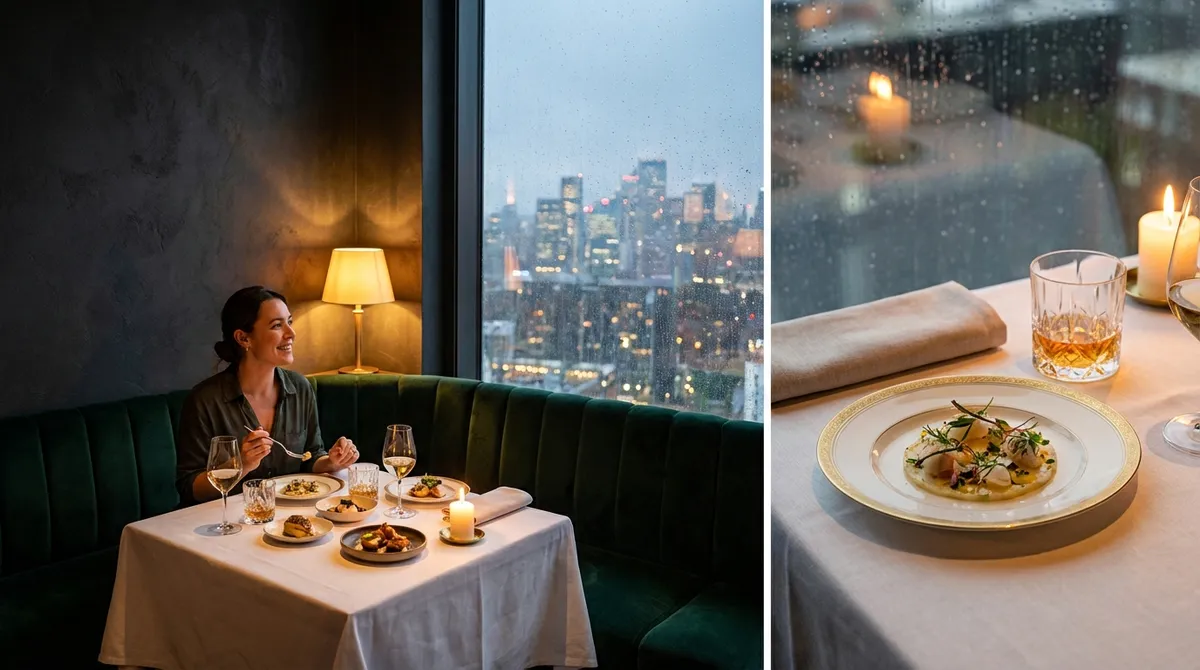
Sophisticated travelers understand that where you sit is as important as what you order. The dining room is meticulously designed: sightlines to the kitchen, calibrated lighting for each table, acoustic zones that allow conversation without intrusion. The most desirable table is rarely the most visible one; it is the one that grants privacy while still offering a sense of the room’s energy.
When reserving, subtle language matters. Rather than requesting “the best table,” ask for “a quieter corner with comfortable lighting and a view into the room, if available.” This signals that you understand there is intent behind the layout. In some establishments, a side banquette with partial kitchen visibility might be where regulars are seated; in others, a small two-top angled away from the main traffic flow is the unspoken pinnacle.
Travelers who dine frequently in high-end restaurants also recognize the luxury of acoustics. They notice beautifully padded floors, carefully chosen materials, and art that absorbs sound instead of amplifying it. A restaurant that invests in silence—as much as in stemware—respects one of the rarest luxuries for modern travelers: the ability to hear a companion without ever raising one’s voice.
Reading a Menu Like a Curator, Not a Consumer
For those accustomed to refined experiences, a menu is less a list of dishes than a map of the kitchen’s philosophy. The names of producers, the sequencing of courses, and the treatment of humble ingredients reveal whether the restaurant is chasing trends or shaping them.
Pay attention to the tension between familiarity and risk. A confident kitchen often anchors the menu with reassuring elements—seasonal vegetables, classic sauces, recognizable cuts—then introduces adventurous notes through technique, texture, or pairing. An unexpected preparation of a modest ingredient (such as celeriac, mackerel, or buckwheat) often tells you more about a chef’s brilliance than an elaborate caviar course.
The most seasoned diners also understand the value of a restaurant’s “middle.” Starters and signature mains receive most of the attention, but creative energy often flourishes in the transitional courses—interludes that cleanse the palate, play with temperature, or introduce subtle bitterness or salinity. Ask the sommelier or server which dishes the team is most excited about at the moment; the answer often reveals the hidden highlights not yet popularized by reviews.
Harnessing the Sommelier as Your Cultural Interpreter
To the luxury traveler, the sommelier is less a gatekeeper of grand labels and more a cultural guide. Wine and beverage programs now extend far beyond Burgundy and Bordeaux, offering rare regional expressions, carefully curated non-alcoholic pairings, and small producers whose bottles often never leave their native country.
The most rewarding experiences come from offering the sommelier a brief but precise framework: your preferred flavor spectrum (mineral vs. opulent, savory vs. fruit-forward), your interest in discovering something local, and an approximate comfort zone on pricing. This empowers them to curate, not merely to upsell. In many top-tier restaurants, portfolio depth in lesser-known regions—Etna, Jura, Swartland, Valle d’Aosta—speaks to how seriously the establishment takes its role as an educator, not just a purveyor.
For those who prefer low- or no-alcohol pairings, the best fine dining rooms now treat these with equal seriousness. Thoughtfully constructed pairings built from infused teas, clarified juices, fermentations, and house-made cordials reflect the same terroir-driven approach traditionally reserved for wine. Engaging with these options not only respects your own equilibrium while traveling, but supports a more inclusive, progressive vision of luxury hospitality.
Designing a Dining Ritual That Extends Beyond the Meal
Memorable fine dining experiences no longer begin at the first course or end with petit fours. For discerning travelers, the ritual extends from the moment the reservation is made to the way the evening is remembered, archived, and revisited.
Before the meal, refined planning might include aligning the reservation with sunset for a waterfront property, arranging for specific dietary details to be discreetly handled in advance, or coordinating with the concierge to avoid rush-hour arrival. It also means considering the evening’s pacing relative to the rest of the day’s experiences—resisting overscheduling so that the meal becomes a centerpiece, not a final obligation.
Afterward, the luxury is in how the memory is preserved. Some guests keep a private digital archive of menus, notes on standout dishes, and wines tasted, treating their culinary journeys like a personal collection. Others follow the restaurant and its chef closely, returning in different seasons or in different cities as the team expands. Sending a brief, sincere note—thanking the staff for a specific moment rather than a generic “wonderful evening”—builds a cadence of recognition over time.
Ultimately, fine dining at the highest level is a dialogue. The most enlightened luxury travelers arrive with curiosity, not entitlement, and leave having co-authored an experience that could never quite be replicated—even in the same room, with the same chef, on another night.
Conclusion
For luxury travelers, fine dining is no longer simply about securing a reservation at the most coveted address. It is about reading the subtleties of a room, engaging thoughtfully with the people who shape the experience, and allowing the evening to become part of a broader narrative of place. The true markers of refinement are quiet: the table chosen, the questions asked, the risks taken, the way one’s presence contributes to the atmosphere rather than dominates it.
In this new era, the most sophisticated diners do not seek to be seen—they seek to be deeply, attentively served, in ways that reflect who they are and how they move through the world. The reward is not just a beautiful meal, but a series of finely drawn memories that linger long after the final glass is poured.
Sources
- [The World’s 50 Best Restaurants – Official List & Features](https://www.theworlds50best.com) - Offers insight into global fine dining trends, chef philosophies, and evolving concepts in high-end gastronomy.
- [Michelin Guide – Official Website](https://guide.michelin.com) - Authoritative resource on starred restaurants worldwide, including perspectives on service, menus, and dining room experience.
- [Cornell University School of Hotel Administration](https://sha.cornell.edu/faculty-research/centers-institutes/chr/research/) - Hospitality research from an academic perspective, including studies on service design, guest experience, and restaurant operations.
- [New York Times Food & Dining Section](https://www.nytimes.com/section/food) - In-depth reporting and criticism on contemporary dining, restaurant culture, and the evolution of fine dining.
- [Institute of Masters of Wine](https://www.mastersofwine.org) - Credible information on wine regions, tasting approaches, and the role of wine professionals, relevant to understanding sommelier programs.
Key Takeaway
The most important thing to remember from this article is that this information can change how you think about Fine Dining.