Fine dining, at its best, is not performance—it is precision. For the luxury traveler, an exceptional restaurant is less about spectacle and more about fluency: in flavor, in service, in the unspoken choreography between guest and room. To truly enjoy world‑class dining, you do not need to be a critic. You simply need to know what to notice.
Below, five exclusive, quietly powerful insights that help refined travelers move through elite dining rooms with ease, discernment, and a sense of private satisfaction.
The Table Is the First Course
In top-tier restaurants, the experience begins long before the first plate arrives. The table itself is a signal of how seriously the house takes its guests.
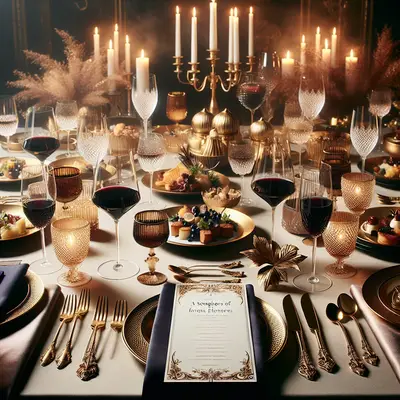
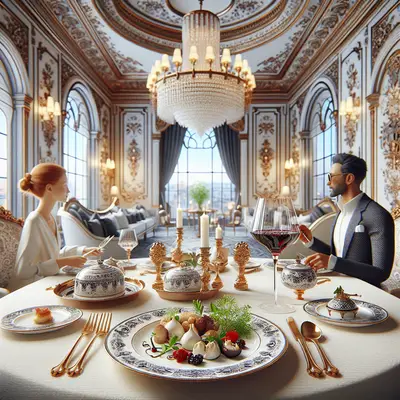
Observe the spacing: in a truly exceptional dining room, tables are set to preserve conversation, not to maximize covers. Seats are angled for sightlines—toward a view, an open kitchen, or an architectural detail—rather than directly at neighboring tables. Linen is crisp but never starched to the point of noise; glassware is subtly weighted so that placing a glass back on the table is nearly silent.
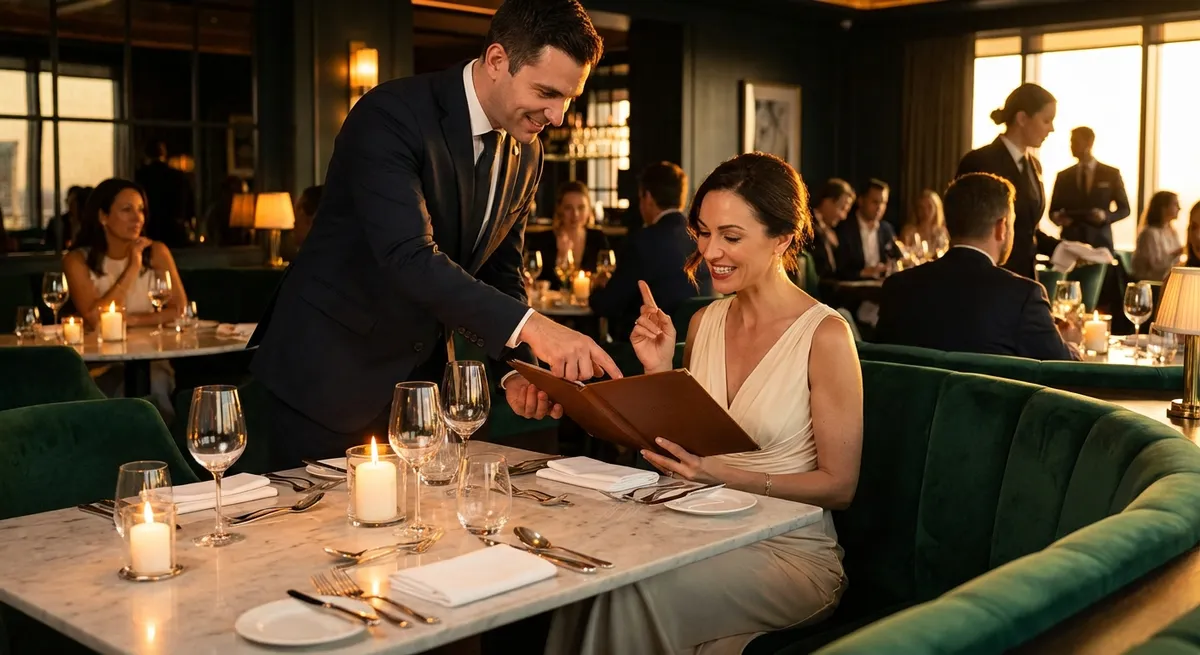
Luxury travelers can quietly request a “corner banquette,” “soft seating,” or “a view of the kitchen pass” when booking. Each choice changes the narrative of the meal: corner tables favor intimate conversation; a seat near the pass offers a front‑row look at the kitchen’s discipline. Paying attention to the table, and not only to the menu, is how you begin to dine like an insider rather than a spectator.
Decoding the Menu Beyond the Words
For the untrained eye, a fine dining menu can appear minimalist, even cryptic. For the attentive guest, its layout is a map of the chef’s priorities and the restaurant’s values.
The order of dishes often reveals the arc the chef prefers: lighter, high‑acid plates first; deeper, umami‑rich compositions later. Short ingredient lists usually indicate a chef confident in technique and sourcing—when a dish reads “Turbot, fennel, citrus,” the complexity is in what is not written: the temperature control, the sauce reduced to a ribbon, the interplay of textures.
Look for quiet signals: the appearance of specific producers (a particular oyster farm, a small estate oil, a named cheese affineur) suggests a commitment to provenance. If a restaurant offers both an à la carte and a tasting menu, ask which format best reflects the kitchen “as it cooks tonight.” The answer is often illuminating.
Luxury travelers can also benefit from a brief conversation with the sommelier or maître d’ about “how the kitchen is feeling”—are there off-menu seasonal dishes, limited-availability ingredients, or a chef’s preferred progression? These gentle questions unlock experiences that never appear on the printed page.
The Art of Ordering: Letting the Room Guide You
In elite dining rooms, the most memorable meals are often co‑authored between guest and staff. The goal is not to display knowledge, but to communicate preferences in a way that allows the restaurant to curate.
Rather than declaring likes and dislikes in rigid terms, speak in directions: “We prefer lighter preparations tonight,” “We’d like to avoid red meat but are open to anything from the sea,” or “We enjoy bolder, more savory flavors over sweetness.” This gives the kitchen a set of parameters within which they can improvise.
When faced with a complex menu, seasoned travelers often choose a hybrid approach: anchor the meal with one or two signature dishes the restaurant is known for, then ask the server or sommelier to “build around them.” This creates a customized progression that still respects the house’s identity.
Pay attention as you order to how confidently the staff responds. In a truly well‑run restaurant, recommendations are specific and unhurried, often accompanied by a brief story—a fisherman the chef has worked with for a decade, a producer whose cheese arrives once a week. The caliber of that conversation is often the best early indicator of the experience to come.
Pairings Beyond Wine: The New Liquid Conversation
While wine remains central to fine dining, the most forward‑thinking restaurants are now approaching the glass as a broader medium—not limited to alcohol, and not confined to traditional pairings.
For the luxury traveler, this opens a discreet range of possibilities. Ask whether the restaurant has a non‑alcoholic pairing; at top establishments, these are no longer simple juices, but carefully layered infusions, fermentations, teas, and distillates built dish by dish. A well‑crafted zero‑proof pairing can reveal flavors the wine list might not.
If you prefer wine, consider giving the sommelier a budget range and a direction rather than a specific bottle: “We’d like to stay in this range, leaning toward Old World, with elegance over power.” This is often the key to being shown off‑list allocations, library vintages, or lesser‑known producers the team is excited about.
The sophisticated guest also knows when not to pair. For particularly intricate tasting menus, taking a lighter approach—sharing a single bottle over several courses, or alternating wine with water or tea—can keep the palate clear and the memory of individual dishes sharper. Fine dining is increasingly about clarity, not excess.
Service as a Mirror: Reading the Room, Not the Script
In exceptional restaurants, service is not a script to be recited; it is a mirror, adjusting to the energy and expectations of each table. Observant travelers notice not only what staff say, but what they do not say.
The best teams read cues almost instantly: a table that leans into detailed descriptions and technical questions will receive more narrative around ingredients and techniques; a table more engaged in its own conversation will see service become quieter, more streamlined, with information offered only at natural pauses.
As a guest, you can subtly signal your preferences. A follow‑up question about a particular component invites deeper explanations; a simple “Thank you, that’s perfect” followed by immediate return to your conversation signals that you prefer minimal interruption. Over the course of the meal, a well‑trained team will recalibrate to match.
Pay attention, too, to how the restaurant handles the unexpected: a corked bottle, a dish that does not quite resonate with you, or a timing misstep between courses. In a truly elevated environment, such moments are corrected preemptively or resolved with understated generosity, without embarrassment for the guest. For the luxury traveler, these details often separate the merely impressive from the genuinely world‑class.
Conclusion
For those who travel well, fine dining is less about chasing reservations and more about cultivating literacy—learning to read a room, a menu, and a team with subtlety. It is in the quiet decisions—where you sit, how you order, how you communicate preferences—that an already excellent restaurant becomes a deeply personal experience.
The refined traveler carries this awareness from city to city, continent to continent, recognizing that the true luxury of dining is not just in the ingredients or the design, but in the feeling of being precisely understood, plate after plate, glass after glass, evening after evening.
Sources
- Michelin Guide – What Makes a Restaurant a Michelin Star Restaurant? - Insight into the standards and nuances that define world‑class restaurants
- The World’s 50 Best Restaurants – How the List Is Compiled - Overview of how top restaurants are evaluated globally
- Court of Master Sommeliers – Wine Service Standards - Detailed look at best practices in professional beverage and wine service
- Harvard T.H. Chan School of Public Health – The Science of Taste - Explains how taste and flavor perception work, relevant to pairing and menu design
- Cornell University School of Hotel Administration – Restaurant Atmospherics and Experience - Research on how design, layout, and service elements shape the dining experience
Key Takeaway
The most important thing to remember from this article is that this information can change how you think about Fine Dining.