Fine dining for the luxury traveler is no longer about white tablecloths and extravagant plating alone. It is about choreography—of timing, service, light, acoustics, provenance, and discretion—woven into a quietly memorable experience. For those who cross time zones as easily as city blocks, the most compelling meals are not the loudest or the most publicized, but the ones that feel precision-made for the moment you’re in. What follows is a lens on fine dining that assumes you already know the Michelin stars and headline names; this is about the quieter codes and undercurrents that separate “excellent” from truly exceptional when you dine around the world.
The Architecture of a Room: Reading a Dining Space Before You Sit
The luxury traveler learns to “read” a dining room in seconds, long before the first pour.
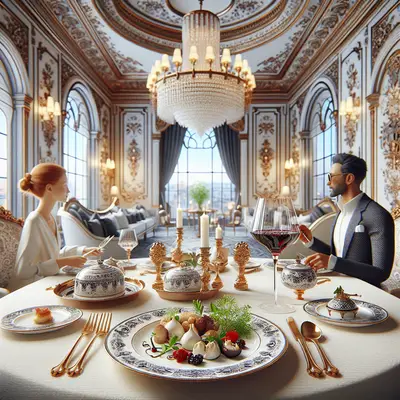
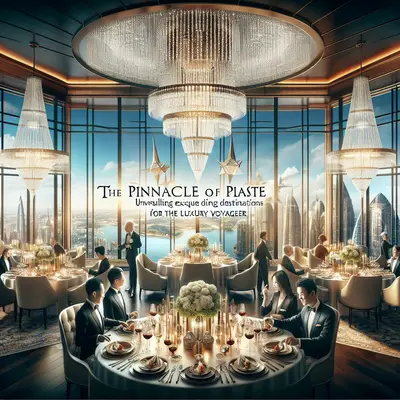
Notice the geometry of the room: sightlines to the kitchen, distance between tables, how the staff traverses space. A well-conceived fine dining room protects conversation with subtle partitions—banquettes, low screens, floral structures—rather than obvious walls. The result is intimacy without isolation.
Acoustics reveal how seriously a restaurant treats its guests’ focus. Thoughtful venues employ layered textiles, architectural baffles, and carefully calibrated soundtracks to ensure you never raise your voice. If you can clearly hear the next table’s anecdotes, the room is under-designed.
Lighting is the unspoken maître d’. Soft, layered illumination that flatters skin tones and glassware, with no harsh overhead glare, signals intent. Candles alone are rarely sufficient at high levels of gastronomy; the most sophisticated rooms use a combination of indirect architectural light and focused table glow that allows you to read, appreciate plating, and still feel bathed in warmth.
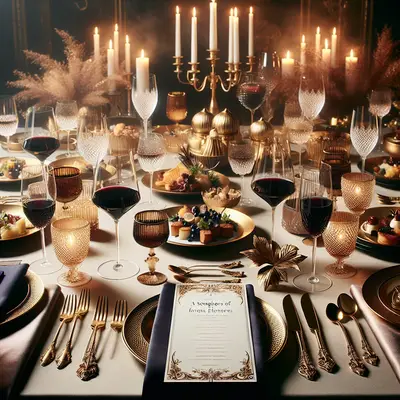
Even the table itself tells a story: the weight of the linen, the chosen glassware, the feel of the cutlery in hand. Reflective surfaces and sparkling details are less important than tactile coherence—when everything the guest touches feels considered, you can expect similar care from the kitchen.
Service as Discreet Choreography, Not Performance
At the highest echelon of dining, service is neither stiff nor performative—it is anticipatory and nearly invisible.
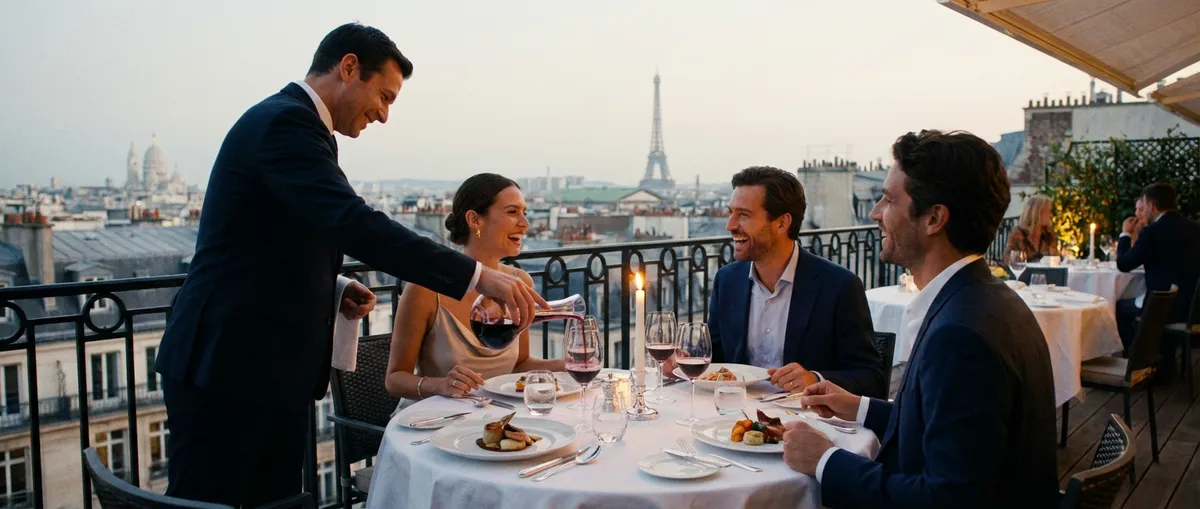
In elite rooms, service teams operate with a form of silent mapping. Within minutes they will have registered who in your party leads the conversation, who is more reserved, who seems more curious about the wine list, and who is jet-lagged but trying not to show it. Adjustments follow with remarkable subtlety: pacing slows for deeper conversations, explanations shorten for experienced diners, detail expands for those who lean forward with questions.
Attention to tempo is one of the clearest markers of refinement. For international travelers dealing with long-haul fatigue, the difference between a brilliant experience and a tiring one often comes down to whether courses arrive in harmony with your energy—neither rushed to “turn the table” nor stretched to the point of boredom.
Watch also for how the team handles imperfection. In truly world-class establishments, a misstep is corrected before you need to articulate it: a dish replaced quietly, a wrongly timed course recalibrated, an off-glass of wine adjusted without debate. The measure of luxury is not the absence of flaws, but the elegance and speed with which they vanish.
The finest service has a kind of emotional intelligence. By evening’s end, you should feel that the restaurant understood not just what you ordered, but how you wanted to experience the night.
Provenance with Purpose: When Ingredient Stories Truly Matter
Seasonality and provenance have become universal talking points; for the luxury traveler, the question is no longer whether ingredients are “local,” but whether their sourcing adds genuine depth to the plate and to your journey.
In premier destinations, the sharpest chefs use regional ingredients to reflect not only locality but also time—anchoring your meal to a precise moment in the calendar. Spring’s first fragile vegetables in Paris, the fleeting shine of late-summer tomatoes along the Amalfi Coast, or cold-sea shellfish in Nordic capitals after the first frost: each tells you precisely where you are and when.
Ask about a signature ingredient and listen carefully to the answer. A meaningful response will speak not just of the product but of relationships—growers, foragers, fishmongers, ranchers—with specifics and respect. When the narrative feels rehearsed or generic, it is often a signal that provenance is being used as marketing rather than as a creative engine.
For those who travel widely, one of the greatest luxuries is tracking a single ingredient across cultures—turbot in France versus Spain, wagyu in Tokyo versus New York, citrus in Sicily versus California—and observing how chefs interpret the same raw material through distinct lenses of technique and heritage. These comparative experiences reward the returning guest more than the first-timer; they transform fine dining into a long-form exploration rather than isolated events.
Authentic sourcing is felt on the palate: depth of flavor, purity of texture, and an absence of distraction. When ingredients are exactly right, a dish can afford to be spare. Complexity becomes a choice, not a necessity.
The New Language of Pairings: Beyond the Obvious Glass
Luxury travelers are increasingly fluent in the grammar of wine, yet the finest dining rooms are now conversant in a broader pairing vocabulary that transcends alcohol alone.
While classic wine pairings remain foundational, the most thoughtful restaurants treat the beverage program as a parallel narrative to the menu, not as a supporting act. This may involve alternating between wine and non-alcoholic pairings within the same meal, introducing infusions, clarified juices, and tea extractions designed with the same rigor as a grand cru selection.
For guests who fly frequently, non-alcoholic options are no longer an afterthought; they are a way to preserve clarity across time zones while still experiencing the full arc of the chef’s vision. In serious rooms, abstaining from alcohol should never feel like a compromise—glassware, color, temperature, and complexity are all calibrated so that every guest holds something with presence.
Fine wine programs at the highest level reveal a dual sensitivity: to the food and to the guest’s emotional state. A master sommelier or wine director will ask questions that go beyond “red or white,” probing for your preferences in energy, structure, and mood—lean and mineral, plush and generous, contemplative or celebratory.
Collectors in particular will appreciate venues that manage mature cellars with intelligence: properly stored older vintages, decanted thoughtfully (or deliberately not), poured at the correct temperature, and presented with context rather than ceremony for its own sake. In such restaurants, a great pairing will heighten the memory of a dish without ever announcing itself more loudly than the food.
Exclusivity in Time, Not Just in Access
True luxury dining is no longer defined only by how hard it is to secure a table, but by how precisely the experience fits the moment of your life, your trip, and your day.
For frequent travelers, the most meaningful reservations are those that respect circadian reality: slightly earlier seatings that allow a graceful transition from long-haul flight to restful night, or later, unhurried dinners that acknowledge a local culture where evenings unfold slowly. An elite restaurant that offers flexible beginning times for a tasting menu—within reason—signals a genuine understanding of global clientele.
Pay attention, too, to how a venue frames the duration of a meal. Some of the most sophisticated experiences now offer distinct narrative arcs: a concentrated, shorter progression tailored to business travelers; a more expansive, contemplative menu for those on leisure; or a “chaptered” experience that can begin at the bar, move to the dining room, and conclude in a lounge, each phase calibrated to your available time and desired intensity.
For those with demanding itineraries, one underappreciated luxury is the ability to be fully present. Restaurants that regulate door traffic, avoid unnecessary interruptions, and orchestrate the meal so that your phone can legitimately remain out of reach—because nothing essential needs your attention—offer a rare kind of mental exclusivity.
Ultimately, the most coveted fine dining experiences are the ones that feel unrepeatable: not because the restaurant is inaccessible, but because they were exquisitely right for that specific city, that particular night, and who you were at the table.
When the Meal Outlives the Evening
The finest meals continue to work on you long after the final course. For the sophisticated traveler, this is the true test of fine dining: not how photogenic the plating was, but how the memories surface weeks later while boarding another flight or unpacking in another hotel.
Look for houses that send you away with more than a bill—perhaps a written menu annotated with vintages, a small element of the experience you can replicate at home, or even a quiet recommendation for where to have your next simple breakfast in the city. These gestures are not about branding; they are about continuity. They acknowledge that for someone in motion, dining is part of a longer narrative of place and palate.
Fine dining, at its most evolved, is neither spectacle nor checklist. It is an intimate understanding between guest and host, expressed through space, service, ingredient, pairing, and time. For the luxury traveler, cultivating an eye for these subtleties transforms each reservation from a mere event into a quietly defining chapter in the story of how—and where—you choose to live well.
Sources
- Michelin Guide – About the MICHELIN Guide - Background on how Michelin evaluates fine dining and service at the highest levels
- Court of Master Sommeliers – What Is a Sommelier? - Insight into the role of the sommelier and beverage pairing philosophy in fine dining
- Harvard T.H. Chan School of Public Health – The Nutrition Source: Seasonality in Food - Overview of why seasonality and provenance matter for flavor and quality
- U.S. Department of State – Jet Lag and Travel Fatigue - Context on long-haul travel fatigue that informs timing and pacing in luxury dining experiences
- Cornell University School of Hotel Administration – Restaurant Design and Guest Experience - Research on how restaurant layout, acoustics, and design affect the overall dining experience
Key Takeaway
The most important thing to remember from this article is that this information can change how you think about Fine Dining.