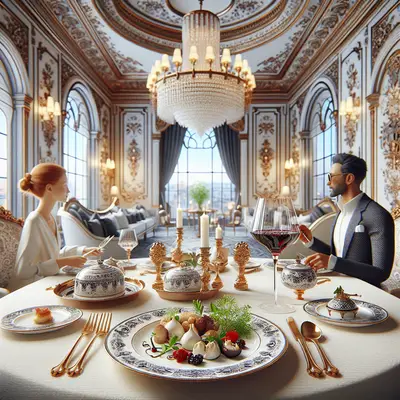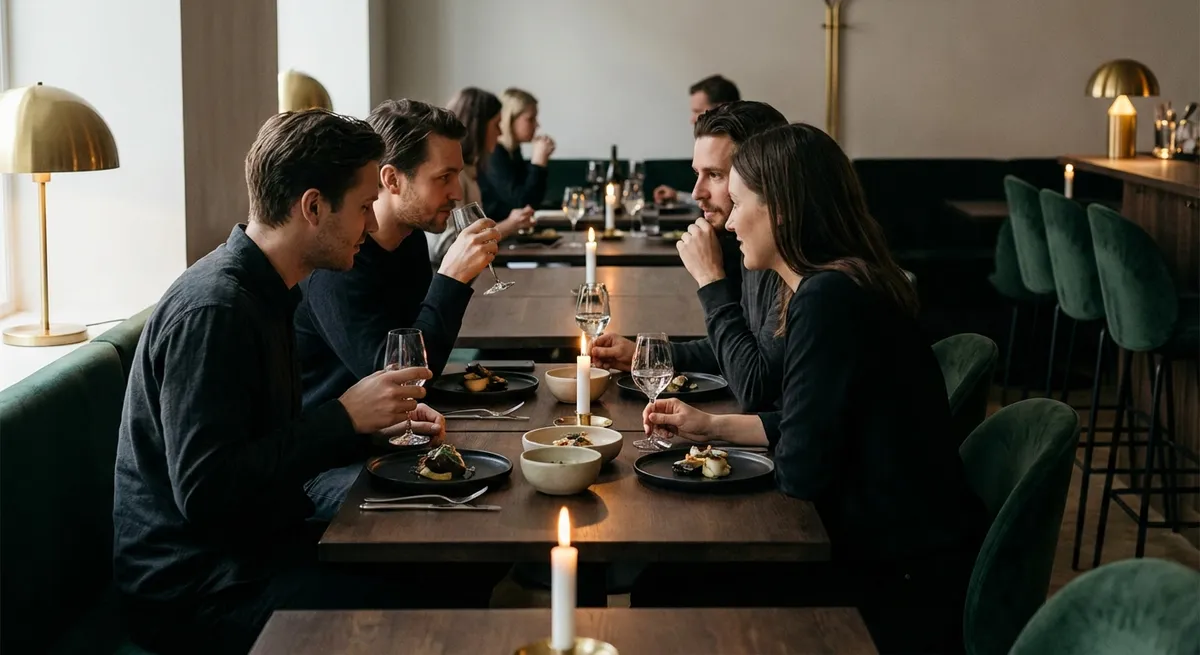
In the world of considered travel, fine dining is no longer a spectacle staged under bright lights. It is a quiet negotiation between craftsmanship, discretion, and a guest’s desire to feel both known and surprised. For the luxury traveler, a table is not simply reserved; it is curated—an orchestration of place, time, and detail that feels as meticulously composed as a private itinerary. This is the realm where menus are whispered, preferences are remembered before they are spoken, and the most meaningful moments unfold between courses rather than on the plate itself.
Below, five exclusive insights reveal how today’s most discerning travelers experience fine dining as a subtle, deeply personal extension of their journey.
1. The Art of the Unwritten Menu
At the highest level, the true luxury is not choosing from a menu but relinquishing it altogether.
In many elite dining rooms, the most coveted experience is an unwritten, quietly tailored progression of courses that responds to your history, not just your hunger. Chefs and sommeliers review your prior visits, travel habits, and even your arrival time to shape an evening that feels uncannily precise. This is not the standard “chef’s tasting menu” but a living document that shifts while you are still seated—an extra course to harmonize with a wine you admired, or a subtle adjustment in seasoning when the staff notices you lingered longer over a particular dish.
The unwritten menu thrives on pre-arrival intelligence. Luxury hotels and private travel designers increasingly coordinate with restaurants to relay preferences and sensitivities in advance, from understated details like preferred glassware shape to a quiet aversion to certain textures. The result is a dining experience that feels less like a service and more like a conversation in which the restaurant speaks first—with fluency.
For the luxury traveler, the signal is clear: the most remarkable dinners begin days, sometimes weeks, before a reservation is ever confirmed.
2. Provenance as Story, Not Slogan
Ingredient sourcing has become a ubiquitous talking point, but in refined circles, provenance is evolving from moral credential to nuanced storytelling.
Rather than reciting a list of suppliers, elevated dining rooms now curate narrative arcs through their sourcing choices. One course may pair seafood from a single, small-scale fishery with vegetables grown in a microclimate just an hour away, echoed by a wine that shares the same coastal wind or volcanic soil. The geography is not a marketing bullet—it is a sensory thread you can follow from plate to glass.
What distinguishes the experience for luxury travelers is restraint. The most sophisticated rooms avoid didactic monologues about sustainability; they assume their guests are already informed. Instead, they reveal just enough context to make the dish emotionally resonant: the aging fisherman who has supplied the restaurant for decades, the vineyard that bottles a single parcel exclusively for the house, the baker whose bread appears only at lunch, never dinner.
Here, provenance is not loudly asserted; it is discovered, often only if the guest is curious enough to ask. The reward is a more intimate connection with place—less about where ingredients came from, and more about why they matter in this precise moment of your journey.
3. The Geometry of the Room: Engineering Atmosphere
For the sophisticated traveler, the dining room itself is part of the experience—an engineered environment that reveals as much about a restaurant’s ethos as the menu ever could.
In the modern luxury context, lighting is treated as architecture, not afterthought. Rooms are lit to flatter not just the food but the faces across the table; reflections in glassware are intentional, the glint of a knife’s edge softer than it appears. Sound design, too, is curated with almost obsessive care. The murmur of conversation is maintained at a level where privacy feels natural, not forced, and music—if present—is layered to support rather than compete with the cadence of service.
Tables are increasingly spaced with a new awareness of social nuance. Some are shielded from view for those who prefer to dine as if alone in the room. Others occupy vantage points that invite a discreet, theater-like observation of the kitchen or bar. Luxury travelers often request these tables by number or nickname, and the staff will orchestrate the evening around that preference like a favored suite in a hotel.
What emerges is a subtle understanding: the best meals are not only about flavor but about the geometry of experience—distance, sight lines, and the quiet choreography of how you move through the space from aperitif to digestif.
4. Service as Fluent Translation, Not Performance
In the most refined dining rooms, service has shifted from polished performance to quiet translation—a careful mediation between the language of the kitchen and the preferences of the guest.
The staff’s true expertise is not in reciting ingredients but in reading the table. Luxury travelers value teams who can interpret mood and energy: knowing when to abbreviate descriptions, when to slow the pace, when to adjust the sequence of courses because a conversation has become too engrossing to interrupt. Timing becomes almost invisible—a napkin replaced without fanfare, a glass replenished at the exact moment you wonder if another sip is warranted.
Crucially, service at this level avoids spectacle. There is an unspoken understanding that the guest is not here to be dazzled by rituals but to feel subtly elevated above the ordinary. Gueridon preparations, decanting, and tableside finishing are executed with a light touch, more as a gesture of intimacy than a public show. The art lies in anticipation: having the alternative stemware ready for the guest who always prefers Burgundy served in a specific bowl-shaped glass, remembering that another guest favors half-portions late in the evening.
The luxury traveler recognizes this not as formality, but as fluency—the sense that everyone in the room speaks the same refined dialect of hospitality.
5. The Itinerary Beyond Dessert: Extending the Evening
For those traveling in style, a remarkable dinner rarely ends with the last course. It transitions, almost imperceptibly, into a second act.
Elite restaurants and hotel dining rooms are increasingly orchestrating “post-dining pathways” for their most discerning guests: a reserved corner of the bar for a nightcap, a private terrace for a final glass of Champagne, or a quiet library setting for tea and conversation away from the glow of the dining room. The handover is seamless—check presented with discretion, coats already en route to the next venue, your preferred digestif waiting at the new table before you sit.
For the international traveler, this continuity transforms dinner from a standalone booking into an integrated part of the evening’s architecture. In certain destinations, the restaurant may coordinate with a nearby gallery open late for private viewings, a members-only club, or a rooftop lounge where the staff has already been briefed on your arrival, preferences, and even your preferred pace.
This is where fine dining at the luxury level reveals its full ambition: not just to perfect what happens between appetizer and dessert, but to choreograph how you feel in the hours that follow. The finest experiences do not conclude; they dissolve softly into the night.
Conclusion
For the luxury traveler, fine dining has evolved into a discreetly complex art form—less about grand gestures than finely calibrated details that feel almost too perfectly aligned to be accidental. An unwritten menu that seems to know you, provenance that reads like a story rather than a slogan, a room whose geometry flatters your presence, service that translates without intruding, and evenings that extend gracefully beyond dessert—these are the quiet signatures of modern culinary prestige.
To move through this world is to understand that the most memorable meals are not announced; they are revealed, one considered detail at a time.
Sources
- [The World’s 50 Best Restaurants – Official List](https://www.theworlds50best.com/) – Insight into global standards of high-end dining and evolving trends in gastronomy
- [Michelin Guide – Official Site](https://guide.michelin.com/) – Authoritative resource on fine dining establishments, service standards, and culinary excellence worldwide
- [Harvard T.H. Chan School of Public Health – The Nutrition Source](https://www.hsph.harvard.edu/nutritionsource/sustainability/) – Background on sustainable and responsible sourcing practices in food and dining
- [Cornell University School of Hotel Administration](https://sha.cornell.edu/faculty-research/centers-institutes/chr/research/) – Research on hospitality, guest experience, and service design within luxury environments
- [UNESCO – Intangible Cultural Heritage: Gastronomic Meals](https://ich.unesco.org/en/intangible-heritage/domains/gastronomy) – Context on the cultural and experiential dimensions of gastronomy and dining traditions
Key Takeaway
The most important thing to remember from this article is that this information can change how you think about Fine Dining.