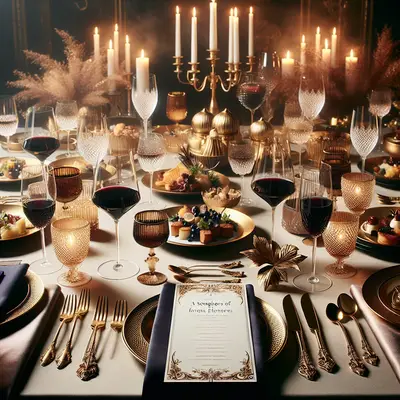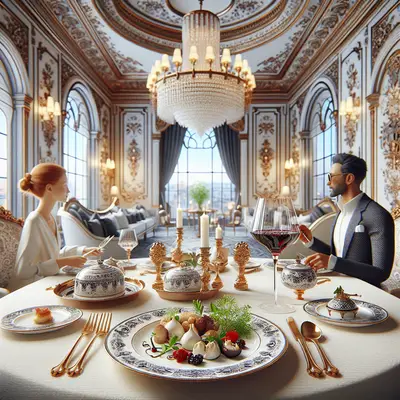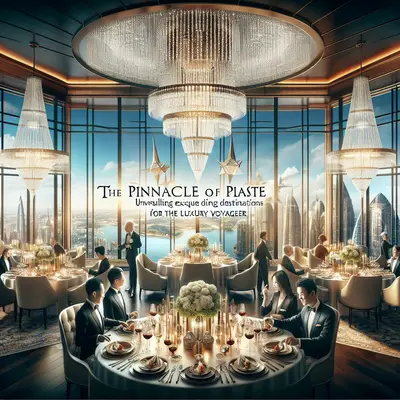
Fine dining has long since evolved past the white tablecloth and wine pairing cliché. For the serious traveler, the restaurant is no longer just a destination; it is a finely tuned instrument for framing memory, calibrating mood, and understanding a city without ever leaving the table. At Jet Ready, we approach dining not as spectacle, but as a private ritual—one that rewards those who read the cues others overlook. What follows are five exclusive insights for luxury travelers who treat a reservation not as a booking, but as a quiet, deliberate choice in how to spend an evening of their lives.
The True Luxury: Time Control, Not Table Size
For the informed traveler, the most precious amenity a restaurant can offer is not a coveted corner booth, but control over tempo. This is where premium dining truly separates itself from the merely expensive. When a room is run well, pacing becomes a form of hospitality: courses appear just as conversation reaches a natural pause; a pause in service reads as intentional, not neglectful; the check materializes only when your body language says you are ready to rejoin the world.
Those who travel often know to signal their preferred rhythm early. A quiet, direct word to the maître d’ or sommelier—indicating whether the evening is pre-theater, post-flight decompression, or a long-form celebration—reshapes the entire arc of the meal. World-class restaurants are designed with the flexibility to condense an experience without making it feel rushed, or to stretch it into an extended, almost cinematic sequence of scenes. The mark of a serious dining room is its ability to let you bend time discreetly, so the outside world never intrudes before you invite it to.
Reading the Room: How Serious Restaurants Reveal a City
Most travelers look at menus; seasoned travelers read rooms. In an era where luxury aesthetics can feel interchangeable from Tokyo to London, the finest dining rooms still embed local nuance in ways that are deliberate but never didactic. The dishware might be sourced from a regional ceramicist, the flowers from a neighborhood grower, the playlist curated with an almost archival obsession for local musicians. None of it needs to be explained—the attentive guest simply notices.
Observing how a restaurant handles its threshold moments—arrival, seating, the first pour of water, the first piece of bread—tells you almost everything about the city’s cultural DNA. In Paris, there may be formality layered with theatrical charm; in Copenhagen, a studied casualness that hides serious precision; in Kyoto, an economy of movement that feels closer to ceremony than performance. For the luxury traveler, fine dining becomes a shortcut to understanding: a few hours in the right dining room can reveal the city’s values more clearly than a week of sightseeing.
The Quiet Architecture of Service
In truly exceptional restaurants, service is not about being served; it is about feeling understood. The best teams operate as a soft architecture of human detail surrounding the table—barely visible, but constantly supporting the experience. A great captain can pick up on whether you are in the mood for explanation or mystery; a skilled sommelier can sense if your question is about price, style, or comfort, even when you do not say so directly.
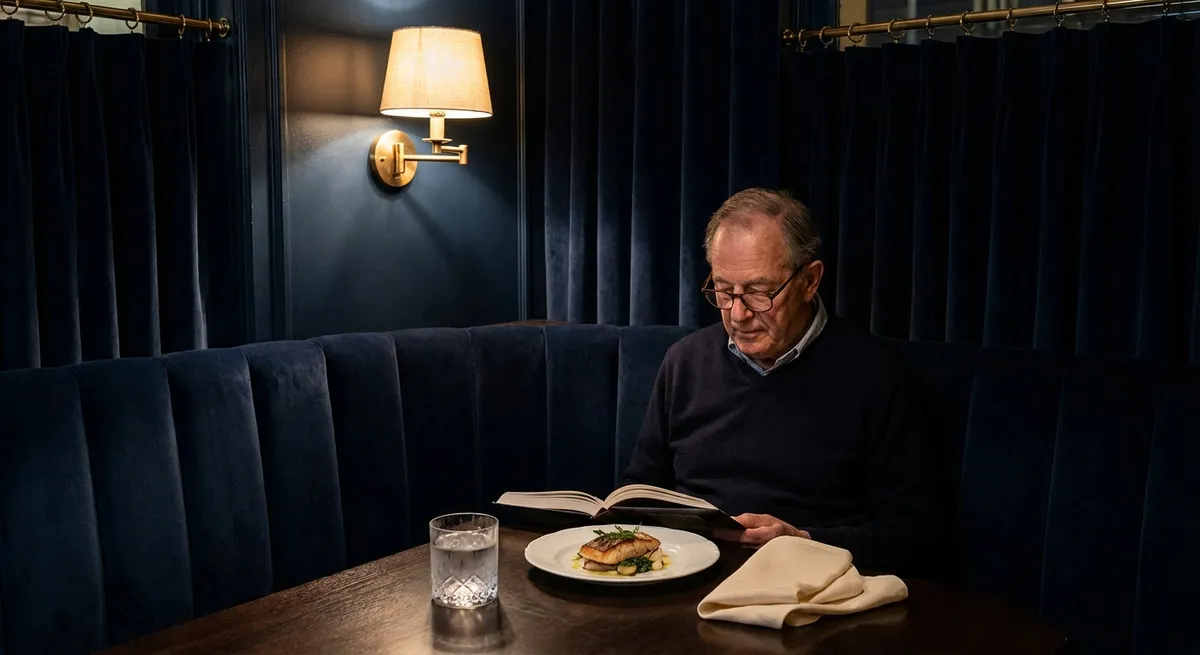
Luxury travelers should look beyond obvious markers such as the size of the wine list or the number of staff on the floor. Instead, pay attention to micro-gestures: does someone quietly reposition your chair before the next course so you remain centered without noticing? Does the team adapt its manner to your group’s tone—expansive with friends, restrained on a business dinner, almost invisible if you are dining solo? This sensitivity is the hallmark of world-class hospitality. It is not about perfection in the abstract, but about the feeling that the entire room has been softly, momentarily calibrated to you.
Menus as Narratives, Not Catalogs
For the premium traveler, a menu is not a list of options; it is a narrative proposal. The most compelling restaurants design their menus as carefully as a short story, with structure, pacing, and an internal logic. A tasting menu might move from crisp, high-acid brightness to richer, slower textures before returning to a final, cleansing note. An à la carte offering, when read carefully, reveals how the kitchen thinks: which ingredients are seasonal obsessions, which techniques they are quietly mastering, which dish is their thesis statement.
Those who dine well learn to read menus with the same attention they give to a wine list. Clusters of similar ingredients suggest the chef’s current fascinations; minimalist descriptions often signal confidence, while verbose ones can sometimes mask conceptual clutter. Asking one or two well-chosen questions—about the origin of a particular ingredient, or the intent behind a pairing—invites a deeper layer of the experience without ever veering into performative curiosity. For the sophisticated traveler, the menu becomes not simply a tool for selection but a window into the mind of the kitchen.
Off-Cycle Reservations: Access to a Different World
Luxury dining is increasingly about timing, not just scoring the marquee reservation. The most astute travelers know that when you choose to dine can transform the experience just as much as where. Lunch at a restaurant known primarily for dinner service often reveals a more relaxed, revealing side of the team. A slightly later seating at the end of service can mean an unhurried flow, more candid conversation with staff, and a room that shifts from grand to intimate as it empties.
Travelers who move frequently across time zones can use this to their advantage. An early local dinner after a long-haul flight allows for an elegant reset: a measured glass of champagne, a precisely composed meal, then a return to the hotel in time for meaningful rest. Conversely, a late seating can serve as a deliberate punctuation mark to a day of meetings or exploration, when the city has exhaled and the restaurant becomes a kind of elevated refuge. Knowing how to pair your body’s rhythm with the restaurant’s rhythm is a subtle, underappreciated luxury—one that turns dining from a fixed appointment into a tailor-made interlude.
Conclusion
Fine dining, at its most elevated, is not about excess, but about orchestration: of time, space, attention, and detail. For the luxury traveler, it offers a rare kind of control over the evening—a way to step into a carefully designed world where every element has been considered, but nothing needs to be announced. The finest restaurants do more than feed you; they frame the city, reflect your mood back to you with refinement, and allow you to move through the world with a little more intention. When approached as a private ritual rather than a public display, fine dining becomes one of travel’s most enduring, quietly transformative pleasures.
Sources
- Michelin Guide – Inspectors’ Guidelines – Explains the criteria Michelin inspectors use to assess restaurants, including quality, personality of the chef, and consistency
- World’s 50 Best Restaurants – About the Awards – Provides context on how leading global restaurants are evaluated and recognized
- CIA – The Culinary Institute of America: Principles of Menu Planning – Offers insight into how serious kitchens think about menu structure, pacing, and guest experience
- Harvard T.H. Chan School of Public Health – The Nutrition Source: Dining Out – Discusses how to make thoughtful choices when dining out, relevant to understanding menu composition
- National Restaurant Association – 2024 State of the Restaurant Industry – Industry overview that illuminates evolving trends in high-end dining and guest expectations
Key Takeaway
The most important thing to remember from this article is that this information can change how you think about Fine Dining.