Fine dining for the modern luxury traveler is no longer about chandeliers and overly flourished plates. It is about precision, privacy, and a sense that every detail—down to the weight of the cutlery and the tempo of the service—has been composed specifically for you. As travel accelerates, the most coveted meals are those that feel like a pause in time: discreet, exacting, and quietly unforgettable. For those who move through the world by choice rather than necessity, the table is less a destination and more a personal ritual in motion.
The Architecture of a Quiet Table
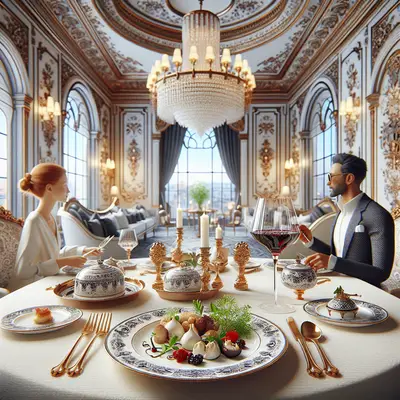
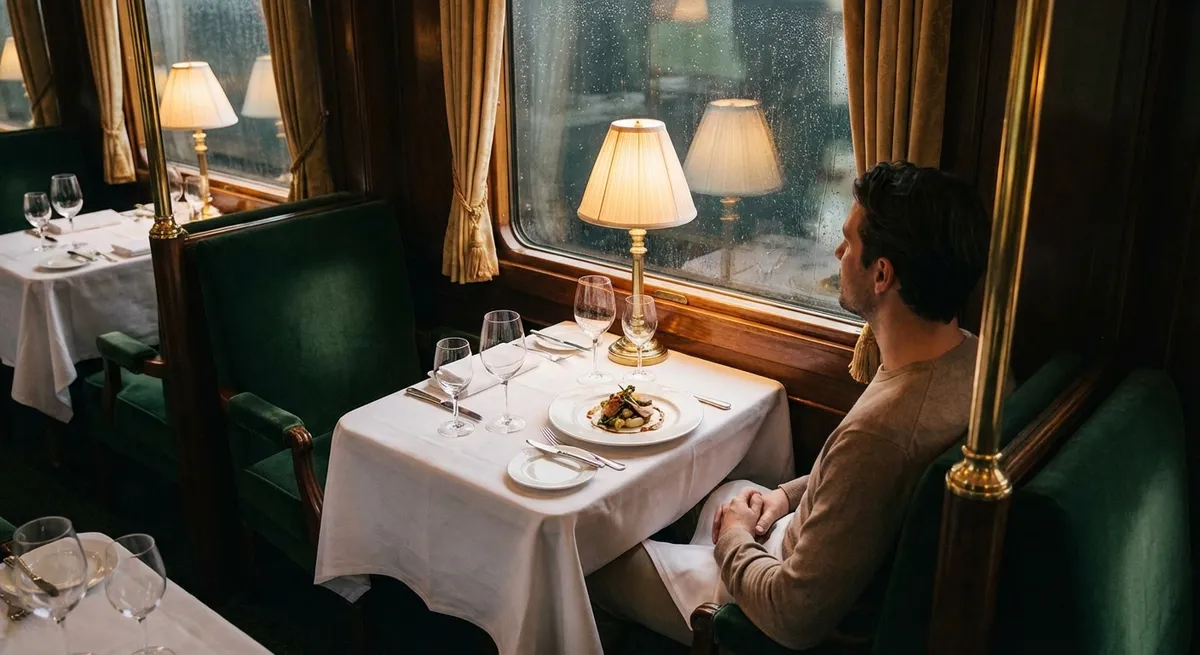
In elite dining rooms around the world, the best tables are not always the ones with the most dramatic views—they are the ones with the most intelligent privacy. Seasoned travelers know to value sight lines as much as skyline vistas: seating angled away from foot traffic, soft partitions that suggest seclusion without feeling cloistered, lighting that flatters conversation rather than photographs.
Beyond aesthetics, the architecture of the room directly shapes the experience. Thoughtful acoustics—fabric-covered walls, carpets, and subtle sound-dampening design—create a cocoon of quiet where the clink of glassware becomes punctuation rather than noise. The most refined restaurants choreograph movement so that service appears and vanishes without crossing the guest’s line of sight more than necessary. For travelers accustomed to airports and lobbies, this deliberate stillness is part of the luxury. Those in the know will often request specific corners or banquettes and develop a mental map of “quiet tables” in their favorite cities, treating them as personal annexes to their own living rooms.
Ingredient Provenance as a Discreet Status Language
On a luxury itinerary, provenance has become a more meaningful flex than extravagance. It is no longer enough for a menu to list lobster or caviar; the real conversation is about origin: wild versus farmed, single-estate versus blended, day-boat versus industrial catch. The most discerning travelers read a menu the way a collector reads a catalogue, noting where, how, and by whom ingredients were raised, grown, or harvested.
What was once the domain of wine lists has expanded to everything on the table: single-origin chocolates, mill-specific olive oils, heritage grains, and regenerative or biodynamic producers. This granular transparency is not only about ethics; it is about nuance. A bluefin tuna from a small Japanese cooperative or a vegetable varietal from a specific Alpine valley telegraphs not just quality, but an alignment with craftsmanship and place. Luxury travelers leverage relationships with sommeliers and chefs to access micro-allocations—rare vintages, limited seasonal harvests—that never reach the printed menu. In this world, fluency in provenance is a subtle language of status, understood best by those who speak it lightly.
The New Pace: Tasting Menus Designed Around Transit
For travelers living between time zones, the traditional multi-hour tasting menu can either be a restorative ceremony or a test of endurance. The most sophisticated restaurants now recognize that not every guest arrives with the same bandwidth. Quietly, they are designing experiences that honor both culinary integrity and the realities of global movement.
Some of the world’s top dining rooms offer unpublicized pacing options: compressed menus that maintain the narrative arc but shorten the timeline, or flexible sequencing that aligns with a guest’s circadian rhythm—lighter courses earlier for those stepping off long-haul flights, more contemplative plates later for those settling in. A few forward-thinking properties coordinate with concierge teams to time seating with flight arrivals, holding tables in “soft blocks” for private aviation schedules that shift by the hour.
Luxury travelers who understand this new pace will pre-brief the restaurant: preferred meal duration, sensitivity to heavy dishes before overnight travel, desired wine intensity when jet lag is in play. This dialogue, conducted discreetly through a travel advisor or hotel butler, produces a meal that feels calibrated rather than generic—an experience in sync with a life lived in motion.
Beyond the Plate: Scent, Texture, and the Fine Art of Table Atmosphere
The finest dining rooms now design experiences with the same depth of consideration found in haute hospitality suites or custom residences. They edit ambient scent so that the room carries only the faintest trace of neutrality—never clashing with the perfume on a guest’s wrist or the aromatics in a glass of Burgundy. Floral arrangements are chosen not just for beauty but for scent discipline: low-fragrance varieties, placed at a respectful distance from the table.
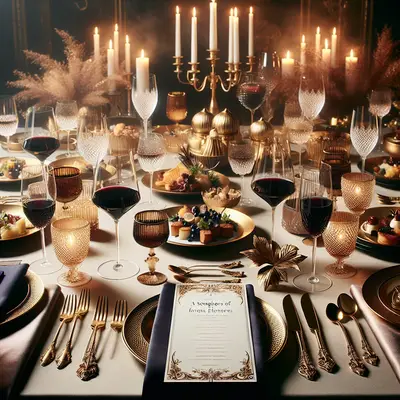
Texture, too, is a quiet form of curation. The napkin’s hand, the porcelain’s edge, the upholstery’s give—each transmits an unconscious message of quality. Weighty, balanced glassware alters how a wine feels before it even reaches the palate, while custom-cutlery profiles guide the hand to hold each piece in the “correct” position without instruction. Light levels are tuned not just for ambiance but for legibility, allowing menus and phones to be read without the harsh intrusion of task lighting.
Luxury travelers, surrounded by design in every other part of their journey, increasingly expect this kind of sensory coherence at the table. They notice when a restaurant’s playlist competes with conversation, when a candle’s fragrance interferes with a truffle course, or when the table height is calibrated perfectly to the chair, making the entire meal feel physically effortless.
The Unlisted Layer: Off-Menu Privileges and Culinary Continuity
For those who dine frequently at the highest level, luxury is continuity: the feeling that your preferences move with you, even as you cross borders. This is where off-menu privileges and personal culinary archives come into play. Top-tier travelers often maintain loose “files” with their favorite properties—documented allergies, preferred doneness, signature aperitifs, even favorite water temperature in the ice bucket.
At the most rarefied level, chefs and sommeliers respond with a parallel, unlisted universe: dishes reinterpreted season after season just for a specific guest, or bottles kept aside from new allocations based on a remembered conversation two years prior. A traveling couple might find that the dessert they loved in Paris appears, reimagined, in a restaurant by the same group in New York or Hong Kong, creating a subtle narrative thread between cities.
Travel advisors and concierges skilled in culinary diplomacy help orchestrate this continuity by quietly sharing guest preferences across trusted networks of restaurants and hotel dining rooms. The result is a sense of being pre-understood without ever feeling surveilled. For the luxury traveler, these micro-gestures—an unrequested half-portion before a late meeting, a decanted bottle timed to coincide with a guest’s arrival—transform fine dining from a one-off event into an ongoing, personalized conversation.
Conclusion
For the truly global traveler, fine dining is not a series of Instagram moments but a private, recurring ritual—an anchor of refinement amid constant movement. The quiet table, the story of each ingredient, the calibrated pace, the orchestration of sensory details, and the unlisted privileges reserved for those who return again and again: together, they define a new standard. It is less about spectacle and more about fluency—an ecosystem of places, people, and plates that recognize who you are the moment you sit down, and respond with an elegance that feels both inevitable and deeply personal.
Sources
- The World’s 50 Best Restaurants – Official List & Features - Offers insight into global fine dining trends, chef philosophies, and evolving service standards
- Michelin Guide – Official Site - Authoritative reference on top-tier restaurants worldwide, including service, ambiance, and culinary innovation
- Harvard T.H. Chan School of Public Health – Sustainable Seafood Guide - Explores sustainability and provenance issues relevant to luxury ingredient choices
- Cornell University School of Hotel Administration – Hospitality Research - Provides research on guest experience design, service, and sensory elements in hospitality environments
- James Beard Foundation – Industry Articles - Covers evolving restaurant practices, sourcing, and the intersection of ethics and excellence in dining
Key Takeaway
The most important thing to remember from this article is that this information can change how you think about Fine Dining.