For the luxury traveler, fine dining is no longer a box to be ticked between spa appointments and private transfers. It is its own destination: a carefully staged world of temperature-controlled glassware, quiet choreography, and conversations that never need to raise their voice. At this level, dinner ceases to be an event and becomes an atmosphere—measured not in courses, but in calibration.
This is the realm where the most discerning travelers reside: where a sommelier’s discretion matters as much as the vintage, where the table you don’t see is as important as the one you sit at, and where the ultimate luxury is not grandeur, but precision.
Below are five exclusive, insider-level dimensions of fine dining that sophisticated travelers quietly seek—and that the best restaurants in the world quietly perfect.
The Geometry of the Room: Why the Best Seat Is Rarely the One You Notice
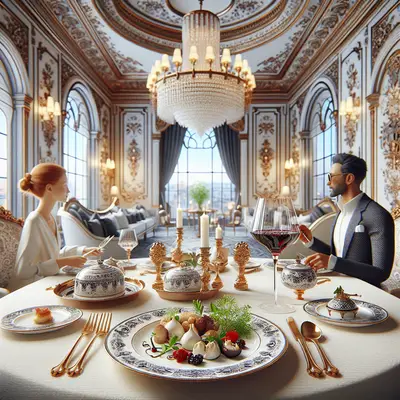
For seasoned travelers, the reservation confirmation is only the beginning; the true luxury lies in where you are placed within the dining room. The most refined restaurants understand that table allocation is a form of curation—one that blends privacy, vantage point, acoustics, and light into a single decision.
Premium travelers often know to specify preferences without sounding prescriptive: a corner banquette with a line of sight to the room, a table away from main traffic paths, or a seat that avoids backlighting for more flattering, softly diffused ambience. Hosts at leading establishments study guest profiles and past visits; your request for a quiet corner on a business trip may yield a more animated, central vantage point on a celebratory return.
The geometry extends beyond mere placement. Distance between tables, ceiling height, and even the fabric density of chairs and drapes subtly shape sound and atmosphere. A room that feels “calm but alive” is rarely accidental—it is the product of design, acoustic engineering, and service rhythm. For the traveler attuned to such details, the experience begins the moment they are led across the floor and recognize, with quiet satisfaction, that someone has already thought three steps ahead on their behalf.
The Choreography of Service: When Precision Feels Effortless, Not Formal
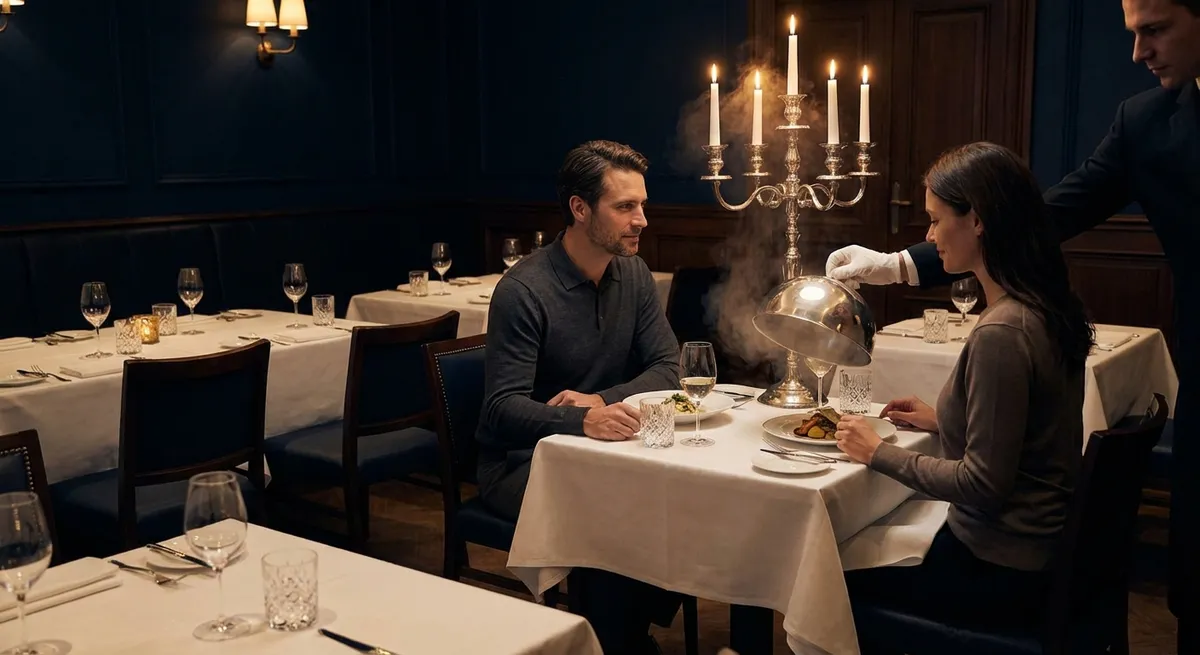
True luxury service is distinguished not by ritual but by invisibility. The most exclusive travelers recognize that at the finest restaurants, every movement around them has been rehearsed: synchronized plate drops, coordinated wine pours, and perfectly timed clearings that never interrupt a sentence. Yet the brilliance lies in how unforced it all feels, as if the room is breathing in tandem with the guests.
At this level, service teams absorb more than orders; they read tempo. A brief, relaxed pause between courses for a couple deep in conversation; a slightly accelerated pace for a solo traveler with a late departure; a rearranged sequence of dishes for a table arriving from a long-haul flight in need of something lighter to begin. The most elevated establishments build this flexibility into their systems, with kitchen and floor in constant, almost wordless communication.
For premium travelers, the marker of excellence is not merely attentiveness, but editorial judgment. The server who knows when to linger and when to vanish, the sommelier who senses that tonight calls for discovery rather than demonstration, the maître d’ who adjusts the arc of the evening without announcing it—these are the subtleties that turn a meal into a deeply personalized experience, and a restaurant into a trusted ally in an always-moving life.
Texture as Luxury: Beyond Flavor into Temperature, Weight, and Silence
In the upper echelons of fine dining, flavor is only the starting point. The truly memorable experiences are built on layers of texture—culinary, sensory, and even auditory. Luxury travelers who dine frequently around the world begin to notice the fine-grained decisions that separate an excellent dish from an unforgettable one.
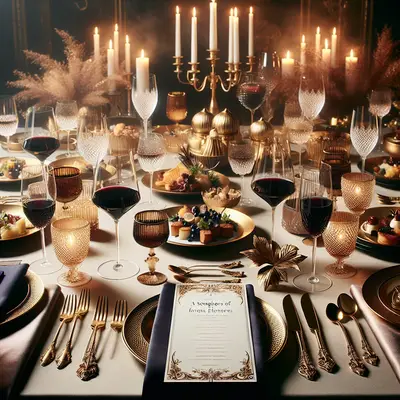
Temperature, for instance, is a quiet obsession. The imperceptible chill of a glass designed specifically for a particular white Burgundy; the exact warmth of a plate that keeps a sauce fluid but not scalding; a dessert served at a point where aromas bloom but structure holds. The same applies to weight: the balance of cutlery in hand, the density of glassware, the tactile feel of porcelain versus stoneware. These are choices that communicate a restaurant’s philosophy without a single word spoken.
Even silence is curated. The best rooms manage sound not to create hush, but to refine it: a level where voices can drop slightly, where the cut of a knife against porcelain is heard but not amplified, where the soundtrack—if there is one—recedes into a texture rather than a statement. For the elite traveler, such details are not extravagances; they are signals that a restaurant understands that luxury is often the sum of what you never have to think about.
The New Language of Pairing: From Cellar Depth to Purposeful Restraint
At the premium end of the dining spectrum, the conversation around wine has shifted from showcasing depth to exercising discretion. Luxury travelers—many of whom maintain their own serious collections—are less interested in being dazzled by labels and more attuned to the intelligence behind every pour.
The finest restaurants today recognize that the highest expression of a cellar is not its breadth, but its relevance. This might mean featuring impeccable producers from unexpected regions, highlighting off-vintage years that drink beautifully now, or offering half-bottles and precise by-the-glass pours from Coravin-preserved rarities. For travelers frequently in motion, this flexibility is invaluable; it allows meaningful engagement with a list without committing to an entire bottle on a night when an early departure awaits.
Equally important is the sommelier’s ability to interpret not just the menu, but the moment. Some evenings call for a vertical of a storied estate; others for a lean, mineral white that quietly supports a seafood course without insisting on conversation. Increasingly, guests are also exploring non-alcoholic pairings crafted with the same rigor—fermented teas, distilled botanicals, and temperature-layered juices that respect the dish rather than mimic wine. The luxury traveler looks less for spectacle and more for coherence: a pairing program that feels like a narrative, not a catalogue.
Reservation as Relationship: Turning Access Into Continuity
In a world where the most coveted dining rooms appear fully booked months in advance, the true privilege lies not in a one-off reservation, but in an ongoing relationship. Sophisticated travelers understand that access is rarely accidental; it is cultivated over time, through respectful engagement and a clear appreciation of the restaurant’s craft.
This does not mean overt displays of status or expectation. Instead, it looks like consistent communication, honoring cancellation policies, arriving on time—even when stepping off a delayed flight—and trusting the house with menu selections on return visits. Many leading restaurants maintain guest profiles that track preferences: favored tables, dietary nuances, preferred pacing, celebratory dates, even a guest’s tolerance for experimentation. Returning patrons, particularly those who travel globally, benefit from a continuity of care that makes each visit feel both familiar and newly tuned.
For the luxury traveler, this relationship extends beyond a single city. Recommendations from one respected dining room often open doors at another, whether within the same group or across continents. Chefs and sommeliers share notes; hospitality directors discreetly coordinate. Over time, a traveler’s name becomes a quiet credential—not for ostentation, but for trust. The reward is not merely access, but a global network of dining rooms where you are greeted not as a stranger, but as a known quantity, wherever your next departure lands.
Conclusion
For those who live much of their lives between terminals, suites, and boardrooms, fine dining is far more than a pleasant diversion. It is one of the few remaining spaces where time is decelerated with purpose, where attention is orchestrated rather than demanded, and where every detail—seat, silence, stemware, sequence—conspires to restore a sense of control and calm.
Luxury travelers do not chase tables for their notoriety alone. They seek rooms where geometry, service, texture, pairing, and relationship are handled with the sort of quiet mastery that needs no explanation. In these spaces, dinner becomes a private world—precise, enveloping, and exquisitely attuned to those who understand that the most refined experiences rarely announce themselves. They simply unfold, course by immaculate course.
Sources
- [The World’s 50 Best Restaurants – Official List](https://www.theworlds50best.com/) - Offers insight into global fine dining trends, restaurant philosophy, and service standards at the highest level
- [Michelin Guide – About the MICHELIN Guide](https://guide.michelin.com/en/article/about-the-michelin-guide/about-the-michelin-guide) - Details criteria and considerations used to evaluate excellence in food, experience, and service
- [Harvard T.H. Chan School of Public Health – The Nutrition Source: Dining Out](https://www.hsph.harvard.edu/nutritionsource/healthy-eating-plate/dining-out/) - Provides perspective on menu composition, portions, and broader considerations when eating at restaurants
- [Coravin – How It Works](https://www.coravin.com/pages/how-it-works) - Explains the technology behind advanced wine preservation systems often used in fine dining programs
- [British Council – Acoustics in Architecture and Design](https://design.britishcouncil.org/projects/2016/acoustics/) - Discusses how acoustics and sound management influence interior environments, including hospitality spaces
Key Takeaway
The most important thing to remember from this article is that this information can change how you think about Fine Dining.