Fine dining for the luxury traveler is no longer about ostentatious plates and choreographed service on display. It is about what doesn’t need to be said: a glass refilled before you look up, a dish adapted before you think to ask, a room that feels as though it has been privately tuned to your mood. In the most elevated dining rooms around the world, sophistication reveals itself in subtleties that rarely reach a menu or a press release. For those who travel well and dine better, understanding these nuances turns a meal into a quietly orchestrated privilege.
Below, five exclusive insights illuminate how the most discerning travelers read, navigate, and shape the world’s finest dining experiences—often before the amuse‑bouche ever arrives.
The Power of Pre-Arrival: When the Experience Begins Before the Reservation
For the truly elevated restaurant, the experience starts long before you sit down—often before the reservation is even confirmed.
The most sophisticated diners understand that high-end restaurants now operate in a realm closer to private clubs than public venues. A discreet email from your hotel’s head concierge, a brief call from your PA, or a direct note to the restaurant with a few carefully chosen details—dietary preferences, preferred pace of service, favored champagne house—invites the restaurant to design the evening around you.
Elite travelers know to use trusted intermediaries: luxury hotels, member clubs, or premium credit card concierge desks with established relationships. These channels often unlock coveted tables without the noise of public waitlists. At this level, it is not about “getting in” but about aligning expectations.
The finest establishments keep comprehensive guest profiles: where you sat last time, which vintage you finished, whether you preferred low lighting or a livelier room. Returning guests who quietly maintain a relationship—an annual visit, a thoughtful note to the sommelier, a follow-up thank-you through their hotel—find on their next arrival that preferences have been silently anticipated. The menu is not the beginning; it is the continuation of a conversation already in progress.
Reading the Room: How Elite Diners Choose the Right Dining Energy
Luxury travelers rarely ask for “any table.” They understand that a restaurant is not a single experience, but a constellation of micro-environments, each tuned to a different energy.
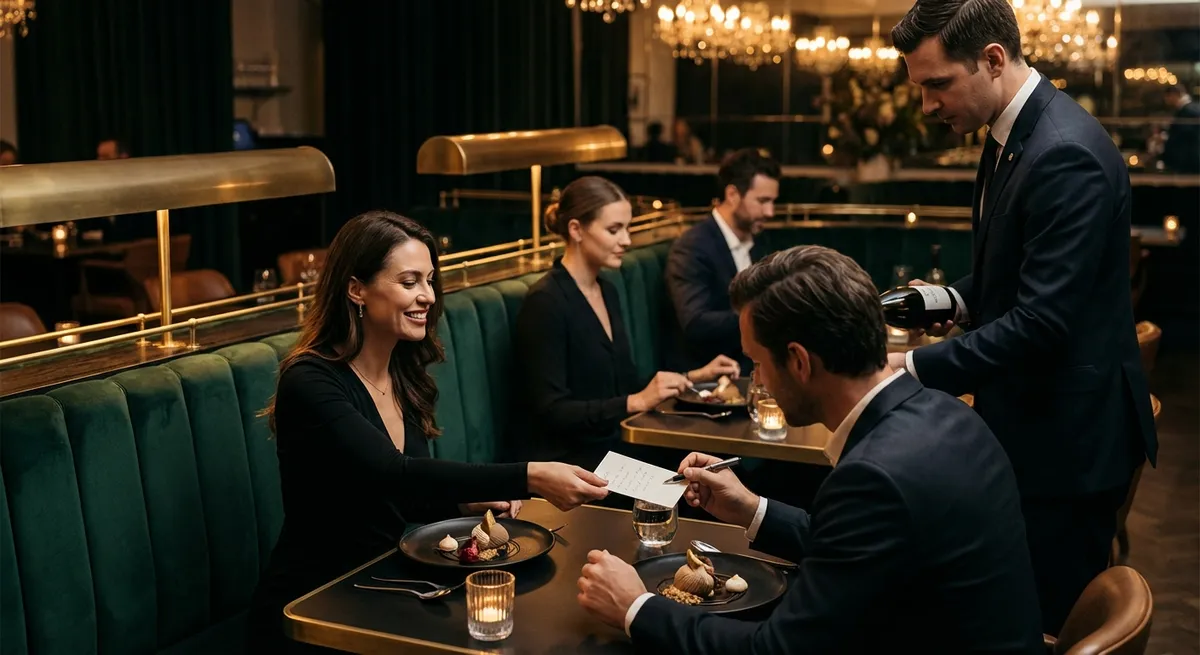
The most desirable table is not always the one with the best view; it is the one with the right degree of control. Corner banquettes allow private conversations and unobstructed service. A table at the edge of the room can offer a discreet vantage point for people-watching without feeling exposed. Seasoned diners often request a type of table rather than a specific one: “quiet corner, away from service stations,” or “near the kitchen pass for a more dynamic experience.”
Lighting matters as much as acoustics. Top restaurants now invest in sound design the way they once invested in silverware. The most refined guests notice whether they can hear the person across from them without raising their voice and whether the clink of glassware blends into a gentle soundtrack or cuts through it. Luxury travelers will adjust their reservation time accordingly: an early seating for a quieter, more contemplative meal; a later one when they want the room alive and humming.
The unspoken rule among the most discerning: the mood of the room should enrich the flavor of the evening as subtly as a great wine pairing. A table is chosen not only for its location, but for the kind of night it promises.
Beyond the Menu: The Private Art of Off-List Experiences
At the highest levels, the most memorable dishes are often the ones you never saw printed.
Luxury travelers recognize that the menu is a starting point, not a boundary. For frequent guests or those arriving through a trusted introduction, many restaurants are open to creating off-menu experiences: a sequence of smaller courses to accommodate a late lunch, a spontaneous tasting built around a particular ingredient in peak season, or a bespoke progression to mirror a treasured bottle from your own cellar.
The key is restraint and respect. Instead of asking for something “special” in vague terms, elite diners provide a refined framework: preferences, constraints, a desired level of adventure. “Seafood-forward, no shellfish, open to raw preparations, moderate portion sizes,” tells a chef both what is possible and what will feel truly tailored. In return, the kitchen may unveil their most intimate work: a dish tested for months, a limited-quantity ingredient, or a preparation too subtle for the broader à la carte crowd.
Many of the world’s great restaurants also guard quiet, internal menus: late-harvest vegetables from a nearby farm, limited-availability game, or experimental desserts not yet released to the wider public. The guest who approaches the evening as a dialogue rather than a demand often finds the restaurant responding with something rarer than luxury: genuine creative trust.
The Sommelier’s Hidden Suite: From Cellar Whisperer to Journey Curator
To the luxury traveler, the sommelier is not a salesperson—it is their most valuable co-conspirator in the room.
At this level, wine service is less about labels and more about narrative architecture. Discerning guests share contextual details rather than simply pointing to a price bracket: whether this is a celebratory evening or a quiet business dinner, whether the meal should stay nimble and crisp or slow and meditative, whether they prefer discovery over familiarity. The sophisticated request is concise yet evocative: “Old World elegance, restrained oak, nothing too showy—wines that reveal themselves slowly over the course of the evening.”
Elite diners also understand that the cellar holds layers not seen on the printed list. Back-vintage allocations, small-producer parcels, or wines off-limit to casual requests may quietly appear when trust and rapport have been built. A guest who treats the sommelier as a collaborator—asking thoughtful questions, engaging with the story behind a region, respecting the integrity of pairings—often finds themselves guided into the most private corners of the cellar’s personality.
Increasingly, the refined traveler also asks about non-alcoholic pairings with the same seriousness reserved for wine. At the world’s leading restaurants, house-fermented juices, infusions, and teas are being crafted with as much precision as grand cru selections. Opting for such pairings is not a compromise; it is another lens through which to view the chef’s imagination.
The Art of the Exit: How Discreet Travelers Turn One Dinner into a Legacy
For luxury travelers, the final course is not dessert—it is memory, and how elegantly it is carried forward.
The most sophisticated guests understand that the end of the meal is a quiet negotiation between privacy and continuity. They might request a printed copy of the menu annotated with wine pairings, or a brief note of the chef’s signatures to share with a private assistant or travel journal. When appropriate, they ask for a card from the manager or sommelier and offer their own contact, creating a direct channel for future visits—without forcing familiarity.
Gracious departures are a currency in this world. A simple, specific acknowledgment—thanking the sommelier for a particular pairing, or the host for remembering a seating preference—signals that the details were noticed and valued. Many elite travelers follow up through their hotel or a brief email the next day. In an industry where staff move between global capitals and iconic dining rooms, those who remember you may one day welcome you in another city entirely.
Over time, this creates something beyond access: a private constellation of dining rooms around the world where you are not just a name on a reservation, but part of an ongoing narrative. The table you sit at in Tokyo is subtly shaped by the relationships you cultivated in Paris, New York, or Copenhagen. The most privileged form of fine dining is not about being recognized publicly—but about being quietly understood, anywhere.
Conclusion
For the truly discerning traveler, fine dining is no longer a spectacle to be observed; it is an ecosystem of relationships, quiet codes, and meticulous decisions made long before and after the plates touch the table. From pre-arrival choreography to the invisible architecture of the room, from off-menu confidences to cellar conversations and carefully curated exits, the rarest luxury is intentionality.
When you understand these unspoken dimensions, each restaurant becomes more than a destination—it becomes a finely tuned instrument, ready to play to your particular frequency. In that space, a meal transcends its courses, and dining turns into what it was always meant to be at its highest level: a private dialogue between your taste and the world.
Sources
- [The World’s 50 Best Restaurants – Official List & Insights](https://www.theworlds50best.com/) – Provides a global overview of leading fine-dining establishments and evolving trends in premium gastronomy.
- [Michelin Guide – Official Website](https://guide.michelin.com/) – Authoritative source on top-tier restaurants worldwide, including insight into service standards, wine programs, and dining-room experience.
- [Harvard T.H. Chan School of Public Health – The Nutrition Source: Dining Out](https://www.hsph.harvard.edu/nutritionsource/healthy-eating-plate/dining-out/) – Offers research-backed perspectives on dining practices and how chefs and diners approach menu composition and preferences.
- [Cornell University School of Hotel Administration – Hospitality Research](https://sha.cornell.edu/faculty-research/centers-institutes/cihler/research/) – Academic insight into hospitality management, guest profiling, and service design in high-end restaurants and hotels.
- [Forbes Travel Guide – Restaurant Ratings & Features](https://www.forbestravelguide.com/restaurants) – Curated profiles and evaluations of luxury restaurants, focusing on service, ambiance, and the expectations of high-net-worth travelers.
Key Takeaway
The most important thing to remember from this article is that this information can change how you think about Fine Dining.