In the realm of luxury travel, the most memorable meals are rarely the ones everyone is talking about. They are the dinners that feel almost off-record—quietly orchestrated, deeply personal, and exquisitely attuned to place. For the Jet Ready traveler, fine dining is not a reservation; it is a narrative in multiple courses, set against the backdrop of cities, coastlines, and cultures that reward close attention. This is not about chasing the most stars, but about cultivating the sharp eye, tuned palate, and discreet instincts that consistently lead to exceptional tables anywhere in the world.
Below, five exclusive insights that transform fine dining from a destination on your itinerary into a private, evolving ritual of global discovery.
1. Reading the Room: The Unspoken Language of Elite Dining Rooms
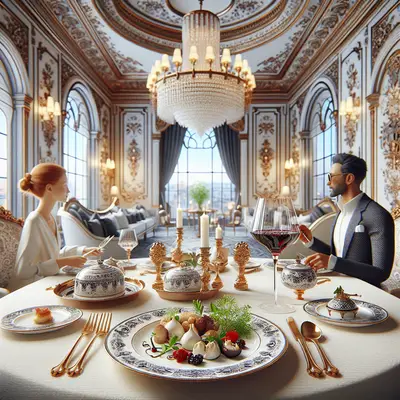
In the world’s most nuanced dining rooms, the true luxury is often found before the first course arrives. It is in the lighting—never harsh, never dim, just enough to flatter skin and glassware. It is in the acoustics—murmured conversation, not clatter. And it is in the choreography of service—unhurried, unintrusive, yet impossibly precise.
Luxury travelers learn to read these cues instantly. A well-curated room will have a subtle hierarchy of tables: the coveted corner banquettes for couples, the slightly elevated tables with sightlines across the room for those who appreciate people-watching without being watched. The most thoughtful restaurants anticipate needs without performance: a second napkin appears before you ask; a chair is angled almost imperceptibly to restore privacy; the pacing of courses adjusts to the rhythm of your conversation, not a fixed schedule.
Discerning guests also understand their own role in this quiet script. Arriving precisely on time signals respect for the kitchen’s timing. Understated attire—well-tailored, seasonally appropriate, never ostentatious—aligns with rooms where elegance is assumed, not announced. In the finest dining spaces, everything is designed so you almost forget you are being taken care of. When a restaurant achieves that, you are in the right place.
2. Beyond the Tasting Menu: How to Unlock a “Quiet” Off-Menu Experience
For seasoned travelers, a set tasting menu can feel both comforting and limiting. The secret? Many of the best kitchens maintain a “shadow menu” known only to regulars, concierges, and those who ask intelligently. It is not about demanding special treatment; it is about engaging the restaurant as a creative collaborator.
The conversation often begins before you land. A well-connected hotel concierge can discreetly introduce your preferences—an aversion to overly rich sauces, a fondness for pristine raw seafood, a curiosity for local heirloom ingredients—to the restaurant. When you arrive, a simple, respectful line such as, “If the chef enjoys tailoring experiences, we’re very happy to place ourselves in their hands,” communicates both trust and openness.
Once a rapport is established, courses may begin to deviate subtly from the printed progression. A limited-availability product—sea urchin just landed from a nearby island, seasonal white truffles, a rare varietal of local citrus—may appear unannounced. The sommelier may pour off-list bottlings, late-disgorged champagnes, or small allocations not formally published. The mark of true luxury is not the price tag, but the sense that your meal could not have been served to anyone else in exactly the same way.
For this to work, generosity must move in both directions. Expressing genuine curiosity about a dish, crediting a particular course as a highlight, or asking a thoughtful question about an obscure ingredient shows the team their efforts are noticed. In leading restaurants, this is often what turns a one-time reservation into a relationship.
3. Place on the Plate: Quietly Sourcing the World’s Most Authentic Tables
Luxury travelers are increasingly uninterested in fine dining that could be anywhere. The most compelling experiences anchor themselves deeply to their surroundings—coastal menus that taste of saline breezes and rock pools, mountain cuisine that borrows the forest’s scent, urban tables that distill the energy of their neighborhoods.
Identifying these addresses requires looking beyond rankings. Pay attention to how chefs speak about sourcing. Do they name specific farmers, fishermen, foragers, or producers? Do they reference micro-seasons rather than just “spring” or “autumn”? Restaurants truly in dialogue with their location will intelligently resist over-importing: a Parisian restaurant that celebrates the Atlantic and Mediterranean coasts; a Tokyo counter where nearly every element is tied to a single prefecture; a Mediterranean table that threads olive groves, local citrus, and small-scale fisheries through every course.
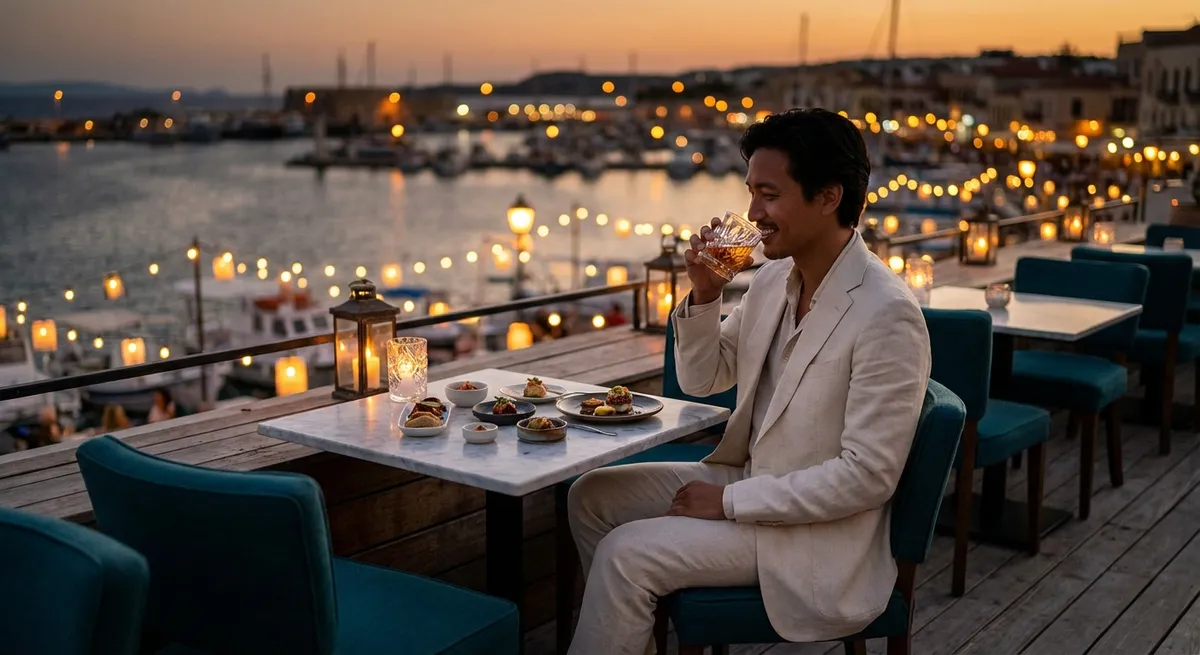
Discerning guests also consider the pre- and post-dinner geography. Exceptional fine dining is heightened by its approach and its exit. A coastal property accessible by boat at dusk, a city restaurant reached through a discreet courtyard, or a mountain lodge that requires a short walk under the stars—all of these build a sense of anticipation and memory. In a world of homogenized luxury, that felt specificity of place becomes the ultimate differentiator.
4. The Sommelier as Curator, Not Salesperson
For the well-traveled guest, the wine list is less a status catalog and more a story—of regions, families, climates, and philosophies. At the highest levels of fine dining, the sommelier is not simply there to validate your knowledge; they are an editor, skilled in revealing the bottle you did not know you wanted.
The most rewarding interactions begin with a concise, confident brief: approximate budget, preferred structure (fresh and mineral, or deep and textural), and level of adventurousness. Instead of anchoring the conversation on recognizable labels alone, mention regions or styles you’ve recently enjoyed—a structured Barolo with fine tannins, a saline white from volcanic soils, a mature Champagne with extended lees aging. This language signals that you are open to a more nuanced journey.
The finest wine programs often hide their most arresting options in sub-sections dedicated to small producers, back vintages, or experimental projects. Coravin or by-the-glass prestige pours allow you to experience world-class wines without committing to a full bottle—ideal for multi-course menus that cross multiple flavor landscapes. For those building a personal cellar, it is worth inquiring, discreetly, whether the restaurant can facilitate introductions to producers or recommend visits; relationships born in the dining room often translate into access on the ground.
Most importantly, a world-class sommelier will respect refinement over conspicuousness. Confident luxury today favors precision and quiet rarity—grower Champagne over ostentatious brands, aged Riesling over predictable pairings—choices that tell a deeper story, not a louder one.
5. Designing Your Own Global Fine Dining Ritual
For frequent travelers, fine dining becomes more meaningful when it evolves from a series of isolated events into a personal tradition—a rhythm that follows you from city to city. Consider developing a signature ritual that threads your experiences together.
This might be beginning every significant trip with a glass of grower Champagne at the bar before being seated, regardless of the country. Or always requesting a half-portion of the restaurant’s iconic dish alongside seasonal courses, creating a private library of comparisons over years. Some travelers maintain a simple leather-bound notebook where each entry captures a single, precise detail: the scent of grilled leeks in San Sebastián, the sound of hand-beaten copper pots in Kyoto, the way a small dining room in Copenhagen smelled of smoked butter at 8 p.m. in winter.
There is also a strategic dimension. Booking patterns often reward foresight: aligning major tasting menus early in a journey, when your palate is fresh and your schedule flexible; interspersing highly formal evenings with more relaxed but equally serious kitchens (wine bistros, intimate counters, chef’s tables with only a handful of seats). Over time, you will find that certain cities reveal themselves most clearly not through their landmarks, but through their tables.
For the Jet Ready traveler, the goal is not to collect reservations as trophies, but to craft a deeply personal map of the world through its most thoughtful dining rooms. Every return visit, every familiar maître d’, every remembered preference subtly rewrites what “being a regular” means—no longer tied to one city, but to a global network of spaces where you are quietly expected.
Conclusion
Fine dining, at its highest expression, is no longer simply the pursuit of perfection on a plate. It is a finely tuned dialogue between guest and place, between kitchen and traveler, between the seen and the almost unseen. For those perpetually in motion, the most luxurious meals are those that feel composed specifically for the moment you are in and the person you have become through the journeys you have taken.
Cultivated taste today has less to do with how many renowned restaurants you have visited, and far more to do with how you move through them—what you notice, how you interact, the relationships you build, and the rituals you carry with you from one city to the next. When approached this way, fine dining ceases to be a special occasion and becomes something rarer: a continuous, evolving expression of how you choose to experience the world.
Sources
- The World’s 50 Best Restaurants – Official List & Insights - Global reference for influential restaurants, trends, and chef-driven dining.
- Michelin Guide – Official Site - Authoritative resource on starred restaurants, bib gourmand listings, and fine dining standards worldwide.
- Institute of Culinary Education – Fine Dining Service Standards - Overview of service etiquette, pacing, and the hallmarks of refined restaurant hospitality.
- Harvard T.H. Chan School of Public Health – The Nutrition Source: Fish - Background on seafood sourcing, sustainability, and quality considerations relevant to high-end menus.
- Wine & Spirit Education Trust (WSET) - Educational institution providing structured knowledge about wine styles, regions, and service, informing sophisticated wine selections and pairings.
Key Takeaway
The most important thing to remember from this article is that this information can change how you think about Fine Dining.