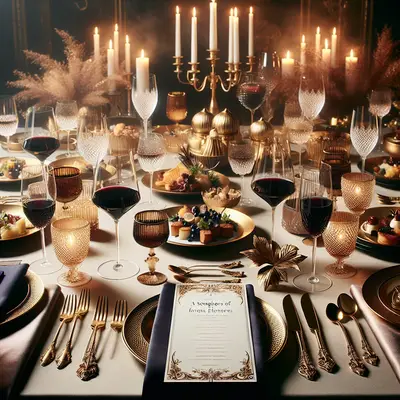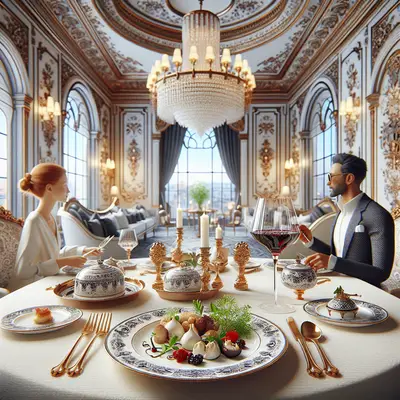
Luxury travelers have long moved past the simple promise of a “good table” and a long wine list. Today, the most discerning guests are looking for something quieter, more precise, and far more intentional—experiences where every detail has been considered, but almost nothing is shouted. Fine dining, at its highest level, has become less about spectacle and more about orchestration: a ballet of service, sourcing, design, and discretion that feels tailored to a single table at a time.
For those who travel well and expect even more from the table than from the suite, understanding these subtleties is essential. The finest restaurants in the world are no longer just where you book; they are how you navigate a city, decode a culture, and measure a destination’s true sophistication.
1. The Art of the Unlisted Experience
In the new echelon of fine dining, the most compelling moments are rarely printed on a menu. They live in the realm of the unlisted: dishes that appear without being ordered, off-menu wine pairings whispered rather than announced, and kitchen counter tastings that never appear on the website. These experiences aren’t “secret” in a theatrical way; they exist for those who know how to invite them.
Luxury travelers who build relationships with a restaurant—visiting annually, staying in touch with the sommelier, or booking through a trusted concierge—often gain access to what is essentially a parallel dining universe. Think: a late-night service after the last seating for friends of the house, a vintage pulled from deep storage because your name is now attached to a style the team remembers, or a dish the chef prepares only for returning guests. The unlisted experience is where true hospitality lives: it tells you the restaurant is not just serving the room, but serving you, personally.
2. Precision Pairing Beyond the Wine List
For years, fine dining defined expertise through the wine cellar. Today, the most forward-thinking rooms are quietly expanding that definition. Beverage pairings now move with the same confidence across sake, low-intervention wines, vintage Champagne, rare teas, and even non-alcoholic ferments with the terroir-level seriousness once reserved for grand cru bottlings. A world-class sommelier is no longer just a steward of grapes, but a curator of every liquid that touches the table.
Luxury travelers are increasingly asking for pairings that match their rhythm: low-ABV journeys that keep the evening clear and luminous; tea pairings selected from single-estate gardens; spirits trolley moments calibrated to the mood of the table, not just the course. At the highest level, the pairing becomes a dialogue: the sommelier learns not only your preferences, but your pace, your appetite, and your energy that evening. The result is not a parade of pours, but a carefully modulated arc—one that leaves you both indulged and intact for the next morning’s early departure.
3. The Silent Choreography of Service
Exceptional service in fine dining used to be synonymous with formality. Today, it is defined by a different luxury: invisibility. The finest dining rooms operate with an almost cinematic fluidity—your water glass refilled without interruption, your napkin refolded while you step away, your next course placed precisely as the conversation at your table naturally pauses. The staff reads body language as fluently as they read the ticket system.
Premium travelers recognize this choreography instantly. The true signal is not the number of staff on the floor, but how little you notice them until you need them. A discreet change of cutlery that anticipates your choice from the menu, a quietly produced reading light for a guest scanning a wine list in a dim corner, or a standby car subtly delayed by the restaurant so a final, unscheduled cheese course can be enjoyed unhurried. In the most refined rooms, service feels less like attention and more like intuition.
4. Architecture You Experience More Than You See
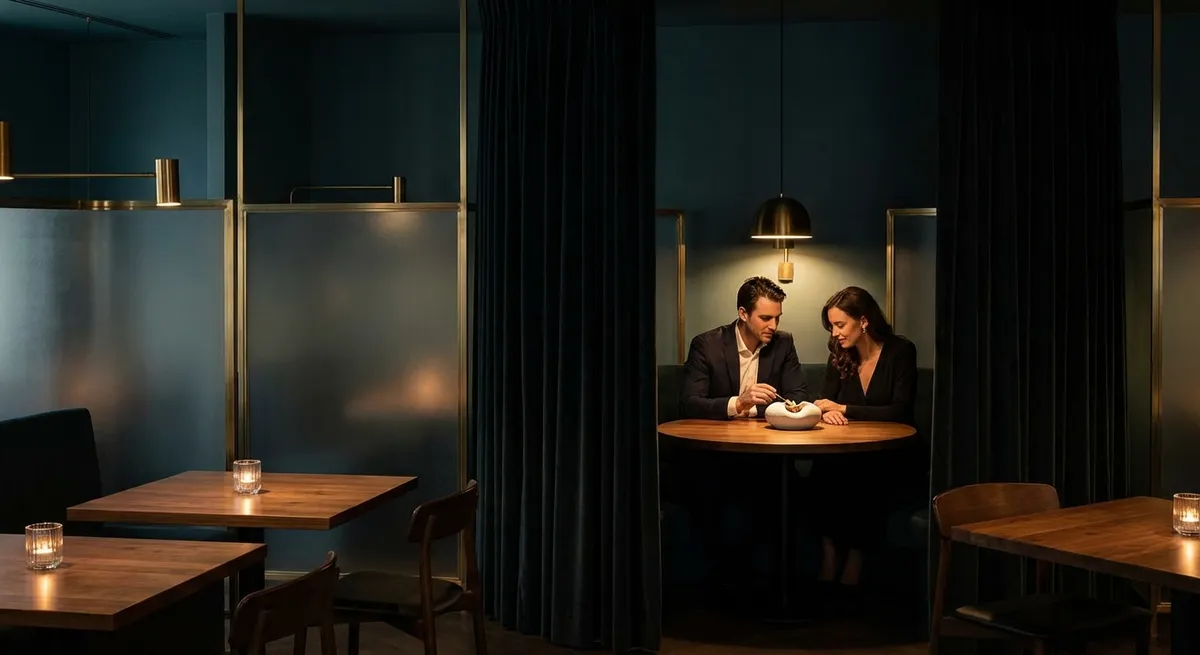
The décor of a fine dining room is no longer about obvious opulence. The most sophisticated spaces feel almost underdesigned at first glance—until you realize how precisely each element shapes your experience. Acoustics, for example, have become a new frontier of luxury: materials and layouts that allow every table its own private sound bubble, quieting the room without deadening its energy. You hear the hum of the restaurant, yet your conversation remains entirely your own.
Lighting is curated to flatter, not simply illuminate: soft, layered pools that make plates appear almost sculptural while faces remain warm and human. Sightlines are intentional; no guest is seated with a view of service stations, swinging doors, or harsh exterior light. Even seat depth and table thickness are considered, ensuring you can linger for three hours without ever shifting in discomfort. When fine dining design is done at this level, you feel it in your body before you register it with your eyes.
5. Time as the Rarest Ingredient
In the current language of luxury, time is the most precious element any restaurant can offer. For high-net-worth travelers who live on accelerated schedules, a meal that allows for genuine slowness is more valuable than an extra course of caviar. The most elevated restaurants understand this, structuring their entire experience around your pace rather than their turnover.
This might mean accepting a late arrival from a delayed jet without rushing you through the menu. Or it may appear as a tasting menu that can be expanded or condensed in real time when your appetite changes. In some ultra-discreet venues, your table is effectively “yours” for the evening—no second seating, no hint that the room is waiting for you to leave. Instead, courses can linger, conversations can deepen, and a business dinner can gently shift into something more personal without interruption. At this level, you are not dining in a time slot; you are inhabiting an evening that has been built around you.
Conclusion
Fine dining for the modern luxury traveler is no longer defined by a single metric—stars, rankings, or reservations secured months in advance. It is measured in subtler currencies: how deeply a restaurant remembers you, how thoughtfully it calibrates every detail to your preferences, and how effortlessly it shields you from the frictions of the outside world.
The most coveted tables now offer something rarer than spectacle: a feeling of being precisely understood, quietly accommodated, and gently surprised. For those who navigate the world through its finest rooms, these unseen layers are where true luxury begins—at the intersection of discretion, intention, and time.
Key Takeaway
The most important thing to remember from this article is that this information can change how you think about Fine Dining.