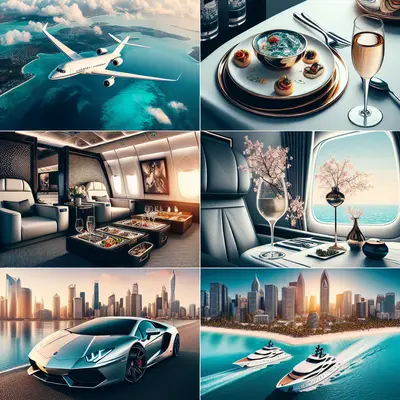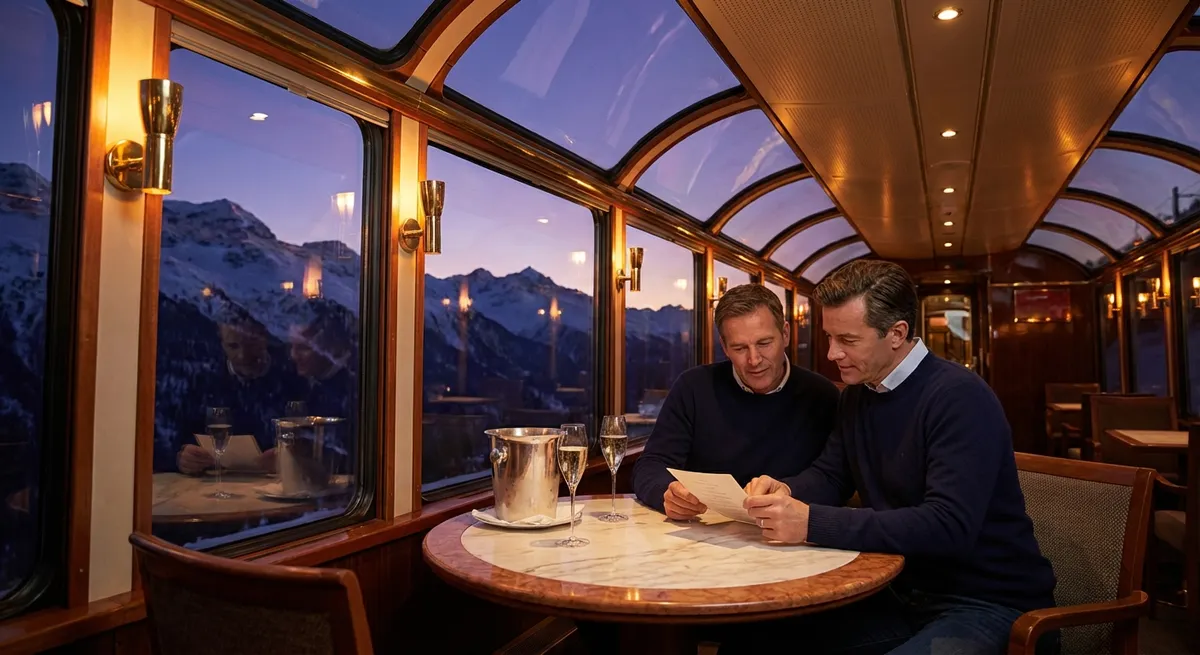
Luxury travel today is no longer defined by cabin class or hotel stars. It is a quiet, deliberate curation of moments—of light, sound, texture, and time—that feel unmistakably yours. The most discerning travelers are not chasing status; they are seeking precision: the right city at the wrong time is a missed opportunity, the right hotel without the right room is simply a compromise.
What follows is a map of subtleties—five exclusive insights that shape how sophisticated travelers now design their journeys, far beyond the obvious markers of “premium.”
The Silent Architecture of Time
For the truly seasoned traveler, time is the rarest currency—and itinerary design has become a form of architecture. The most coveted journeys are built not around destinations, but around temporal signatures: shoulder-season light in the Luberon, the four-day window between harvest and fermentation in Mendoza, or the exact week when Arctic ice softens enough for silent Zodiac landings, yet remains pristine.
Elite travelers increasingly work with specialists who build “temporal itineraries,” beginning with a calendar rather than a map. Flight paths are selected not only for efficiency but for circadian alignment—departures that allow natural sleep cycles, landings that avoid immigration rush hours, and transfers that eliminate unnecessary re-screening and exposure to crowded terminals.
There is also a renewed focus on temporal pacing: three nights per stop is increasingly seen as the minimum threshold for meaningful immersion, and five nights for any destination that demands a change in climate, culture, or cuisine. Rather than compressing four countries into ten days, refined travelers are asking a sharper question: What deserves my best hours, my clearest mind, my most attentive palate?
The luxury is not in seeing more, but in granting each place enough time to breathe.
The New Craft of Transit: From Cabin Class to Micro-Environment
The most discerning guests now treat every journey—whether private or commercial—as an opportunity to engineer a micro-environment that preserves performance and well-being. The question has shifted from “Which seat?” to “Which conditions?”
Cabin pressure, humidity, lighting, and noise exposure are now as critical as wine lists and amenity kits. Aircraft with lower cabin altitude and improved humidity are quietly prioritized to reduce fatigue and jet lag. Travelers who understand aircraft types will choose a specific configuration (for example, a 1-2-1 layout with direct aisle access and controlled light exposure) over a marginally faster routing.
The environmental choreography continues on the ground. Chauffeur transfers are selected not only for discretion, but for sound insulation, air purification, and connectivity—creating a protected corridor between airport, hotel, and city. Lounge use is no longer about buffet access; it is about quiet zones, controlled lighting, and the shortest possible distance between security, lounge, and gate.
The rarest luxury? Moving from home to hotel room with minimal exposure to fluorescent lighting, poor air, and unnecessary queues. For travelers whose time is measured in impact, the journey is not an intermission—it is a protected chapter.
Sourcing the Exceptional: Provenance as a Private Language
For the global elite, provenance has become the quiet code of discernment. It is no longer sufficient that a hotel is “beautiful” or a restaurant “highly rated.” The question is: Where does this come from, and who made it possible?
This manifests in subtle but potent ways:
- Choosing a boutique property where the owner’s family has lived for generations, and where each room tells a story of local craftsmanship.
- Favoring restaurants that work directly with nearby producers, allowing guests to visit the vineyard, olive grove, or market behind the plate.
- Electing experiences that illuminate origin—watching a kimono dyed in Kyoto, commissioning a handwoven rug in Oaxaca, or tasting sake with the brewer beside his fermentation tanks.
The most exclusive luxury is not simply access, but context. Knowing that a yacht’s chef has sourced sea urchins that morning from the very inlet where you swam, or that your tasting menu is built around a single day’s micro-season, transforms indulgence into narrative.
Provenance is also a form of responsibility. Discerning travelers are quietly directing their spending toward places where luxury and sustainability intersect—properties powered by renewable energy, restaurants that minimize waste while preserving heritage recipes, and operators that invest meaningfully in local communities. The question “Where is this from?” is increasingly followed by “What does this support?”
Quiet Personalization: Precision Without Performance
The most advanced form of personalization is not grand, performative gestures—it is the perfectly calibrated absence of friction. At this level, luxury feels less like being “treated” and more like being understood.
Consider the following subtle markers of true personalization:
- The hotel has pre-set room humidity because it remembers your preference from previous stays—and knows you fly frequently long-haul.
- Your in-room minibar contains still water at room temperature, not chilled, because you never drink it cold.
- Housekeeping has placed a discrete, gently scented linen spray beside the bed in a fragrance that complements your preferred perfume profile, not competes with it.
- The restaurant has already adjusted your tasting menu for your typical aversion to excessive salt and late-evening caffeine—without you having to mention it again.
The finest properties and operators now maintain sophisticated guest profiles: preferred pillow fill, light levels for turn-down, ideal room orientation (courtyard-quiet vs. city-view), even typical gym hours to avoid unnecessary staff disturbance. This is not about algorithms replacing instinct, but about intelligent systems supporting genuinely thoughtful hospitality.
Done well, personalization is nearly invisible. Nothing is announced. There is no spectacle. There is only the quiet, continuous sense that the world has been edited slightly in your favor.
The Art of the Deliberately Unshared Moment
Paradoxically, in an age of constant documentation, the ultimate luxury may be the moment that goes entirely unrecorded. The savviest travelers now draw a deliberate boundary between what is captured for the feed and what is reserved for memory alone.
This is reshaping how certain experiences are designed:
- Some high-end lodges and retreats now offer optional “camera-light” or “no-devices” zones—sunset decks, fire circles, or private viewpoints where guests are gently encouraged to simply be present.
- Private guides on safari or in remote landscapes discreetly ask, “Would you like this to be photographed, or would you prefer to just watch?”—normalizing the choice not to capture.
- Hosts create small, unscripted rituals—early-morning tea on a private terrace, impromptu piano in a nearly empty bar, late-night stargazing without artificial light—that feel too intimate to broadcast.
For the refined traveler, social media becomes a curated index, not a complete archive. The itinerary contains two parallel journeys: the visible narrative and the private one. The visible may be a checked-in hotel or a beautifully plated dish. The invisible might be the conversation with the chef at midnight, the walk through empty streets after the restaurant closes, or the moment of recognition between you and a bartender who remembers how you like your martini and when to leave you alone.
The new luxury is not only access to rare places, but ownership of experiences so deeply personal they resist translation.
Conclusion
Modern luxury travel is no longer anchored in uniform markers of prestige. It resides in nuance: the curvature of time across an itinerary, the micro-climate of a cabin, the story behind a simple bowl of soup, the almost-telepathic grace of personalization, and the decision to let certain experiences remain beautifully undocumented.
For those who travel at this level, journeys cease to be escapes. They become a refined extension of a life lived with precision—where every departure is not a break from reality, but a more considered version of it.
Sources
- U.S. Department of Transportation – Airline Consumer Protection – Provides official information on airline passenger rights, delays, and service standards that influence how premium travelers structure their routes and connections.
- International Air Transport Association (IATA) – Cabin Air Quality – Explains cabin pressure, humidity, and air quality considerations that sophisticated travelers factor into aircraft and route selection.
- Harvard Business Review – The Emotional Power of Travel – Explores how meaningful, well-designed journeys impact well-being and identity, aligning with the shift from status-driven to experience-driven luxury.
- Relais & Châteaux – Sustainability & Local Sourcing – Details how high-end hospitality brands emphasize provenance, responsible sourcing, and community engagement in premium experiences.
- UN World Tourism Organization (UNWTO) – Tourism and Sustainability – Offers insights into how discerning travelers increasingly consider sustainability and local impact when choosing luxury itineraries and properties.
Key Takeaway
The most important thing to remember from this article is that this information can change how you think about Luxury Travel.