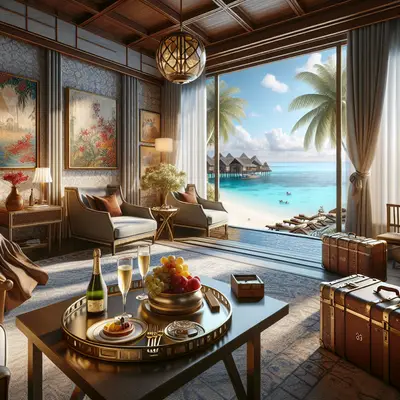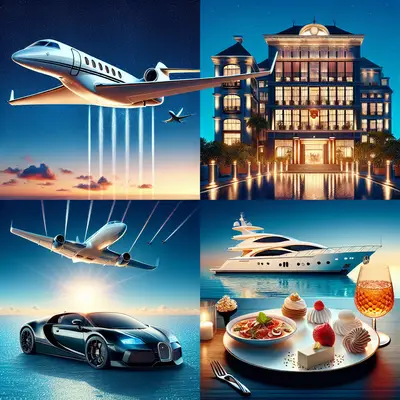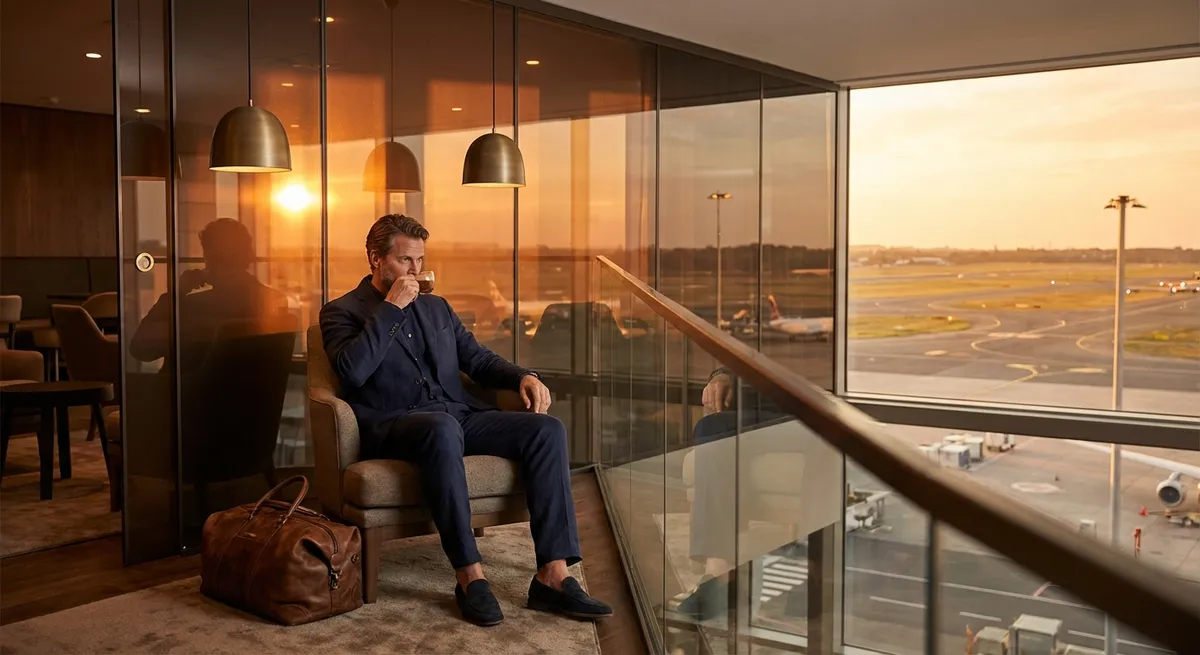
The new language of luxury is almost inaudible. It lives in choices that are rarely photographed, in itineraries that never touch an algorithm, and in the way a journey feels rather than looks. For the truly global, truly mobile elite, premium travel is no longer about more; it is about less—but better. Fewer touchpoints, fewer frictions, fewer spectators. What remains is precision, privacy, and a sense that every movement has been considered in advance.
Below, five exclusive insights shaping how discerning travelers quietly redesign the way they move through the world.
1. The Rise of Frictionless Time
For luxury travelers, the most coveted amenity is not a suite upgrade or an embossed luggage tag—it is unbroken time. The orchestration behind this is increasingly sophisticated, reaching far beyond priority security lanes and chauffeured transfers.
Elite flyers are pairing private aviation or top-tier commercial cabins with backstage airport services that dissolve the traditional terminal experience: private check-in, escorted immigration, and sealed-off lounges that function more like private members’ clubs than waiting rooms. At the hotel level, pre-arrival profiling means preferences are anticipated with near-clinical accuracy: blackout curtains set to a familiar level, preferred mattress firmness already waiting, minibar curated to an individual’s travel rhythm rather than generic “luxury” brands.
The new standard is a journey where no moment feels wasted or accidental. It’s the midnight arrival where check-in is completed en route, the key is digital, the room is pre-adjusted to one’s home time zone, and a jet-lag protocol is waiting—hydration, lighting, and room temperature tuned to circadian science rather than guesswork. Time is no longer something to endure between destinations; it is curated as deliberately as a tasting menu.
2. Curated Stillness in a Hyper-Visible World
As social media continues to encourage constant display, the most discerning travelers are moving in the opposite direction: toward experiences that resist documentation altogether. Privacy is no longer a single feature—like a gated villa—but a layered architecture of seclusion, anonymity, and discretion.
This may mean arranging arrival via private terminal and direct villa access, bypassing both lobby and elevator. It might involve properties that limit their digital footprint, where room layouts, views, and even certain facilities are never fully depicted online. At sea, it manifests in expedition-style yachts with low-profile itineraries, docking in quieter harbors and operating on flexible, lightly documented routes.
The true luxury is the ability to step out of the public record. Dinners that ban photography, wellness experiences that request guests leave devices behind, and stays where one’s presence is never announced, tagged, or cross-promoted are quietly becoming the gold standard. To the outside world, the trip barely existed. To the traveler, it was precisely because of that absence of visibility that it felt so completely real.
3. Precision Wellness as Travel Infrastructure
Wellness has shifted from indulgent add-on to core infrastructure for the constant traveler. The most advanced properties and services now build an almost clinical approach to wellbeing into the very spine of the journey, merging science, hospitality, and personalization.
Top-tier travelers increasingly undergo comprehensive health baselines before embarking on intensive travel seasons: genetic testing, metabolic profiling, sleep diagnostics, and stress mapping. These are not vanity data points; they are operational instructions for the journey ahead. Flight times are selected to match chronotypes, in-flight lighting and meal timing are modulated to protect circadian rhythms, and recovery days are built into itineraries as deliberately as business meetings.
At the destination, the spa is no longer the main event. Instead, one finds medical-grade therapies—contrast hydrotherapy circuits, hyperbaric oxygen sessions, infrared saunas, cold immersion, and breathwork guided by practitioners versed in both tradition and evidence. Nutrition is handled with the precision of a private chef working from a medical brief: glycemic control, anti-inflammatory ingredients, and functional botanicals integrated without sacrificing pleasure.
The deeper luxury lies not in being pampered, but in returning from travel objectively better—rested, recalibrated, and with measurable gains in performance and clarity, rather than the usual quiet exhaustion.
4. Quietly Tailored Access, Not Overexposure
Access remains at the heart of premium travel, but the most valuable kind has become more subtle and more selective. The era of over-programmed itineraries—every moment scheduled, every attraction “VIP”—is quietly ending at the top.
Today’s refined traveler wants access that expands their world without amplifying their visibility. That might mean a museum opened outside standard hours, not for a grand tour, but for the quiet of standing alone with a single work. It may be a restaurant that does not advertise chef’s-counter seating, but extends it to guests whose preferences and pace the team already knows from prior visits in other cities or countries.
On the ground, access has become about depth rather than spectacle. Private tastings with vintners who open unlisted vintages, atelier visits where designers discuss process rather than pose for press, or after-hours walking tours guided by historians rather than influencers or generic tour staff. The traveler is not the star of these moments; they are the privileged witness.
What distinguishes this level of access is its restraint. The most sophisticated experiences rarely appear on a public menu. They are negotiated through relationships, trust, and a shared understanding that discretion is as critical as the experience itself.
5. A Personal Aesthetic of Movement
For those who travel incessantly, movement itself becomes an aesthetic discipline. The way one packs, transitions, and occupies space is as considered as what one wears or where one stays. It is about coherence: every element of the journey, from luggage to lounge to onboard cabin, expressing a quiet, consistent language of taste.
This often begins with a radically edited travel kit. A single carry-on that works on both private jets and commercial first cabins. Textures that travel well—cashmere, fine merino, performance fabrics disguised as classic tailoring. Devices reduced to what is essential, each with a clear purpose, all arranged so that nothing feels improvised or frantic.
Beyond objects, there is choreography. Knowing precisely when to arrive to avoid both queues and spectacle. Moving through a terminal as if it were a familiar private space: no visible rush, no excess interaction, yet never appearing aloof. In the air, a routine that unfolds the same way every time—change of clothes, hydration, sleep protocols, media consumption—so that the body and mind are conditioned to treat even intercontinental shifts as controlled rituals rather than disruptions.
The ultimate marker of a premium lifestyle in motion is not that others notice it, but that everything feels internally aligned. The journey becomes an extension of one’s personal architecture: ordered, quiet, and exquisitely tuned.
Conclusion
The modern premium lifestyle is defined less by what is seen and more by what is felt: the ease of a day without logistical friction, the relief of real privacy, the renewed body after a demanding circuit of cities, the quiet power of being granted access without being placed on display. For luxury travelers who live at altitude—geographically, professionally, and socially—the true privilege is no longer in acquiring more experiences, but in designing better ones.
In this new landscape, every decision along the journey becomes a signal—not to the outside world, but to oneself—that time, health, and attention are being treated as the rarest currencies. And when travel reaches that level of refinement, the destination is only part of the story. The way you move through the world becomes the luxury.
Sources
- [U.S. Department of Transportation – Air Travel Consumer Reports](https://www.transportation.gov/airconsumer/air-travel-consumer-reports) - Data and insights on air travel trends, delays, and consumer experience
- [International Air Transport Association (IATA) – Future of the Airline Industry 2035](https://www.iata.org/en/publications/store/future-airline-industry/) - Long-term perspective on how premium air travel and passenger expectations are evolving
- [Harvard Medical School – Sleep and Health](https://www.health.harvard.edu/topics/sleep) - Evidence-based information on sleep, circadian rhythms, and strategies relevant to long-haul travel
- [Mayo Clinic – Jet Lag Disorder](https://www.mayoclinic.org/diseases-conditions/jet-lag/symptoms-causes/syc-20374025) - Clinical overview of jet lag and recommended approaches for mitigation
- [World Tourism Organization (UNWTO) – Tourism Data and Insights](https://www.unwto.org/tourism-data) - Authoritative statistics and analysis on global tourism and high-end travel patterns
Key Takeaway
The most important thing to remember from this article is that this information can change how you think about Premium Lifestyle.