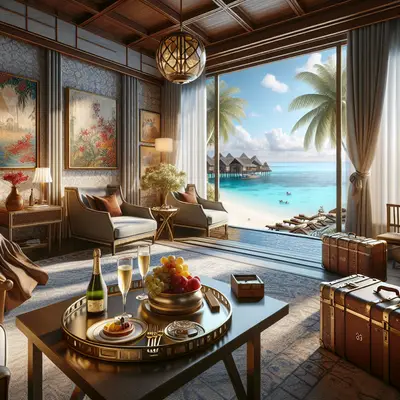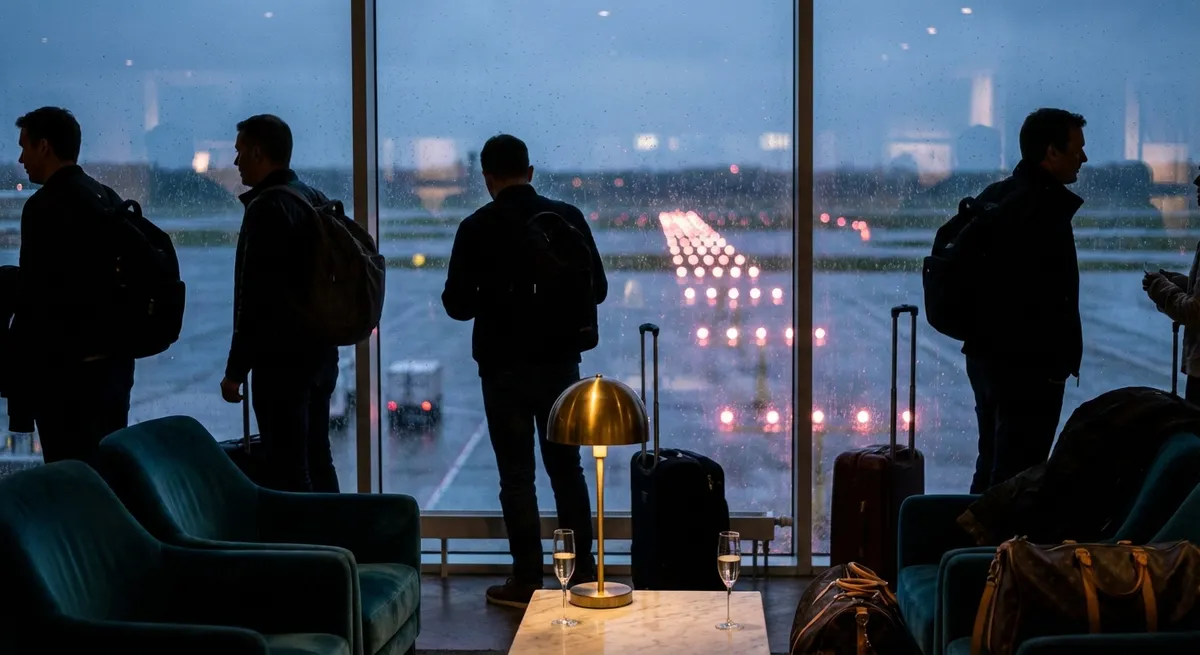
Luxury today is less about what can be seen and more about what can be felt—those measured, almost invisible calibrations that turn movement into ease, time into a private canvas, and service into something approaching telepathy. For the contemporary luxury traveler, the true markers of status are not logos or excess, but orchestration: how seamlessly a day unfolds, how quietly a door opens, how perfectly a moment aligns with an unspoken desire.
This is the new premium lifestyle in motion: discerning, low-volume, globally fluent, and uncompromisingly attuned to detail. Below, five exclusive insights that speak to how the world’s most sophisticated travelers are now shaping—and being shaped by—the highest tier of hospitality and experience design.
1. The Precision Itinerary: When Time Becomes a Bespoke Asset
At the top end of travel, an itinerary is no longer a schedule; it is an instrument, tuned to the traveler’s internal rhythm rather than the clock on the wall.
Premium travelers now expect journey design that recognizes energy curves and cognitive load. Mornings may be reserved for quiet, focus-heavy experiences—private gallery viewings, before-hours museum access, discreet meetings in architecturally significant spaces—while afternoons are structured as decompression corridors: spa rituals timed around circadian rhythms, unhurried lunches with local producers, or scenic transfers that feel more like cinematic interludes than logistics.
The difference lies in the micro-decisions: flights chosen as much for aircraft configuration and cabin layout as departure time; transfers choreographed to avoid peak traffic, airport bottlenecks, or disruptive layovers; even dining times adjusted to minimize jet lag. The true luxury is not “busy versus free,” but “purposeful versus accidental.” Every segment earns its place.
Increasingly, elite travelers are working with specialized travel designers who coordinate with executive assistants, wellness advisors, and even sleep consultants. The result is a precision itinerary that moves in sync with the traveler’s physiology and responsibilities, rather than asking them to bend to the tyranny of the timetable.
2. Quiet Personalization: The New Grammar of Service
Those at the apex of the market are no longer impressed by overt fuss. They are impressed when needs are met before they are fully articulated—and when that attentiveness is executed with restraint.
Quiet personalization is built on observation rather than interrogation. A preferred tea appears in the room after one mention, without fanfare or formality. The turn-down service does not simply adjust pillows; it subtly adds the firm support the guest improvised with a folded towel the night before. A driver who noticed an offhand comment about avoiding heavy scents arrives the next day in a freshly cleaned, unscented vehicle.
In the most advanced properties and services, teams are briefed across the entire guest journey. A preference noted at a beach club in one destination may be reflected months later at a sister property or on a connecting flight. The traveler experiences continuity; the systems behind the scenes quietly synchronize.
Technology supports, but does not dominate, this grammar of service. Discreet profile management, privacy-respecting preference tracking, and secure communication channels allow staff to anticipate rather than ask. The tone is never transactional. The interaction feels like an ongoing, wordless conversation in which the guest’s comfort and autonomy are the only metrics that matter.
3. Experience Curation: From Access to Editorial Direction
Premium travelers today are not looking to collect destinations; they are looking to refine narratives. They want a journey to feel edited, not crowded—a thoughtful sequence of scenes with balance, contrast, and emotional pacing.
Access is now the baseline: private appointments with artisans, closed-door viewings at wineries, intimate performances, backstage or pre-opening tours. What sets the highest tier apart is editorial discipline. That might mean structuring an evening so that a visit to a contemporary art space is followed not by another gallery, but by a low-lit bar where a bartender has designed a flight of cocktails inspired by specific works the guest has just seen.
This curation extends beyond the obvious touchpoints. Retail stops are no longer generic shopping excursions; they become precise discoveries: a discreet atelier rather than a flagship, a watchmaker in a courtyard rather than a branded boutique. Dining is not about chasing star counts but about context—tasting a chef’s interpretation of the local terroir from a table positioned at the perfect angle to both people-watch and remain protected from intrusion.
For luxury travelers, the value lies in how these experiences are stitched together. The ideal sequence feels cinematic: moments of intensity followed by exhale, public followed by intimate, urban texture followed by elemental calm. The result is a trip that lingers in memory not as a list of places, but as a cohesive, deeply personal story.
4. Spatial Intelligence: Crafting Environments That Think Ahead
Truly elevated travel is no longer just about beautiful rooms; it is about intelligent environments that collaborate with the traveler’s needs.
The most discerning guests notice details that many properties treat as afterthoughts: the height and responsiveness of a work surface; the quality and positioning of ambient lighting; whether curtains fully black out at sunrise; the acoustic integrity of doorways; how far one must walk between bed and bathroom at night. These are not trivialities—they dictate how restorative (or disruptive) a stay becomes.
High-end accommodations and transport are increasingly designed around spatial intelligence: layouts that allow for separate zones for work, rest, dining, and wellness, even within a single suite or cabin; intuitive pathways that avoid awkward crisscrossing; sightlines that protect privacy while preserving views. Lighting that automatically adjusts warmth according to time of day, climate controls that respond smoothly rather than abruptly, and soundscapes that subtly buffer city noise all contribute to an envelope of controlled calm.
The premium traveler now expects spaces that almost anticipate use: a luggage bench at the precise height of a Rimowa or Tumi case; easily accessible charging points where a hand naturally rests; a vanity set at the correct distance from light to avoid shadows; an in-room refreshment area that reflects personal taste rather than generic mini-bar offerings.
It is the convergence of architecture, ergonomics, and hospitality that signals to the seasoned traveler: you were considered at every line on this floorplan.
5. Strategic Stillness: The New Luxury of Deliberate Pause
In a world that encourages constant movement, those who can slow down—thoughtfully and on their own terms—possess a rare privilege.
Strategic stillness is not idleness; it is an intentional recalibration built into the journey. High-level travelers are increasingly designing “white space days” into otherwise dense itineraries: entire afternoons left unprogrammed, but structured with optional frameworks—a private terrace that becomes an open-air office, a quiet library corner reserved for several hours, a spa suite booked not for treatments but simply for access to silence, water, and light.
The premium lifestyle recognizes that peak performance, whether creative or executive, depends on intervals of disconnection. This might mean a morning where phones are left in a programmed lockbox while a sunrise hike unfolds; an evening flight selected specifically for its likelihood of uninterrupted sleep; or choosing a property where analog spaces—gardens, verandas, fireside lounges—are as refined as their digital amenities.
What distinguishes luxury in this context is control. The traveler is not forced into stillness by bad connectivity or lack of options. Instead, they are presented with an elevated menu of ways to step back: guided breathwork overlooking a city skyline, private yoga in a historic courtyard, or a simple, beautifully laid tea service with no agenda attached.
In the new hierarchy of experiences, the ability to protect and enhance one’s interior world—through excellent external design—is fast becoming the most coveted privilege of all.
Conclusion
For the modern luxury traveler, premium lifestyle is not a collection of spectacular moments but a continuous, meticulous refinement of how those moments are structured. The most coveted journeys are built on precision timekeeping without visible clocks, deeply personal service without overt display, curated experiences that feel like a well-edited film, spaces that think a step ahead, and intentional pauses that safeguard clarity and health.
As travel continues to evolve, those operating at the highest level—guests and providers alike—understand that true luxury is increasingly silent. It is found in what you do not have to ask for, what you do not have to endure, and what you no longer feel compelled to prove. The destination matters, but the design of the journey—and the quality of the stillness within it—matters more.
Sources
- [McKinsey & Company – The New Rules of Luxury Growth](https://www.mckinsey.com/industries/retail/our-insights/luxury-in-2023-resilient-with-new-risks) - Analysis of evolving luxury consumer expectations, including personalization and experience-led spending
- [Bain & Company – Luxury Goods Worldwide Market Study](https://www.bain.com/insights/luxury-goods-worldwide-market-study-spring-2023-update/) - Data on high-end consumer behavior, travel patterns, and the shift toward experiential luxury
- [Harvard Business Review – The Future of Customer Service Is About Relationships](https://hbr.org/2021/11/the-future-of-customer-service-is-about-relationships) - Explores how anticipatory, relationship-based service is redefining premium experiences
- [World Travel & Tourism Council (WTTC) – Travel & Tourism Economic Impact](https://wttc.org/research/economic-impact) - Provides context on global travel trends and the role of high-spend segments
- [World Health Organization – Healthy Travel and Jet Lag](https://www.who.int/news-room/fact-sheets/detail/travel) - Offers insight into managing fatigue and circadian rhythms, relevant to precision itinerary design and strategic stillness
Key Takeaway
The most important thing to remember from this article is that this information can change how you think about Premium Lifestyle.