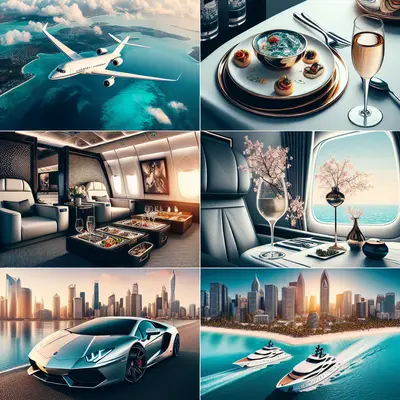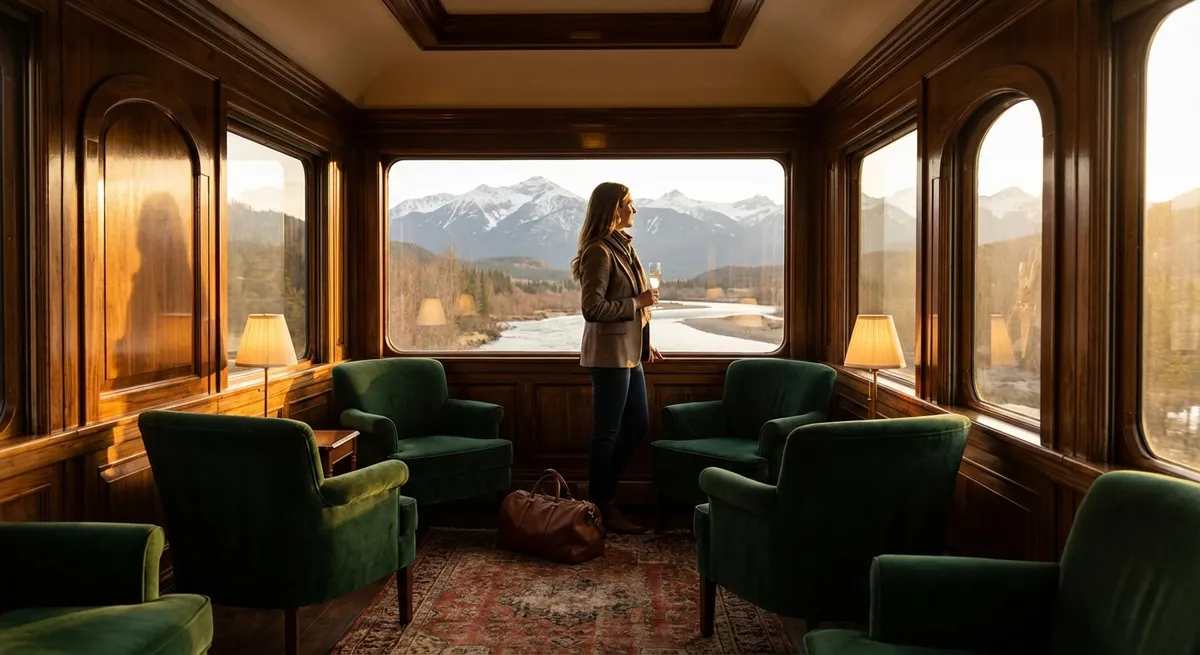
Luxury travel today is less about opulence on display and more about the artful orchestration of time, privacy, and sensory detail. The discerning traveler is not simply changing locations; they are curating states of mind. From aircraft cabins that feel like private sanctuaries to itineraries scripted around quiet access and rare encounters, the true premium is no longer “more,” but “better, deeper, and fewer.”
Below, five exclusive insights shaping how the world’s most sophisticated travelers now move through the world—and how to recognize the experiences that are genuinely worth your attention.
1. Precision Over Excess: Designing a Journey Like a Bespoke Suit
For the modern luxury traveler, the measure of a trip is no longer its length or price tag, but its precision. Every element—from departure time to pillow density—is tailored with the same care as a custom garment.
Rather than beginning with destinations, high-end travel designers increasingly start with personal cadences: when you think best, when you like to be unreachable, how your energy rises and falls over a 24-hour cycle. From there, flight times, transfer windows, and even in-flight dining are built to protect your rhythm rather than disrupt it.
At the top end of the market, custom flight manifests ensure travelers are insulated from unnecessary interactions; private lounges are pre-stocked with preferred newspapers, teas, or vintages; and hotel suites are configured in advance according to lighting preferences and temperature tolerances. The new standard is anticipation: the sense that the journey knows you well enough to remove friction before you encounter it.
This is not indulgence for its own sake. Precision unlocks a calmer, more lucid state of travel—one in which you actually have the cognitive and emotional space to absorb where you’ve gone, and why you chose it.
2. Private Skies, Public Silence: The Evolving Luxury of Airspace
Premium air travel is undergoing a quiet recalibration. It is no longer only about square footage and Champagne labels, but the invisible architecture of privacy and control.
Ultra-long-haul first-class and new-generation business cabins now function as micro-residences in the sky. Sliding doors, near-silent engines, circadian lighting, and bespoke bedding transform aircraft rows into private suites designed for restoration rather than survival. The most advanced cabins run full lighting programs that mimic your final destination’s time zone, while menus and hydration schedules are adapted to mitigate jet lag instead of simply entertaining your palate.
For those operating at the very top tier, private aviation further refines this experience. The true benefit is not just avoiding lines, but dictating every variable: departure minute, airport choice, inflight routing around turbulence, the ability to turn a flight into a working boardroom or a complete digital blackout zone.
The real luxury, however, is discretion. From unbranded vehicles delivering you directly to the aircraft steps, to crews trained in non-intrusive service and confidentiality, premium airspace is increasingly defined by how little it announces itself.
3. Access as a Currency: Experiences Where Money Alone Is Not Enough
The most coveted experiences in luxury travel are increasingly those that cannot simply be bought, but must be unlocked. Access—quiet, respectful, and often invisible—is becoming its own form of currency.
This might take the shape of an after-hours museum visit guided by a curator who helped assemble the collection, a private tasting in a vineyard normally closed to the public, or a morning in a historic theater while its orchestra rehearses. In many cases, these are not advertised offerings; they are the result of relationships cultivated by high-caliber travel advisors, concierges, and local fixers.
Elite travelers now evaluate a partner not just by the logos on their hotel roster, but by the depth of their local networks: which doors they can open, which queues disappear, and which “no” can quietly become a “yes” without spectacle or disruption. The focus is less on being seen in exclusive places and more on being present in extraordinary situations, often when no one else is there at all.
This tier of access demands more than budget. It requires time, trust, and respect—for local culture, for institutions, and for the people who make these spaces come alive. In return, the traveler is invited not just to observe, but to participate—albeit with a light footprint.
4. Intelligent Itineraries: Traveling in Alignment With Your Inner Clock
High-end travel used to equate to packing as much as possible into each day. The contemporary luxury lens reverses that logic: the most refined itineraries now move at the speed of your nervous system, not your calendar.
Experienced luxury travelers understand their own thresholds: how many social interactions, climate shifts, and time zones they can comfortably process in a given period. As a result, itineraries are built with “breathing architecture”—days that flex, routes that cluster destinations with similar atmospheres, and built-in recovery intervals that feel intentional, not like afterthoughts.
Sophisticated journeys often deploy “anchor points”—experiences that shape the emotional temperature of a trip. A sunrise over a remote landscape, a late-night classical performance in an intimate venue, or a single, exquisitely curated tasting dinner may become the gravitational center of a journey around which everything else is spaced to avoid overload.
Travel intelligence also means integrating wellness unobtrusively. Instead of overt “retreats,” travelers may opt for suites with advanced air filtration, access to clinical-level spa facilities, nutrition-aware in-room dining, or hotels that collaborate with medical or performance-wellness partners. The aim is travel that leaves you sharper and more attuned, not depleted.
5. Quiet Sustainability: The New Non-Negotiable in Luxury
For the sophisticated traveler, sustainability is no longer an optional gesture—it is a baseline expectation, albeit one that prefers understatement over slogans.
True luxury properties and operators are weaving environmental stewardship into their infrastructure rather than their marketing copy. This can look like high-end lodges that generate their own renewable energy, aviation partners investing in sustainable aviation fuel (SAF), or urban hotels that integrate biophilic design and advanced water systems without compromising comfort or aesthetics.
At the top of the market, travelers increasingly ask pointed questions: How are staff compensated and trained? How are local communities engaged beyond simple employment? Does conservation extend beyond the property line? Those accustomed to the best are now acutely aware that a pristine view is rarely an accident; it is often the outcome of decades of preservation, regulation, and delicate collaboration with local stakeholders.
The refined stance is not performative eco-rigidity, but thoughtful alignment: choosing partners whose practices quietly match your values, and whose long-term stewardship ensures that the places you love to visit will remain visitable—unrushed, unspoiled, and intact—for those who come after you.
Conclusion
Modern luxury travel is becoming less visible and more deliberate. It resides in the choreography you don’t see: the flight scheduled to protect your sleep, the museum door that opens after closing, the villa that feels immediately like a second skin, the hotel whose sustainability is felt rather than advertised.
For those who demand more from movement than mere transit, luxury is evolving into a discipline—an ongoing refinement of taste, time, and attention. The most exclusive journeys now are not simply the ones that take you farthest, but the ones that take you deepest, with everything unnecessary edited away.
Sources
- International Air Transport Association (IATA) – Sustainable Aviation Fuel – Overview of SAF and its role in the future of premium and commercial air travel
- Virtuoso – 2024 Luxe Report – Insights into current trends and preferences among high-net-worth luxury travelers
- Forbes Travel Guide – Independent evaluations of luxury hotels, restaurants, and spas, including emerging standards in service and wellness
- United Nations World Tourism Organization (UNWTO) – Tourism and Sustainability – Global framework for sustainable and responsible tourism practices
- Harvard Business Review – The New Luxury Experience: Creating the Ultimate Customer Experience – Analysis of how luxury consumers are redefining value, experience, and expectations across sectors, including travel
Key Takeaway
The most important thing to remember from this article is that this information can change how you think about Luxury Travel.