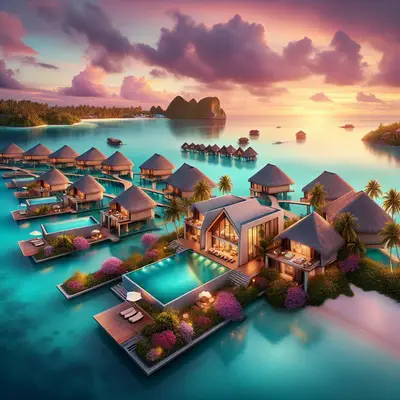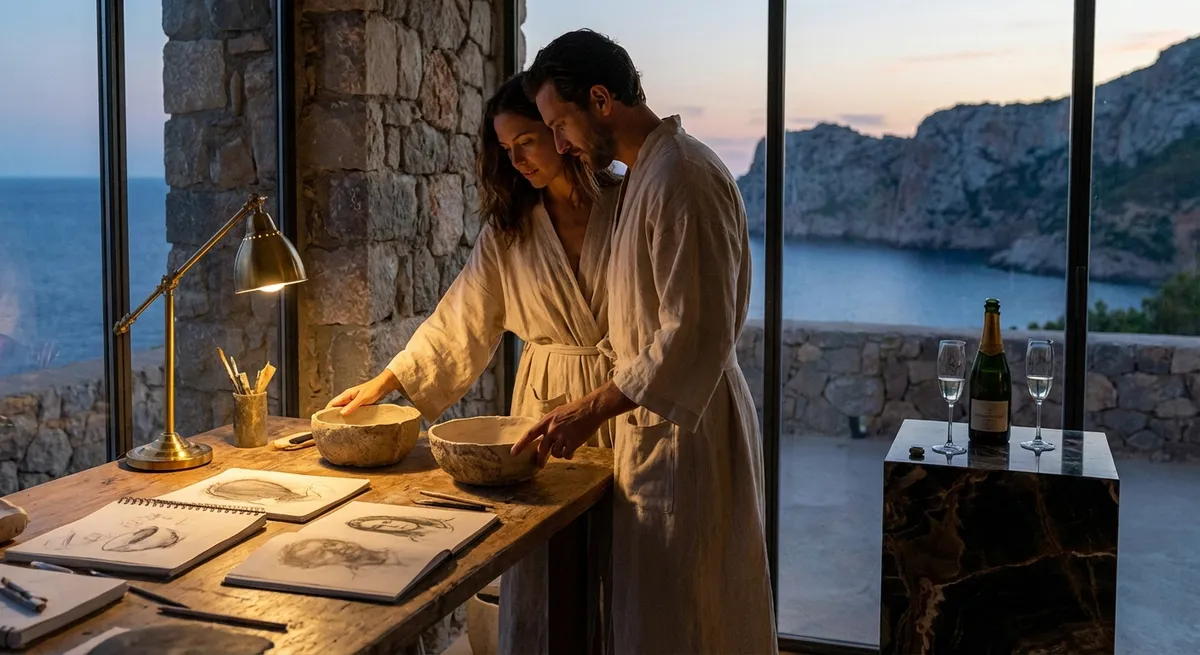
There is a quiet art to choosing an exclusive resort—and an even finer art to inhabiting it well. For the genuinely discerning traveler, luxury is no longer a matter of thread counts and views, but of orchestration: the way privacy, service, design, and time itself are composed into a stay that feels both effortless and unforgettable. This is not about extravagance on display; it is about experiences so finely tuned they feel as though they could exist only for you.
Redefining Exclusivity: From Access to Intention
Exclusivity has evolved from mere gatekeeping to something far more nuanced: the curation of intention. A truly exclusive resort is less a destination and more a point of view—an interpretation of how you might wish to live for a few days if all constraints were gently removed.
Instead of crowd-pleasing amenities, you find precision: a property whose scale has been deliberately kept small, whose guest list is quietly managed, and whose architecture is designed as much for seclusion as for spectacle. The atmosphere is calibrated to avoid bustle at all costs; even at peak occupancy, you sense that the most precious commodity being protected is your attention. Here, the mark of luxury is not how much is offered, but how little you have to think about. Every detail—arrival, movement, mealtimes, transitions between activities—is subtly choreographed so that your mind can linger on what you feel, not on what needs to happen next.
Insight 1: The Art of Arrival Is the True Signature
The most exclusive resorts understand that your stay begins long before you see the lobby. The arrival sequence is their calling card, revealing more about the property’s ethos than any brochure could.
Consider the quiet precision of pre-arrival contact: discreet requests for preferences that go beyond allergies and pillow types to understand your rhythms—when you like to wake, how you prefer to dine after a long journey, whether you want interaction or anonymity. The very best teams distill this into an arrival that feels almost cinematic.
Perhaps your transfer is not merely a car, but a carefully chosen conveyance aligned with the setting—a classic wooden boat gliding into a private cove, a hybrid SUV silently threading through vineyards, a seaplane landing at a private dock. The check-in process itself may be dissolved entirely, replaced by a welcome ritual conducted in your suite or on a terrace, documents handled seamlessly in the background.
For the luxury traveler, the insight is simple: pay attention to how a resort orchestrates your first 30 minutes. If they have invested thought there, you can be almost certain that the rest of your stay will bear the same level of intentionality.
Insight 2: Privacy as Design, Not Policy
True privacy is not achieved with “Do Not Disturb” signs; it is embedded in the very geometry and flow of a resort. The most sophisticated properties design seclusion into sightlines, pathways, and spatial relationships, allowing guests to feel enveloped rather than hidden.
Rooms and villas are often staggered or terraced not only for views, but to prevent direct lines of sight between neighbors. Public spaces are broken into micro-environments—alcoves, pergolas, semi-screened terraces—that feel like discovered corners rather than assigned seating. Landscaping is used not just for beauty, but as a gentle veil: a carefully placed palm, an elevation change, or a stone wall that offers shelter from the gaze without feeling enclosed.
This kind of privacy means you can move freely and comfortably, knowing that your presence is never on display. For those accustomed to high visibility in their professional lives, this sense of unobserved ease is often the most luxurious amenity of all. When evaluating an exclusive resort, study the floor plans and property map; the most refined addresses reveal their discretion not only in their marketing, but in their architecture.
Insight 3: Bespoke Service That Understands When to Vanish
At the pinnacle of hospitality, service becomes a choreography of presence and absence. What distinguishes an exclusive resort is not the number of staff per guest, but the emotional intelligence with which those staff appear and recede.
The finest properties train their teams to read micro-signals: the pace of your walk, the way you close a book, how long you linger over coffee. A good butler or guest experience curator knows when to suggest an experience and when to let silence reign. They may anticipate your needs—your morning tea order, your preferred yoga hour, your post-dinner fondness for a nightcap on the terrace—but they will deliver these gestures in a way that never feels rehearsed or intrusive.
This is service as conversation, not performance. Instead of repeated name usage and scripted warmth, you encounter understated professionalism, a quiet recognition that luxury is as much about what is withheld as what is provided. As a traveler, you can invite deeper personalization by sharing your preferences in broad strokes—energy levels, interests, boundaries for interaction—then allowing the team to interpret them with nuance.
Insight 4: Time as the Ultimate Luxury Material
In an exclusive resort setting, time is not filled; it is refined. The most sophisticated properties understand that their true canvas is your sense of pace. Rather than packing the schedule with activities, they design an arc to your stay—moments of immersion, interspersed with deliberate expanses of unclaimed hours.
Curated experiences are often offered not by the clock, but by the mood: a sunrise that is quietly suggested but never insisted upon, a chef’s table that appears as an invitation rather than a booking slot, a late-afternoon sail adjusted to the winds instead of a fixed itinerary. The sense of being rushed dissolves; instead you feel your days being subtly shaped, like a well-structured narrative with room for improvisation.
For the seasoned luxury traveler, the key is to think of a resort stay as a commissioned piece rather than a packaged escape. Rather than requesting a dense activity roster, describe how you want the days to feel—expansive, restorative, exploratory, celebratory—and allow the property to choreograph the tempo. The best teams will design your time as carefully as they design your suite.
Insight 5: Quiet Rarity in Place, Craft, and Culture
The new expression of exclusivity is not limited to remoteness or opulence; it lies in the quiet rarity of what cannot be easily replicated elsewhere. This may manifest as a location with limited access, certainly, but more importantly as a depth of connection to its setting and culture.
Truly exceptional resorts invest in singularities: collaborations with local artisans whose work is woven into the property’s identity; culinary programs that go beyond “farm-to-table” into genuine relationships with nearby producers; wellness offerings that draw from indigenous knowledge with respect rather than appropriation. These are not decorative references, but integrated narratives that you can feel in the textures of the linens, the ceramics on the table, the rituals in the spa.
Rarity also appears in the caliber of experiences: private access to cultural sites outside public hours, conservation-led encounters with nature that are strictly limited in scale, or one-of-a-kind events created solely for your stay—a candlelit classical performance in an old stone courtyard, a bespoke tasting led by a winemaker who rarely hosts outsiders. When choosing a resort, look for evidence of this depth: not just views and villas, but stories and partnerships that exist nowhere else.
Conclusion
At its highest expression, an exclusive resort is not a backdrop but an atelier of escape—a place where your days are shaped with the same care that a couturier gives to a single garment. For the luxury traveler, the true privilege is not just access, but authorship: the ability to inhabit spaces where arrival is an experience in itself, privacy is silently assured, service is keenly attuned, time is elegantly composed, and rarity is found in details that cannot be copied.
To travel this way is to exchange conspicuous luxury for something more enduring: a sense that, for a brief moment, the world has been arranged with extraordinary care, just for you.
Sources
- [Forbes Travel Guide – What Makes a Hotel Truly Luxurious?](https://www.forbestravelguide.com/about/ratings) – Discusses criteria and standards used to evaluate top-tier luxury properties and service
- [Condé Nast Traveler – Gold List of the World’s Best Hotels & Resorts](https://www.cntraveler.com/the-gold-list) – Curated selection of exceptional resorts with insights into what sets them apart
- [American Express Travel – The Rise of Experiential Luxury Travel](https://www.americanexpress.com/en-us/travel/discover/get-inspired/travel-trends-experiential-luxury/) – Explores evolving expectations of affluent travelers and the shift toward bespoke experiences
- [World Travel & Tourism Council (WTTC) – Luxury Travel Report](https://wttc.org/research/insights) – Research and analysis on global luxury travel trends and high-end consumer behavior
- [Cornell University School of Hotel Administration – Hospitality Research](https://scholarship.sha.cornell.edu/hosp_articles/) – Academic articles on hospitality design, service quality, and guest experience in upscale properties
Key Takeaway
The most important thing to remember from this article is that this information can change how you think about Exclusive Resorts.