There is a particular stillness that precedes a truly elevated journey. It’s not about spectacle or display, but about a choreography so carefully considered that each transition feels inevitable. For the discerning traveler, luxury is no longer defined by excess; it is defined by the absence of friction, the precision of timing, and the feeling that the world has subtly rearranged itself in anticipation of one’s presence.
What follows are five exclusive, often unspoken insights that shape how sophisticated travelers experience the world today—not as a sequence of stops, but as a continuous, curated state of being.
The Silent Lobby: Mastering the First Ten Minutes
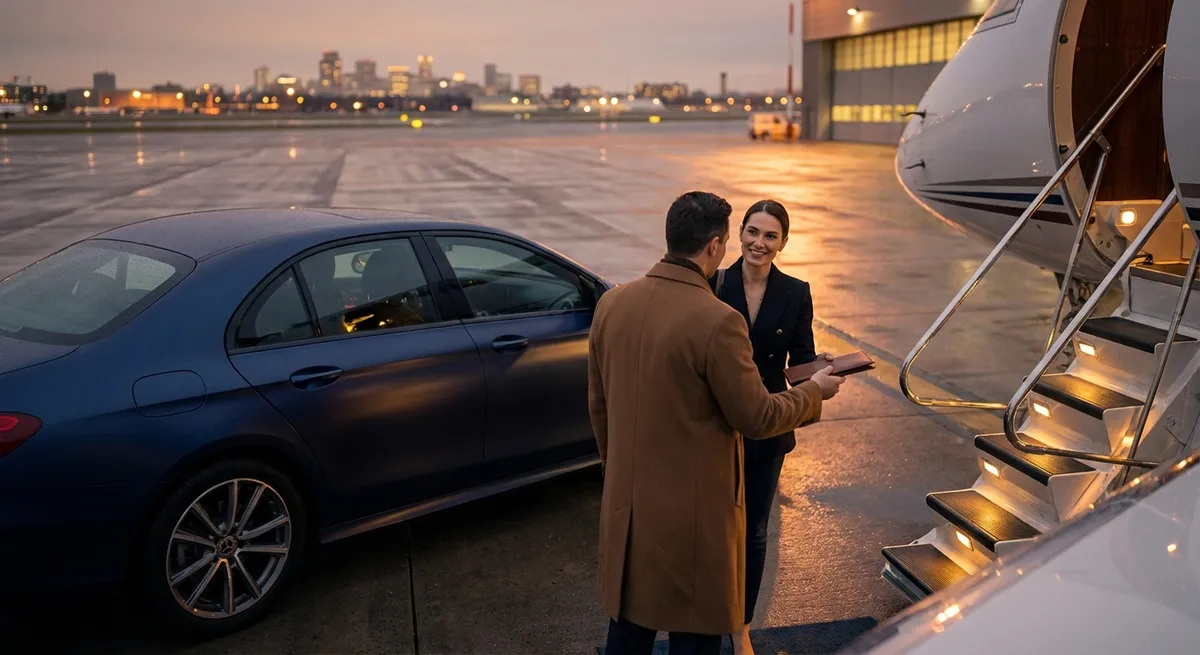
The first ten minutes after you step out of a car in a new city will often define your entire perception of a property. Refined travelers pay careful attention to this threshold moment, not for theatrics, but for what is conspicuously absent: no queues, no paperwork, no raised voices, no visible struggle behind the scenes. The premium experience begins when administrative hurdles have been dissolved long before you arrive.
This is why experienced travelers often share their expected arrival window, flight details, and preferences well in advance—not as a courtesy, but as an unspoken agreement: in exchange for meticulous information, they expect an almost preternatural smoothness on arrival. The best properties quietly preload passport details, pre-assign rooms based on light exposure and view preferences, and ensure that keys—or increasingly, digital credentials—are activated before your vehicle rolls to a stop.
The truly elevated arrival offers no grand declaration. A single, well-timed gesture—a glass of water at the exact temperature you prefer, a subtle acknowledgment of your previous stay, the absence of overt introductions—signals that the property is operating on a private frequency calibrated specifically to you. The world, for a moment, feels edited.
Precision Itineraries: When Time Becomes the True Luxury
For those accustomed to premium travel, the rarest luxury is no longer space or even privacy—it is unfragmented, intelligently protected time. The most coveted itineraries today are not overcrowded with experiences, but structured with the precision of a perfectly balanced composition: a deliberate rhythm of intensity and quiet.
Sophisticated travelers increasingly approach itineraries as a sequence of “anchored moments” rather than a list of obligations. A morning when a museum opens doors early, a late afternoon when a private tasting is scheduled just after the day’s last rush, an evening transfer that bypasses peak traffic by design—not coincidence. These details are not improvised; they are negotiated in advance with concierges, travel designers, and local experts who understand the city’s hidden tempo.
Instead of marathon sightseeing, the emphasis shifts to curated density: fewer experiences, but each one orchestrated for ideal light, sound, and pace. A sunrise over a coastal ridge arranged when the tides, weather, and crowd patterns align. A gallery visit during conservation hours when select works are handled or discussed in ways never available to the public. Time becomes less about duration and more about purity—minutes that are entirely yours, unshared, uninterrupted.
Private Infrastructure: The Hidden Framework Behind Ease
Behind every seamless premium journey lies a quiet architecture of infrastructure that most guests will never see. Experienced luxury travelers recognize that genuine ease is only possible when logistics are treated as a design discipline, not an afterthought.
This is why they increasingly favor properties and travel partners who own or tightly control key parts of the journey: private transfers coordinated with airside meet-and-greet services, preferred access to airport lounges that can flex for irregular operations, relationships with local authorities that smooth the edges of unexpected disruptions. It is not just about flying private or booking suites; it is about the reliability and discretion of the connective tissue between experiences.
Premium travelers ask different questions: How many access points does this property have, and which one offers the quietest ingress? How does the hotel handle major city events or sudden security constraints? What contingency planning exists for last-minute itinerary shifts? The answers reveal whether “luxury” is merely aesthetic or structurally embedded. The most sophisticated journeys feel effortless precisely because an invisible web of redundancy, priority access, and local influence is always on standby, yet never on display.
Scent, Sound, and Shadow: The Sensory Signature of True Refinement
Where conventional luxury leans on visible symbols—branded amenities, bold design, declared opulence—the new premium experience is defined by subtleties that exist at the edge of perception. Seasoned travelers pay attention to scent, sound, and light not as decorative elements, but as indicators of intent.
The lobby that shifts its ambient fragrance after dusk to a more subdued profile, the guest floor where sound is not merely reduced but actively shaped—airflow, door closures, elevator chimes, and corridor acoustics are all tuned for discretion. In suites, this sensitivity manifests in the way blackout blinds meet without trace gaps, how dimmers track the natural progression of outdoor light, how reflective surfaces are minimized to create an atmosphere of composed calm rather than visual noise.
Sophisticated guests often test these details intuitively: stepping onto balconies to gauge environmental sound, checking whether HVAC systems whisper or hum, noticing whether the nighttime lighting has been calibrated to protect circadian rhythm rather than overwhelm it. When a property succeeds, the effect is almost medicinal. You feel restored not because you were pampered in any ostentatious sense, but because your senses were given space to recalibrate in an environment of intentional quiet and precise control.
The Curated Network: People as the Highest-Tier Amenity
For the truly discerning traveler, the most valuable asset is no longer the room, the aircraft, or the view, but the network quietly activated on their behalf. The finest luxury experiences are now defined by who can be reached—and how quickly—when the guest expresses a particular interest.
This goes beyond the traditional concierge model. Premium travelers increasingly rely on travel advisors and property teams who maintain deeply personal networks of chefs, curators, pilots, artisans, and local insiders. A private atelier opening when the designer is usually off-site, an impromptu vineyard visit with the winemaker rather than a staff guide, a last-minute helicopter routing adjusted to capture a weather window over a particular glacier or reef—these are not simple “upgrades,” but manifestations of long-cultivated, trust-based relationships.
Discerning guests understand that these outcomes are rarely transactional in the conventional sense. They are the result of years of consistent behavior: reliability, respect for privacy, reasonable requests, and a reputation for discretion. Over time, a traveler’s own conduct becomes a kind of unwritten currency. Those who treat people as more than service providers—who remember names, follow up graciously, and move through spaces without disruption—often find that on their next journey, doors open a little earlier, tables become available where none existed, and experiences seem to materialize precisely at the moment they are desired.
Conclusion
The modern premium lifestyle in travel is not defined by how far one goes, but by how precisely the journey is tuned to the traveler’s inner cadence. It is a quiet conversation between guest and world, conducted through unspoken understandings: that time should unfold without abrasion, that details should reveal themselves only when needed, that the most powerful expressions of luxury are often the least visible.
For those who move frequently and privately, these five insights are less a checklist and more a philosophy. The destination may change—alpine airstrips, coastal enclaves, desert compounds—but the expectation remains constant: a journey where arrival is not an interruption of life, but its most refined continuation.
Sources
- [Forbes Travel Guide – What Makes a Hotel Truly Luxurious](https://www.forbestravelguide.com/about/ratings) - Background on the service and design standards that underpin high-end hospitality
- [Virtuoso – The Future of Luxury Travel](https://www.virtuoso.com/travel/articles/future-of-luxury-travel) - Industry insights into evolving expectations of affluent travelers
- [McKinsey & Company – The New Rules of Luxury](https://www.mckinsey.com/industries/retail/our-insights/the-new-rules-of-luxury) - Analysis of how luxury consumers define value, exclusivity, and experience today
- [Skift – The Evolution of Luxury Hospitality](https://skift.com/2023/06/15/the-evolution-of-luxury-hospitality/) - Exploration of how top-tier hotels and brands are rethinking service and guest experience
- [Harvard Business Review – The Future of Customer Experience](https://hbr.org/2016/11/the-future-of-customer-experience) - Frameworks for understanding seamless, anticipatory service relevant to premium travel experiences
Key Takeaway
The most important thing to remember from this article is that this information can change how you think about Premium Lifestyle.