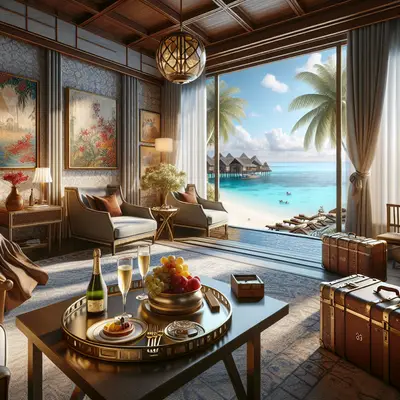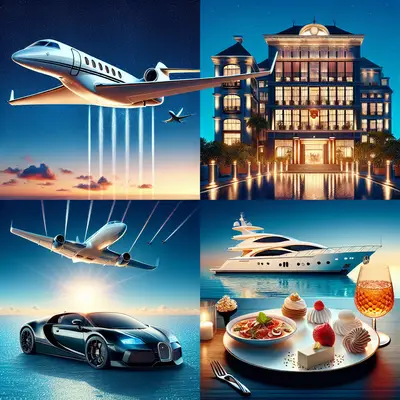
The most sophisticated travelers are no longer chasing opulence on display; they are curating lives in motion that feel composed, precise, and almost impossibly effortless. Premium lifestyle today is less about being seen and more about experiencing the world in ways that feel innately calibrated to one’s rhythms, values, and standards. It’s the difference between simply arriving and moving through the world as if it were quietly arranged around you.
Below, five exclusive, quietly powerful insights shaping how refined travelers are designing their journeys now.
Calibrated Time: Treating Your Itinerary Like a Bespoke Suit
For the truly discerning, time is no longer something to be “managed” but something to be tailored.
Instead of cramming multiple destinations into a single trip, luxury travelers are editing ruthlessly, often staying longer in fewer places. The day is shaped not around what is available, but around personal tempo: an 11:00 a.m. check-in arranged in advance, a mid-afternoon meeting framed by natural light, a late-night spa reserved exclusively for one’s use. This approach values transitions as much as the destinations themselves—private transfers that allow for a brief reset between city and countryside, or thoughtfully planned layovers that feel like intermissions, not interruptions.
These travelers work with concierges, travel advisors, and hotel guest relations teams to pre-arrange the invisible scaffolding: preferred pillow type, in-room aromatherapy timed to arrival, minibar curated like a personal pantry, even the route the car takes from airport to hotel. The itinerary becomes less of a timetable and more of a choreography—quietly supportive, never rushed, and always a half-step ahead of need.
Sourced, Not Shown: Quiet Obsession with Provenance
Modern luxury is deeply curious about origins.
Discerning travelers increasingly want to know where things come from: the hillside on which the hotel’s olive oil is produced, the exact vineyard plot behind the house pour, the atelier that crafted the glassware on the restaurant table. They ask about the fishermen whose catch appears on the tasting menu or the local family that supplied the linens. This is not performative connoisseurship; it is a desire for integrity and traceability.
Hotels and restaurants at the top of their game now act as storytellers of provenance. Wine lists are edited not for volume but for narrative relevance. Spas highlight regional botanicals, sustainably harvested and transparently sourced. Breakfast buffets quietly replace anonymous spreads with small-batch jams, single-origin coffees, and pastries from the city’s most coveted bakers. The experience feels richer not because it is louder or more extravagant, but because every element has a clear lineage that can be named, understood, and, ideally, revisited.
Precision Comfort: The New Language of In-Transit Luxury
For those who live between time zones, comfort has evolved into a sophisticated, highly personal science.
The most refined frequent flyers no longer rely solely on airline or hotel offerings; instead, they create a portable ecosystem of calm that moves with them. Custom-fit noise-masking rather than generic noise-cancelling, personal amenity kits with dermatologist-approved skincare for cabin air, and travel wardrobes built around breathable technical fabrics that still read as tailored are now the norm at the very top end.
Seat selection is treated as an art form that considers everything from airflow patterns to proximity to the galley. Sleep is optimized with pre-flight light exposure, in-flight meal timing aligned with circadian research, and post-landing routines that are as disciplined as any training program. At destination, wellness-oriented hotels and members’ clubs that offer high-quality gyms, recovery therapies, and evidence-based spa treatments are not luxuries but necessities.
Travel stops feeling like something to recover from, and begins to function as an unobtrusive, if mobile, extension of one’s ideal daily routine.
Intelligent Privacy: Designing a Life That Is Selectively Visible
Privacy in luxury travel is shifting from physical seclusion to intelligent curation of what is shared, and with whom.
This does not always mean remote islands or gated villas—though those remain desirable. Instead, it is about choosing environments where one can be known deeply by a few rather than broadly recognized by many. Long-term relationships with particular hotels, private aviation providers, and concierge services allow for a form of soft familiarity: your coffee preference memorized, your security concerns preempted, your need for anonymity respected without question.
Digital privacy is entering this realm as well. Savvy travelers are increasingly selective about which loyalty programs they join, where they log in, and how their data is used to “enhance” their stays. They ask about data storage, opt out of unnecessary tracking, and lean on trusted advisors rather than broadcasting their movements on public channels.
The result is a cocoon of selective visibility: the world opens its finest doors, yet the traveler chooses when and how to step into the light.
Meaning as a Luxury Good: Curated Depth Over Accumulated Stamps
The final—and perhaps most defining—insight of contemporary premium travel is a simple one: meaning itself has become the rarest commodity.
Sophisticated travelers are increasingly unwilling to invest time and resources into experiences that feel generic, even when wrapped in glossy service. Instead, they seek encounters that change their understanding of a place, or of themselves. That might mean a private visit with a museum curator before opening hours, a morning spent in the kitchen with a chef sourcing ingredients from local markets, or a guided walk through a neighborhood with an architect who helped shape its skyline.
Philanthropic and purpose-driven elements are no longer add-ons but integral to the trip: supporting local conservation projects, staying at properties that demonstrably contribute to their communities, or arranging learning experiences for their children that are as thoughtfully curated as any elite education.
In this context, luxury is not just what is experienced, but what lingers—what travels back home as perspective, not just as a stamp in the passport.
Conclusion
The premium lifestyle in motion today is defined less by spectacle and more by curation: of time, of objects and their origins, of personal comfort, of privacy, and of meaning. For those who live frequently in transit, travel becomes a finely tuned extension of how they wish to live everywhere—composed, intelligent, and quietly exacting. The true privilege is not simply crossing borders with ease, but doing so in a way that feels profoundly, unmistakably your own.
Sources
- World Tourism Organization (UNWTO) - Data and analysis on global and high-end tourism trends
- Virtuoso Luxe Report - Insights from luxury travel advisors on evolving preferences of affluent travelers
- Condé Nast Traveler – Future of Luxury Travel - Editorial perspective on how modern luxury travel is changing
- Harvard Business Review – The New Science of Customer Emotions - Explains how emotional drivers and meaning shape premium experiences
- Global Wellness Institute – Wellness Tourism - Research on wellness-oriented travel and its growing role in premium journeys
Key Takeaway
The most important thing to remember from this article is that this information can change how you think about Premium Lifestyle.