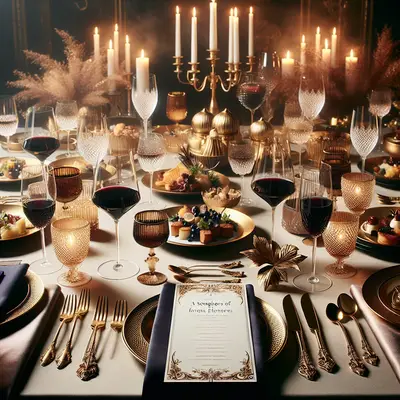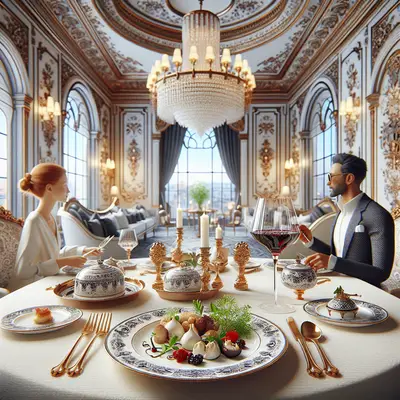
Luxury travelers do not seek dinner; they seek a perfectly paced sequence of moments that feels inevitable in hindsight. Fine dining at its highest level is less about excess and more about orchestration—how light, timing, sound, and service are composed around a plate. For guests accustomed to private terminals and villa keys that never touch a front desk, the true pleasure lies in recognizing (and quietly expecting) the details that separate a merely excellent restaurant from a world‑class experience.
Below, five discreet yet decisive insights reveal what is really happening beneath the linen—signals that your evening is being curated to the same standard as your most memorable journeys.
The Architecture of Time: How Elite Restaurants Design Your Evening
In serious dining rooms, the most valuable luxury is not a grand cru but your time—and how gently it is structured. Leading restaurants treat a reservation as a temporal blueprint, engineering the entire arc of your evening from the moment you are seated.
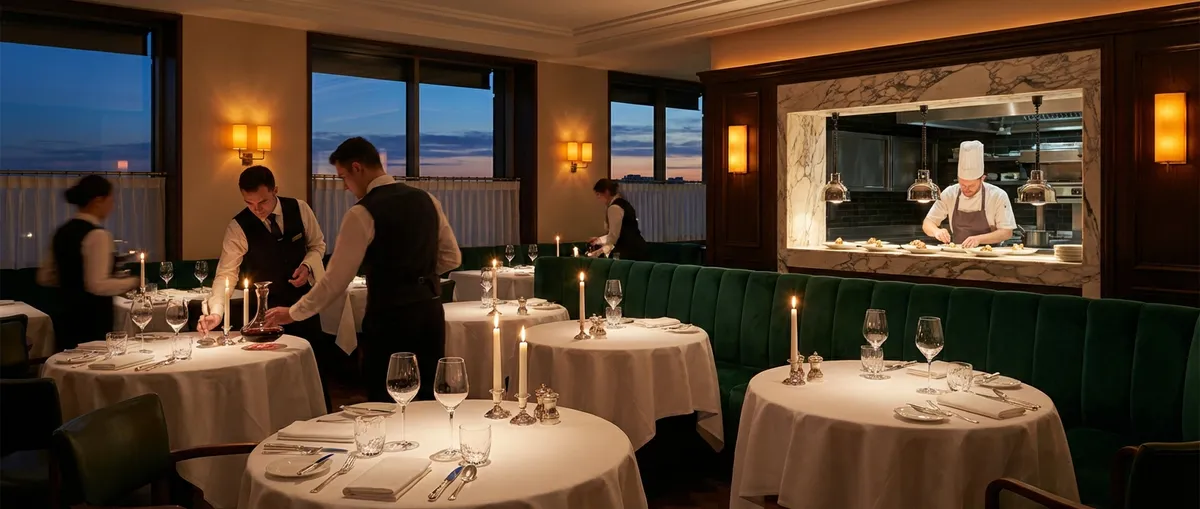
The host stand is effectively a control tower. Parties are staggered to prevent congestion in the kitchen at critical courses. Sommeliers are briefed on your expected dining duration, making it possible to pace pairings and decanting rituals in true alignment with your evening plans. This is why the best rooms rarely feel rushed, even when fully booked: service teams are working from an invisible timeline designed around you, not the table turns.
For luxury travelers, a clear signal of mastery is the restaurant’s ability to absorb unpredictability without breaking rhythm—an unexpected extra course, a delayed guest from the hotel lobby, a last‑minute switch to an extended tasting. When the pacing still feels unforced and seamless, you are in the hands of a team that understands time the way a great hotel understands privacy: as something to be engineered, not merely observed.
The Palette Beyond the Plate: Scent, Sound, and Light as Unspoken Courses
World‑class dining rooms edit as ruthlessly as they add. Beyond what arrives on the plate, the most sophisticated restaurants curate three environmental elements with near‑surgical precision: scent, sound, and light.
Fragrance is intentionally restrained. The absence of intrusive aromas—no heavy floral arrangements near the tables, no scented candles competing with the kitchen—protects the integrity of the wine and the detail in the food. Sound is tuned with the attentiveness of a recording studio: upholstery density, table spacing, and ceiling materials are all selected to maintain a low, warm hum that allows private conversation without revealing it.
Lighting, meanwhile, is deliberately layered. Instead of a single overhead wash, the room uses multiple sources—often concealed—to create a flattering warmth on faces while keeping tabletops bright enough to showcase texture, color, and plating. For the observant traveler, notice if the light subtly shifts as the evening progresses; some of the most discreetly refined rooms dim or warm the lighting through the night to match the evolving mood, particularly as desserts and digestifs arrive.
In such spaces, ambiance is not a backdrop. It is a parallel tasting menu—one you feel rather than chew.
The Guest Profile as an Art Form: How Staff Anticipate You Before You Arrive
At the upper echelon, service is not simply attentive; it is quietly predictive. The best dining rooms operate on an internal network of guest intelligence that would be familiar to any elite concierge team.
If you are a returning guest, core preferences—water temperature, typical dining pace, favored wine styles, allergies, seating choices—are often logged and shared during pre‑service briefings. If you are visiting from a notable hotel suite, flying in on a private itinerary, or have booked via a trusted concierge, the restaurant may have already confirmed key details before you sit down. The result is an evening that feels “just right” without you needing to request anything twice.
Even first‑time guests are profiled in real time. A skilled team watches how quickly you move through your first drink, whether you linger over the menu or close it decisively, how engaged you are with the room, and whether your conversation suggests business, celebration, or something more private. Done properly, this never feels invasive; it manifests as natural alignment. A shortened tasting menu quietly offered before curtain time. A more expansive cheese course suggested when your table is clearly in no hurry. A decanter appearing without fanfare the moment you nod at a more structured red.
For seasoned travelers, the true marker of a refined restaurant is not how well it responds to demands, but how elegantly it eliminates the need for them.
Precision on the Plate: Quiet Signals of a Kitchen at the Highest Level
Luxury travelers are well acquainted with caviar bumps and truffle shavings; these alone no longer define excellence. Instead, the most compelling kitchens signal their level through subtler forms of precision.
Temperature control is one. The finest fish and meats arrive at exact doneness across the entire cut, with no gradient of overcooking at the edges—a sign of technical mastery and thoughtful resting times. Sauces hold a glossy, almost mirror‑like sheen without breaking or forming a skin, even as conversation stretches between bites. Crisp elements remain crisp, because the kitchen has timed fire, plating, and service to the second.
Another quiet tell is restraint. A truly confident chef does not overload the plate with components to justify a price point. Instead, flavors are layered with clarity—acidity calibrated to elongate, not dominate; salt used to frame, not shout. Seasonal produce appears in forms that respect, rather than overwrite, its origin: a single luminous spear of asparagus with a complex yet whisper‑light emulsion, instead of a forest of distractions.
For the frequent flyer whose life is already saturated with abundance, this kind of controlled minimalism feels especially luxurious. It invites focus and grants something rare in modern travel: mental stillness, centered on one perfect bite.
The Afterglow: What Happens Once You’ve Left the Table
In the most sophisticated ecosystems, your fine dining experience does not end with the check presenter; it dissolves gracefully into the rest of your evening and, often, your future travels.
Post‑service, teams debrief in detail. Notes are updated on your preferences, pacing, and reactions to specific dishes or wines. If you are staying in a partner hotel, the restaurant may discreetly communicate with the concierge about how your evening concluded, ensuring that turn‑down timing, late‑night snacks, or next‑day breakfast recommendations are subtly adjusted. A seamlessly coordinated wake‑up call following a late tasting menu is not an accident; it is hospitality extended beyond the dining room walls.
Thoughtful follow‑up can be equally revealing. A personalized note from the sommelier with vintages to watch for on your upcoming trips, a quiet invitation to a future off‑menu experience, or a memory of your favorite course reinterpreted on your next visit—these gestures convert a single meal into an ongoing narrative.
For the luxury traveler, this afterglow is where the rarest value resides. The finest restaurants no longer exist as standalone destinations; they become recurring chapters in a larger, curated life—marked not by ostentation, but by continuity, memory, and a refined sense of being expected.
Conclusion
For those who travel well, the real luxury in fine dining is not spectacle, but alignment: of time, environment, service, and memory. The most accomplished dining rooms operate like private aviation—each movement choreographed around the guest, with complexity hidden beneath an appearance of effortless calm.
Recognizing these five quiet dimensions—time architecture, atmospheric design, guest profiling, precision on the plate, and the afterglow—allows you to select experiences that match the rest of your life in transit. In an age of constant exposure, they are the details that keep the very best tables feeling not simply exclusive, but deeply, deliberately personal.
Sources
- [Michelin Guide: What Makes a Restaurant Michelin Star‑worthy?](https://guide.michelin.com/us/en/article/dining-out/what-is-a-michelin-star) - Insight into the standards and criteria used to evaluate top restaurants
- [The World’s 50 Best Restaurants: About the Voting Process](https://www.theworlds50best.com/academy/voting/the-voting-system) - Explains how global experts assess and rank leading dining experiences
- [Harvard T.H. Chan School of Public Health – The Science of Taste](https://www.hsph.harvard.edu/nutritionsource/food-features/the-science-of-taste/) - Background on how flavor, aroma, and environment shape perception
- [Eater: How Fine Dining Service Really Works](https://www.eater.com/2016/6/7/11866394/fine-dining-service-restaurant) - Behind‑the‑scenes look at service structure and guest management
- [Cornell University School of Hotel Administration – Restaurant Atmospherics and Customer Experience](https://scholarship.sha.cornell.edu/articles/918/) - Research on how lighting, sound, and design influence the dining experience
Key Takeaway
The most important thing to remember from this article is that this information can change how you think about Fine Dining.