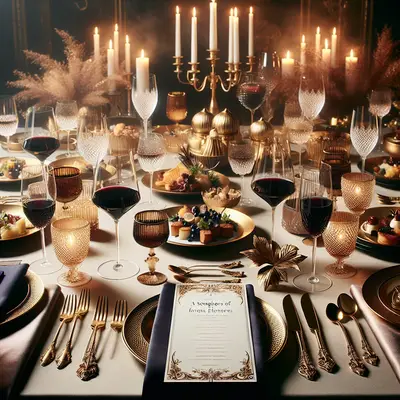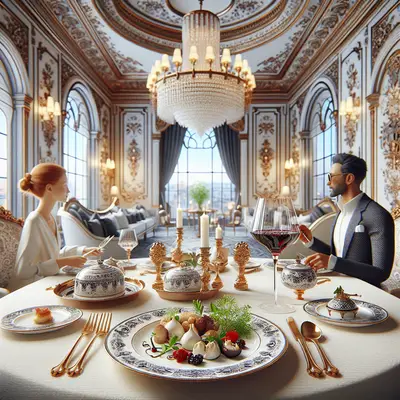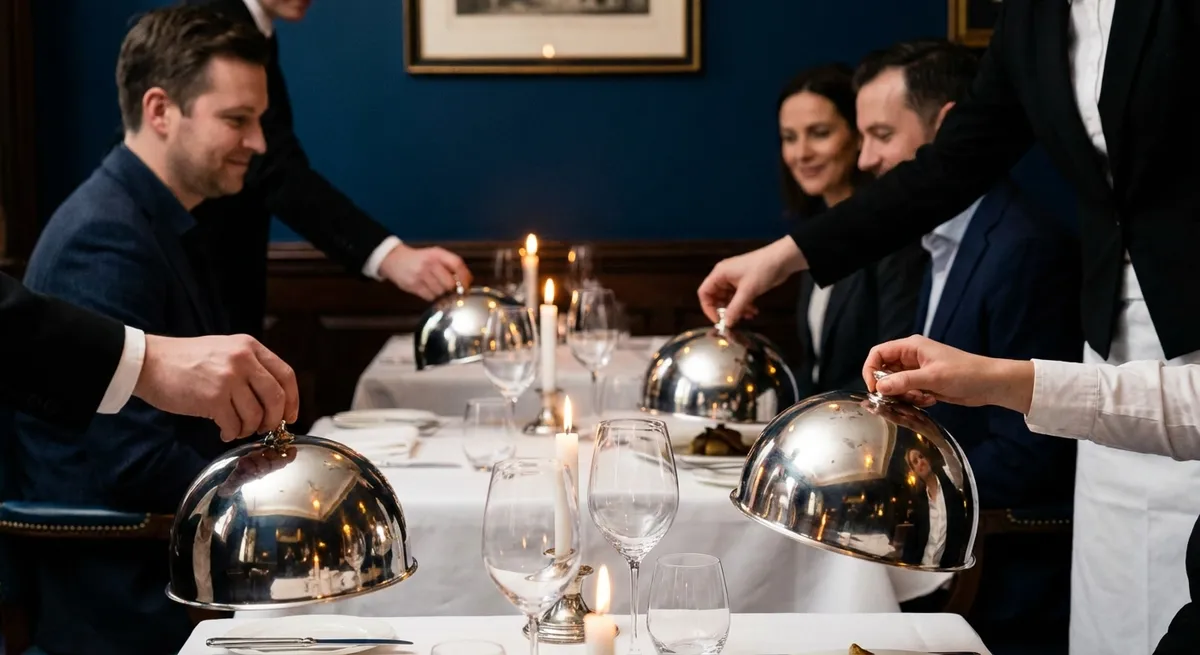
There is a moment, just before the first plate lands on the table, when a truly exceptional restaurant reveals itself. It’s not in the logo or the linens, but in the tempo of service, the quiet intelligence of the room, and the way your preferences seem anticipated rather than requested. For the luxury traveler, fine dining is no longer a matter of Michelin stars alone; it is a curated form of cultural immersion, a way to understand a city by the way it sets a table. What follows are five exclusive, quietly powerful insights that separate a pleasant dinner from an indelible experience.
Reading a Room Like a Connoisseur
Seasoned travelers know that the most important part of a dining room is not the view—it is the rhythm.
Observe the pacing in the first 15 minutes: the speed at which water is poured, menus presented, and the first interaction with the sommelier. An accomplished room moves with a kind of invisible choreography: staff glide rather than rush, no one appears idle yet no one appears hurried. Background sound is intentional—enough ambient noise to protect conversation, but never so loud that you need to lean in.
Notice also how the room manages light. Elevated spaces use layered lighting: warm pools on tables, subdued ceiling glows, discreet spotlights that flatter both food and faces. Harsh overhead lighting or wide patches of shadow are subtle indications that detail is secondary to spectacle.
For the luxury traveler, learning to “read” this choreography within minutes of arrival allows you to adjust expectations, request pacing modifications, or in some cases, choose to linger only for a drink at the bar and reserve the true investment of time and appetite for a more accomplished table elsewhere.
The New Language of Menus and How to Navigate It
Menus in serious dining rooms are no longer simple inventories; they are manifestos.
Instead of being seduced by elaborate descriptors, examine the structure. A modern high-end tasting menu often reveals its philosophy in progression: how many bites are dedicated to vegetables versus proteins, how the chef handles temperature changes (raw, warm, roasted, grilled), and how many courses serve as palate “whispers” rather than statements.
Look for a quiet confidence in restraint. An overabundance of luxury ingredients—caviar, truffle, wagyu—often signals an attempt to impress rather than to express. True mastery lies in revealing character through humble elements: a single pristine oyster, an impeccably seasonal vegetable, a sauce that speaks of hours of patient reduction.
Ask one specific, targeted question: “Which dish best expresses the chef’s point of view tonight?” The answer—and the ease with which it is given—often tells you more than any review. When you travel, this is also the dish that anchors the memory of place: a Nordic chef’s treatment of wild herbs, a Tokyo counter’s precise handling of seasonal fish, a Mediterranean kitchen’s interpretation of citrus and olive oil. Order that plate, even if it disrupts your initial plan. It is usually the dish you remember years later.
The Art of Private Service in a Public Room
True luxury service is not about being visible; it is about being precisely invisible.
Pay attention to how the staff respects your conversational “bubble.” Plates should be cleared or placed with minimal interruption to the flow of discussion. The best teams sense when to appear: water refilled while you are absorbed in a story, bread replenished only after you have finished making a point, rather than mid-sentence.
For frequent travelers, the most rewarding experiences come from establishing an elegant feedback loop with the team. Offer a single, clear preference early: “We prefer a slower pace between courses,” or “We’d love the sommelier to guide us glass by glass, not by the bottle.” Call it a gentle brief. High-caliber restaurants appreciate this level of intention and will often adjust the entire arc of the experience around it.
Look, too, for the subtle marks of service culture: consistent posture, eye contact at the moment of greeting, the use of your name without over-familiarity. In the world’s finest rooms, you are never the subject of a performance; you are the beneficiary of a well-rehearsed, highly personalized ritual.
The Intelligence Behind the Glass
For the luxury traveler, the wine program is often the most revealing window into a restaurant’s soul.
Length alone is not the measure of quality. What matters is curation—how the list balances classic regions and producers with thoughtful, sometimes daring, inclusions. A concise but incisive list with strong vintages, smaller producers, and a sensitivity to local terroir can be far more compelling than a leather-bound tome of famous labels.
A key insight: use the sommelier not as a salesperson but as a collaborator. Share your preferences in terms of mood and texture rather than prestige: “We’re looking for something luminous and mineral,” or “We’d like a red that feels structured but not heavy, with enough energy to carry us through the menu.” This language grants the sommelier permission to move beyond predictable choices and unlock more interesting, often better-valued bottles.
Pay attention to how the restaurant treats non-alcoholic pairings as well. Increasingly, top-tier establishments invest serious thought into tea infusions, ferments, and house-made blends that mirror the complexity of wine. For travelers navigating time zones or early departures, a composed non-alcoholic pairing can be a sophisticated way to experience the full narrative of the meal without compromise.
Collecting Experiences, Not Just Reservations
In the age of digital lists and social media check-ins, the most discerning travelers cultivate something different: a personal archive of experiences rather than a roster of “must-visit” names.
Before you book, consider how the restaurant will exist in your overall travel narrative. Is it a deep dive into local tradition, a contemporary counterpoint to the city’s heritage, or a quiet sanctuary after a day of overstimulation? Choosing the right restaurant for the right evening often transforms a meal from excellent to unforgettable.
When possible, build continuity. Return quietly to a favorite address in Paris, Tokyo, or Mexico City once every few years. Over time, you are no longer merely a guest—you become part of the living memory of the room. Staff may recall your preferred corner table, your affinity for a certain style of wine, or your aversion to overlong tasting menus. This familiarity is the highest form of luxury: not conspicuous privilege, but recognition that feels earned.
Finally, document the experience with intention. A discreet photograph of a course that moved you, a note on the progression of flavors, the name of a sommelier who guided you particularly well—these fragments become a private cartography of taste. As you travel, this archive evolves into a personal standard against which every new dining room, however acclaimed, must quietly measure itself.
Conclusion
For the modern luxury traveler, fine dining is less about spectacle and more about alignment—between the room and your mood, the menu and its place, the service and your unspoken expectations. Mastering the subtleties of pace, menu structure, service culture, beverage intelligence, and long-term relationships with certain tables grants you something far rarer than a coveted reservation: the ability to orchestrate evenings that feel precise, deeply personal, and quietly unforgettable, anywhere in the world.
Sources
- [Michelin Guide – Official Website](https://guide.michelin.com/) - Provides insight into global fine dining standards, restaurant selection criteria, and evolving trends in gastronomy
- [The World’s 50 Best Restaurants – Official List](https://www.theworlds50best.com/) - Offers context on influential restaurants worldwide and the philosophies shaping contemporary fine dining
- [Cornell University School of Hotel Administration](https://sha.cornell.edu/faculty-research/research/) - Research hub for hospitality, service design, and restaurant management, informing best practices in premium dining experiences
- [Harvard T.H. Chan School of Public Health – Nutrition Source](https://www.hsph.harvard.edu/nutritionsource/) - Covers evolving perspectives on ingredients, health, and dining, relevant to modern, ingredient-led fine dining
- [Wine & Spirits Magazine](https://www.wineandspiritsmagazine.com/) - Authoritative coverage on wine regions, pairing philosophies, and sommelier-driven programs in leading restaurants
Key Takeaway
The most important thing to remember from this article is that this information can change how you think about Fine Dining.