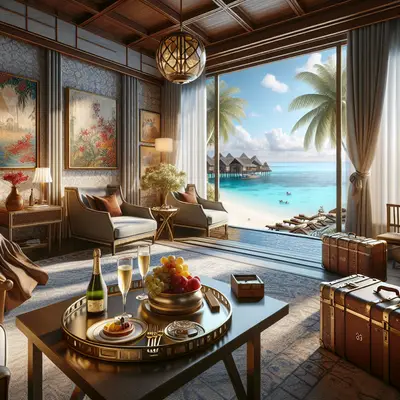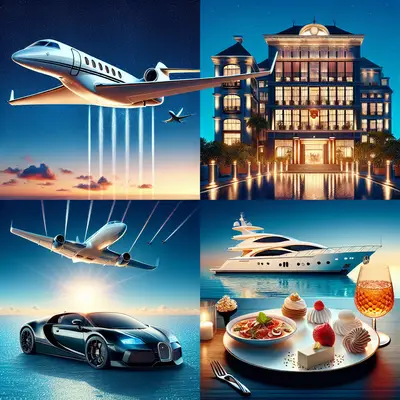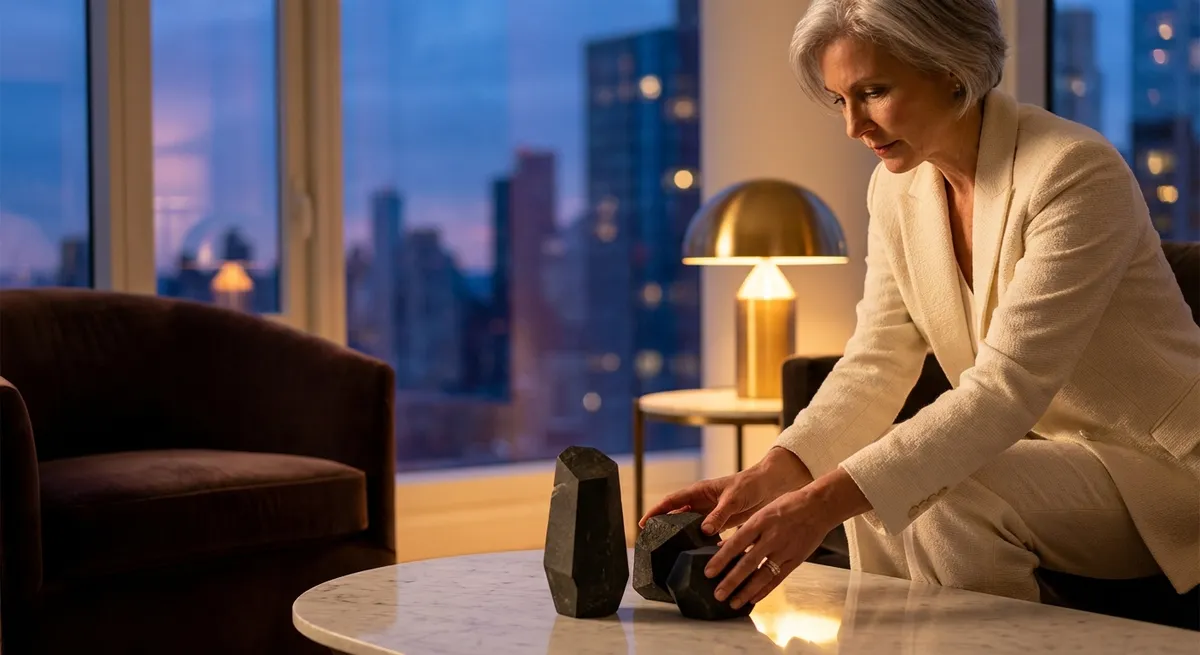
A premium lifestyle is no longer defined by what can be seen at a glance. It is shaped instead by calibration: of time, of attention, of sensory detail. For the modern luxury traveler, true privilege lies not in spectacle but in the quiet precision with which a day unfolds—who is on the other end of the phone, how a room is lit at midnight, which door opens when you arrive. It is a life curated in layers, where the most valuable experiences rarely appear on a public itinerary.
Below are five exclusive insights shaping how sophisticated travelers now design, protect, and elevate their journeys.
1. Time as the Only Genuine Upgrade
For those accustomed to first-class cabins and private suites, the only true scarcity left is time. The most discerning travelers now treat time as a luxury material—something to be sculpted, defended, and invested with intention.
This begins long before departure. Instead of assembling complex itineraries, many rely on elite travel designers and private offices who choreograph every transfer, check-in, and security interaction to minimize friction. Private airport terminals, expedited border formalities, and pre-cleared documentation are no longer perks; they are time-liberating essentials.
On the ground, “dead time” is engineered out of the journey. Luggage is transferred ahead of arrival, rooms are pre-conditioned to personal preferences, and in-suite dining replaces the ritual of waiting for a table when discretion or fatigue is paramount. Even wellness is restructured around time efficiency: jet lag is addressed with tailored sleep plans, hydration protocols, and recovery treatments orchestrated to fit the traveler’s schedule rather than the spa’s.
For the premium traveler, the question is no longer “How luxurious is this?” but “How much of my life does this give back to me?”
2. Curated Anonymity: The New Social Signature
In an era of constant visibility, those for whom access is never the problem increasingly pursue the opposite: control over who sees them, when, and under what circumstances. A premium lifestyle is now defined as much by curated absence as by curated presence.
This manifests across every touchpoint of a journey. High-net-worth travelers are gravitating toward properties and experiences that offer sophisticated privacy architecture: private entrances, secure lifts, unlisted floors, and staff trained not just in service, but in discretion. Reservations are often made under alternate names; photographs are politely but firmly declined; social media moments, if captured at all, remain in private galleries rather than public feeds.
Yet curated anonymity is not withdrawal—it is intentional selectivity. The most refined trips now feature encounters that are intensely personal but extremely controlled: a late-night gallery viewing with the owner, a private rehearsal with a symphony conductor, a visit to a designer’s atelier outside opening hours. These moments are rarely posted, but they shape the traveler’s sense of identity far more than any public-facing “content.”
The distinction is subtle but powerful: mass luxury seeks visibility; premium life seeks authorship over its own narrative.
3. Sensory Precision as the New Benchmark of Luxury
For seasoned travelers, another champagne bottle or larger suite is no longer a revelation. What astonishes now is precision: how specifically an environment is tuned to the individual.
This begins with scent and sound. Bespoke room fragrances, customized playlists that evolve with the time of day, and acoustic design that gently filters background noise transform a space from merely beautiful to deeply restorative. Lighting is choreographed—not just dimmable, but designed to support circadian rhythms, enhance focus, or soften the day into ritualized calm.
Nutritional preferences are handled with quiet sophistication rather than fuss. Kitchens remember intolerances, allergies, and tastes not as restrictions but as creative frameworks. A late return from a private flight might be met not by a generic welcome amenity but by a carefully balanced, light meal designed for recovery and sleep.
Even tactile detail matters: the feel of a robe, the exact firmness of a pillow, the weight of a glass. For travelers who have “seen it all,” the luxury that remains is how precisely the world touches them—through the senses, not the spectacle.
4. Relationship Capital Over Rewards Points
Loyalty programs and tier statuses once defined premium travel; now, at the very top of the market, the true currency is relationship capital. It is no longer about collecting benefits—it is about being remembered, anticipated, and quietly protected.
Rather than scattering their travel across countless brands, sophisticated travelers now cultivate depth with a few: a particular hotel group, a trusted private aviation provider, a favored yacht charter network, a small circle of concierge and lifestyle services. Over time, these relationships result not just in upgrades, but in something far more valuable: institutional memory.
A favored property might know that a guest prefers to arrive to a silent suite, with lights low and curtains closed after a long-haul flight. A private office might anticipate that a business traveler always extends their stay if a deal runs long and therefore pre-holds the suite. A trusted advisor might alert a client when a destination they love is about to reach a tipping point in popularity, recommending a visit before the wider world arrives.
This relationship capital becomes a protective layer around the traveler’s life, smoothing crises, unlocking access, and ensuring that every new request is built on a foundation of prior understanding.
5. Private Cultural Access as the Ultimate Marker of Taste
For the modern luxury traveler, the most coveted experiences are no longer simply rare—they are intellectually and emotionally resonant. The new premium is cultural intimacy: access that deepens understanding rather than simply impressing onlookers.
Instead of front-row tables and VIP ropes, the focus has shifted to private cultural mechanisms. This might take the form of an after-hours museum tour led by the curator who assembled the exhibition; a tasting at a vineyard with the winemaker, with bottles drawn from parcels never exported; a quiet workshop with a master craftsman whose work is otherwise visible only in haute boutiques.
These experiences require more than money; they require trust and alignment. Hosts are increasingly selective, opening their studios, homes, and archives only to guests who demonstrate genuine curiosity and respect. Luxury travelers in turn are refining their own approach—reading, learning, and arriving prepared to engage thoughtfully rather than consume passively.
In this world, the most valuable souvenirs are not objects but insights: an altered perspective on a city, a deeper understanding of a tradition, a personal connection to a person whose work shapes a culture. It is a form of luxury that cannot be photographed, only remembered.
Conclusion
The architecture of a premium lifestyle is far more intricate than a series of high-priced experiences. It is the sum of delicate calibrations—how time is honored, how privacy is preserved, how the senses are considered, how relationships are nurtured, and how culture is approached with intelligence rather than entitlement.
For luxury travelers, the future is not louder, brighter, or more conspicuous. It is increasingly quiet, exacting, and deeply personal. The true privilege is not merely to go everywhere, but to move through the world in a way that feels singular: fully considered, elegantly protected, and unmistakably one’s own.
Sources
- World Tourism Organization (UN Tourism) - Global insights on tourism trends, including high-end travel behaviors and market shifts
- McKinsey & Company – The rise of experiential luxury - Analysis of how affluent consumers increasingly prioritize experiences, time, and personalization over purely material markers of luxury
- Boston Consulting Group – Winning the Hearts of Luxury Customers - Research on relationship-based loyalty, personalization, and evolving expectations in the luxury segment
- Skift – The Future of Luxury Travel - Industry reporting on privacy, cultural access, and the shift toward discreet, experience-led high-end travel
- Harvard Business Review – The New Science of Customer Emotions - Explores how emotional connection and tailored experiences create deeper loyalty among premium clients
Key Takeaway
The most important thing to remember from this article is that this information can change how you think about Premium Lifestyle.