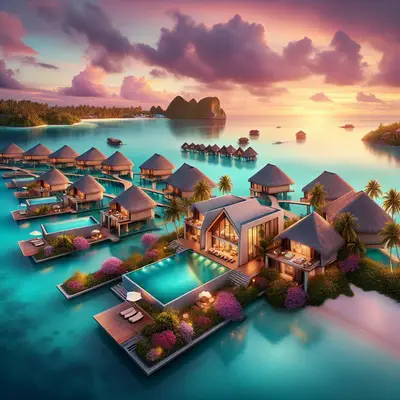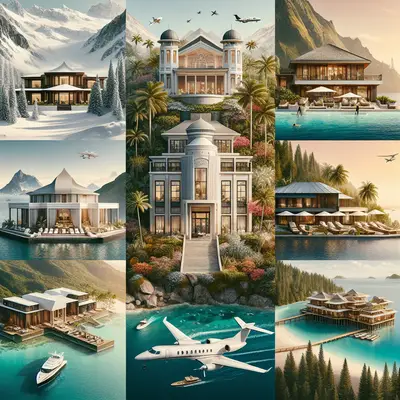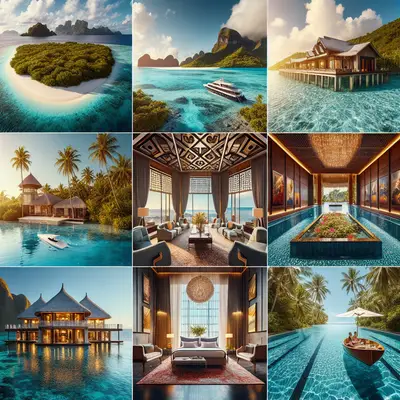
Luxury resorts are no longer merely destinations; they are carefully orchestrated environments where architecture, service, and atmosphere converge into something that feels almost impossibly precise. For the modern luxury traveler, the most coveted properties are those that reveal themselves slowly—by the second morning’s light, the third conversation with a concierge who somehow anticipates a preference never spoken aloud, or the way a window is positioned to capture the exact moment the sea turns to silver.
This is the quiet geometry of truly exceptional resorts: not ostentation, but orchestration. Below, five exclusive insights that define properties designed for those who prefer their privilege measured in nuance rather than noise.
1. Architecture That Choreographs Privacy, Not Just Views
The most exceptional resorts do more than offer “a room with a view.” They use architecture to choreograph how that view is experienced—what you see first upon entering, how light moves across the space throughout the day, how neighboring suites are positioned to feel worlds apart even when they are feet away.
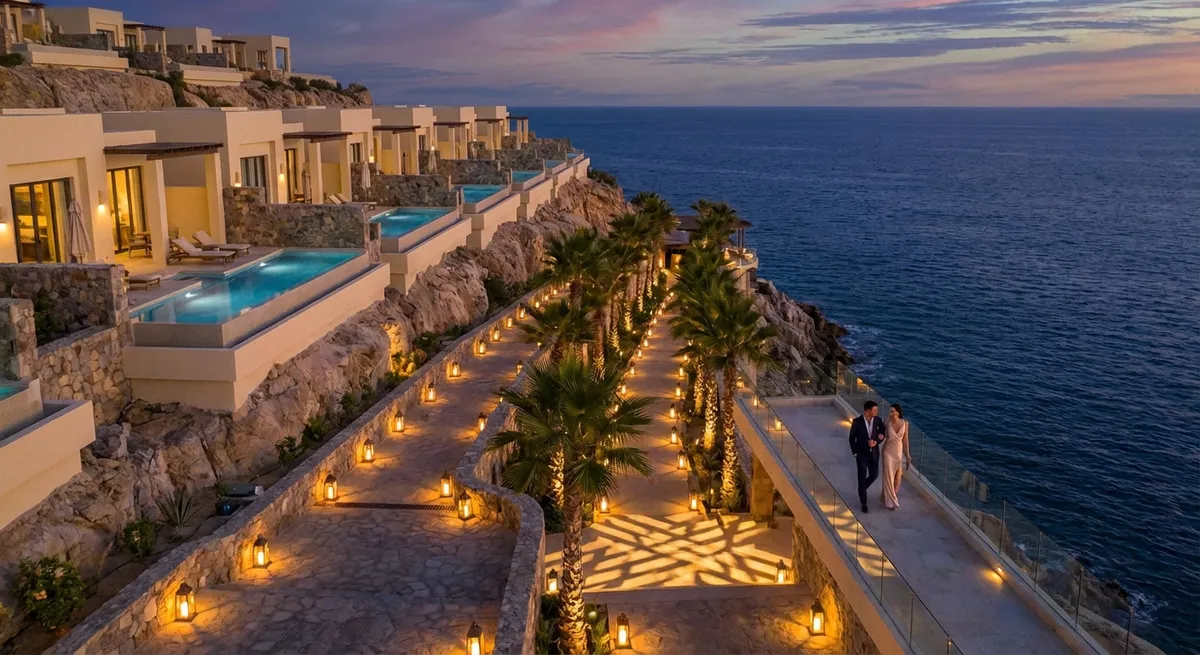
Look for properties where suites are staggered along a cliff line, or discreetly terraced into a hillside, so that no balcony is in another’s sightline. In the finest resorts, floor-to-ceiling glass is not simply a design flourish but a calibrated frame: the ocean aligned on a single horizon, a mountain peak placed like a painting, a courtyard garden rendered almost cinematic.
Equally telling is the threshold between public and private. Lobbies are often intentionally underplayed, guiding guests swiftly into more intimate spaces: a private library for arrival check-in, a courtyard perfumed with local botanicals, or a shaded path that leads directly to the suite. Architecture becomes a language of quiet intent, signaling that the most precious experiences will not be found in the obvious places, but in the carefully concealed ones.
2. Service That Edits, Rather Than Overwhelms
At the best resorts, service is not about abundance of attention—but precision of it. Staff are trained not merely to respond, but to edit your experience: removing friction before it arises, stripping away unnecessary choices, and distilling your stay to its most effortless form.
Instead of a flurry of introductions and rehearsed names, you might find one point of contact who moves invisibly in the background—adjusting transport times when your flight is delayed, quietly reserving the same corner table you favored the evening before, or arranging in-villa dining when you decline dessert at the restaurant, sensing that your evening is better concluded in privacy.
This is service that resists the urge to constantly appear. You’ll notice it in the way housekeeping seems to know exactly when you’ve slipped out for a swim, in the way your preferred sparkling water appears in the room without commentary, in the unobtrusive placement of a shawl across the back of your chair as the terrace breeze picks up. The finest properties understand that true luxury is not measured by how often they ask, “How can we help?” but by how rarely you need to answer.
3. Culinary Programs That Reflect Place With Surgical Precision
The contemporary luxury traveler expects more than “locally sourced” or “farm-to-table” as abstract promises. What differentiates an exceptional resort is a culinary program that feels surgically attuned to its environment—where each plate is not a performance, but a quiet translation of place.
You’ll notice this in the specificity of ingredients and narratives. Not just “local fish,” but a particular reef, a named fisherman, a season when the water is at a temperature that changes the texture of the flesh. Not just “herbs from our garden,” but a chef who adjusts a menu because the morning’s microgreens came in smaller than expected after an overnight temperature drop.
Breakfast service, often overlooked, becomes a subtle indicator of a resort’s culinary intelligence. The best properties design morning offerings around circadian rhythms and cultural nuance: broths and light proteins for travelers arriving from distant time zones, regionally precise breads and pastries for those who value authenticity over excess, fresh-pressed juices and herbal infusions that reflect indigenous wellness traditions rather than generic wellness trends.
In such resorts, the most refined meal may not be the headline dinner, but a late-afternoon snack after a swim—a single perfect stone fruit, chilled and sliced with care, or an herbal tea blend created to reflect the scent of the landscape just beyond your terrace.
4. Experiences Curated With Restraint—And Access
The most compelling resorts understand that their guests are not seeking a crowded calendar, but calibrated access. Experiences are curated less as packaged “activities” and more as keys: subtle entry points into a place’s cultural, natural, or artistic undercurrent.
Consider the difference between a standard “sunset cruise” and a privately chartered boat that departs 40 minutes earlier, timed to avoid other vessels and to coincide with a specific alignment of sun, tide, and coastline. Or between a group “cooking class” and a single morning in the kitchen with the resort’s head chef and a local producer, punctuated by conversation rather than instruction.
Exceptional properties maintain discreet networks: a gallery owner who will unlock a space after hours, a conservancy ranger who guides a dawn walk off normal trails, a historian who meets for a quiet drink rather than a lecture. These are not experiences you will find advertised on the website; they exist in the realm of the unlisted, designed for guests who know how to ask—and properties that know when to offer without being prompted.
Restraint is key. The most refined itineraries leave deliberate white space on the agenda, understanding that luxury today is as much about unscheduled time as it is about curated moments.
5. Wellness That Integrates Seamlessly Into Daily Rituals
In the current era of luxury travel, wellness has evolved beyond the spa menu and the yoga pavilion. In exceptional resorts, well-being is not compartmentalized; it is woven into the quiet fabric of each day, so subtly that you may only recognize its structure in retrospect.
Lighting systems may be synchronized with circadian rhythms, gradually warming or cooling in tone as the day progresses. Sleep is elevated to an art form: mattresses selected for optimal spinal alignment, pillow menus that consider not just firmness but temperature and materials, blackout systems that truly darken a room without the distraction of blinking electronics.
Hydration and recovery—so critical to travelers crossing multiple time zones—are delicately supported. You might return to your suite to find an herbal infusion targeted to digestion after a late dinner, magnesium-rich bath salts for post-flight muscle fatigue, or a tailored stretching sequence left discreetly on your bedside table rather than pushed as a “program.”
Even movement is reconsidered. Instead of a crowded gym with rows of identical machines, you may find a serene studio with a handful of impeccably chosen equipment, an in-suite trainer who arrives on your schedule, or guided outdoor routes that use the landscape as the primary fitness tool. Wellness, at this level, is not about intensity or spectacle—it is about customization, recovery, and a sense that your body has been considered in every element of the stay.
Conclusion
For travelers who navigate the world with discernment, the difference between a “luxury resort” and an exceptional one lies in the details that never appear on a brochure: the angle of a terrace, the timing of a conversation, the quiet recalibration of an itinerary that preserves your energy rather than consumes it.
The most elevated properties today are not competing in the arena of excess, but of precision. They excel at the invisible—those architectural choices, service rituals, culinary decisions, curated introductions, and wellness integrations that leave you departing not just impressed, but subtly restored. In a world increasingly defined by noise and velocity, these resorts offer something rarer: a meticulously crafted sense of ease that lingers long after the flight home.
Sources
- [Virtuoso: Global Trends in Luxury Travel](https://www.virtuoso.com/travel/articles/virtuoso-luxury-travel-predictions) - Insight into evolving expectations of high-end travelers and how luxury properties are adapting
- [Forbes Travel Guide: What Makes a Five-Star Hotel](https://www.forbestravelguide.com/about/our-standards) - Detailed standards that define exceptional service, design, and guest experience in top-tier properties
- [Condé Nast Traveler: Gold List Hotels & Resorts](https://www.cntraveler.com/the-gold-list) - Curated examples of leading luxury resorts worldwide, with emphasis on architecture, service, and sense of place
- [Global Wellness Institute: Wellness in Hospitality and Tourism](https://globalwellnessinstitute.org/industry-research/wellness-tourism/) - Research on how wellness is being integrated into hospitality and resort experiences
- [American Institute of Architects: Design and Human Experience](https://www.aia.org/resources/70241-the-science-of-design) - Exploration of how architectural design influences comfort, privacy, and well-being
Key Takeaway
The most important thing to remember from this article is that this information can change how you think about Exclusive Resorts.