Fine dining, at its most compelling, is less about spectacle and more about orchestration. For the discerning traveler, a truly exceptional restaurant becomes a quiet stage where timing, light, texture, and human intuition converge into something that feels both effortless and impossible to replicate. Beyond the obvious hallmarks—Michelin stars, vaulted cellars, postcard views—there are subtler cues that distinguish a memorable meal from a transformative one. These are the refinements luxury travelers come to recognize, and increasingly, to seek out with intention.
The Architecture of Time: Pacing as a Signature
In the world’s most accomplished dining rooms, time is the invisible course on the menu. The sequence of each moment—from the first greeting to the final farewell—is calibrated with the precision of a conductor guiding an orchestra.
You will notice it in the way your first interaction unfolds: no rushed requests for drink orders, no clipped recitation of specials. Instead, there is a brief, considered pause that allows you to arrive, to inhabit the room. Courses are then served in a rhythm that aligns with your table’s natural conversation: a slightly slower pace for a table deep in discussion, a more energetic tempo for a couple leaning into discovery.
Luxury travelers often underestimate how revealing pacing can be. Restaurants with genuine mastery read the table without intrusion. They sense when to delay the next plate because you are lost in a story, or when to expedite because your flight is early the next morning. When you find a dining room that treats time not as a schedule to be managed but as a material to be sculpted, you are in the presence of a deeply considered operation.
The Quiet Intelligence of the Room
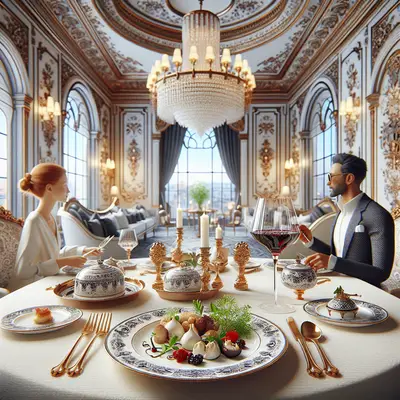
Long before the first plate arrives, a fine dining experience has already disclosed its intentions through the room itself. The most sophisticated spaces are not simply “beautiful”; they are designed to feel inevitable—every choice so well resolved that you stop noticing individual details and simply feel at ease.
Lighting is key. Luxury travelers will recognize a certain gentleness: a level low enough to flatter, but bright enough to read the menu without squinting. There is a warm, directional glow on the table, while the periphery recedes softly. Acoustics are engineered so that the room feels alive with conversation, yet you never need to raise your voice. Hard surfaces are tempered with textiles; sound feels absorbed rather than amplified.
Then there are the micro-considerations. The particular grain of the table surface that feels pleasing under your fingertips. The way a chair supports your posture two hours into a tasting menu. The distance between tables, calibrated not just for privacy, but for a subtle sense of being part of a shared, elevated experience. These are small decisions, collectively signaling that someone has thought of you long before you arrived.
Provenance with Purpose, Not Performance
Ingredients, in the realm of fine dining, have long been used as badges of status: caviar, truffles, single-vineyard vintages, all recited in breathless detail. But the new language of luxury is moving away from performance toward purpose—where provenance is meaningful, not merely impressive.
For the seasoned traveler, the most compelling menus highlight not just where an ingredient comes from, but why it is there. Perhaps the chef works with a remote coastal supplier whose daily catch shapes the menu in real time. Maybe the greens are sourced from a single regenerative farm just outside the city, their flavor a reflection of soil health rather than culinary theatrics.
This is where exclusivity becomes nuanced. It is not simply that something is rare; it is that it is particular to this place, at this moment. The most sophisticated restaurants are transparent without being didactic: they share the story of a producer or a technique only when it enhances your understanding of what is on the plate, never to fill silence or justify price. Luxury travelers come to cherish these quiet revelations—the sense that this dish could not be replicated elsewhere, because its origin is so intimately bound to this kitchen’s relationships.
Service as a Form of Discreet Stewardship
At its peak, service in fine dining transcends hospitality and enters the realm of stewardship. The staff does not simply attend to you; they curate your experience as though safeguarding something of value—your time, your palate, your privacy.
Luxury travelers will recognize this in a host’s ability to anticipate preference without presumption. A subtle shift of glassware that acknowledges your inclination toward champagne over cocktails. A suggested wine pairing offered not from the top of the list, but from a thoughtful middle ground that precisely aligns with your curiosity and comfort.
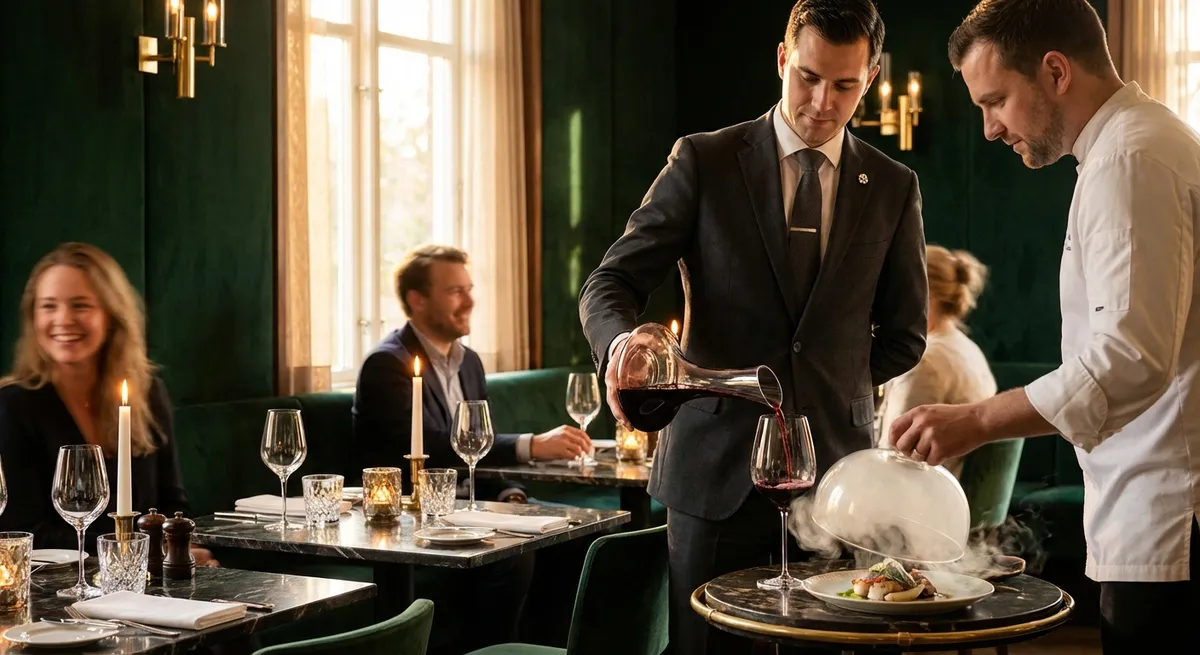
The most refined service is observational rather than declarative. Allergies are registered once and never asked about again. Napkins are replaced only when you step away, never mid-conversation. Staff understand when to disappear; they do not orbit the table, but move in a choreography you rarely fully see. In such spaces, you never feel managed. Instead, you feel quietly protected from friction—buffered from the logistics of your own experience so that all your attention may rest on the moment itself.
The Afterglow: When the Meal Redefines a Destination
For luxury travelers, the rarest fine dining experiences linger well beyond the final course. They subtly reframe your relationship with the city or region in which they exist, leaving you with a sense that you have encountered the place at a deeper, more intimate register.
This afterglow often comes from an interplay between culinary excellence and cultural fluency. Perhaps a tasting menu reimagines traditional flavors with such clarity that you suddenly understand a country’s palate anew. Or a wine pairing quietly introduces you to small producers whose bottles you later recognize in a local shop, transforming a simple errand into a moment of personal connection.
These are the dining experiences that become anchors in your travel memory: the restaurant you plan an entire itinerary around, or the place you return to not because the food is simply “good,” but because it made you feel more in the destination than any landmark. That feeling is the true luxury—an intimacy with place, orchestrated through flavor, setting, and care.
Conclusion
Fine dining, in its most sophisticated form, is no longer a showcase of excess. It is a study in calibration—a delicate alignment of time, space, story, and human intuition. For the luxury traveler, the measure of a truly exceptional restaurant lies in the details that don’t demand attention yet quietly shape every moment: the way the room holds your conversation, the thoughtful logic behind each ingredient, the service that seems to vanish yet never falters.
Seek the places where nothing feels forced and everything feels considered. These are the dining rooms that will not only satisfy your appetite, but also refine your understanding of what it means to be exquisitely, generously, and intelligently hosted.
Sources
- [Michelin Guide – About the MICHELIN Guide](https://guide.michelin.com/en/about-us) – Overview of the standards and philosophy that define Michelin-rated dining.
- [The World’s 50 Best Restaurants – FAQs & Voting Process](https://www.theworlds50best.com/faq.html) – Insight into how top global restaurants are evaluated and recognized.
- [Harvard T.H. Chan School of Public Health – The Nutrition Source: Dining Out](https://www.hsph.harvard.edu/nutritionsource/healthy-eating-plate/dining-out/) – Context on restaurant dining trends and considerations from a research perspective.
- [Cornell University School of Hotel Administration – “Restaurant Atmospherics and Behavioral Intentions” (PDF)](https://scholarship.sha.cornell.edu/cgi/viewcontent.cgi?article=1492&context=articles) – Academic research on how design and atmosphere influence the dining experience.
- [James Beard Foundation – About the James Beard Awards](https://www.jamesbeard.org/awards/about) – Details on one of the most influential award programs in the culinary world and what it recognizes in restaurants and chefs.
Key Takeaway
The most important thing to remember from this article is that this information can change how you think about Fine Dining.