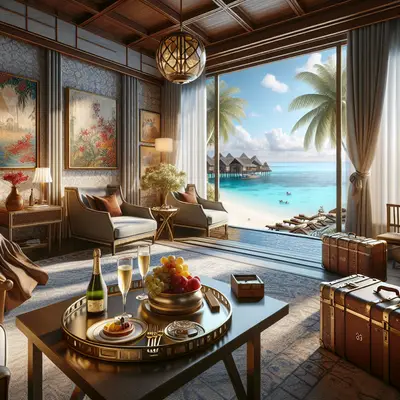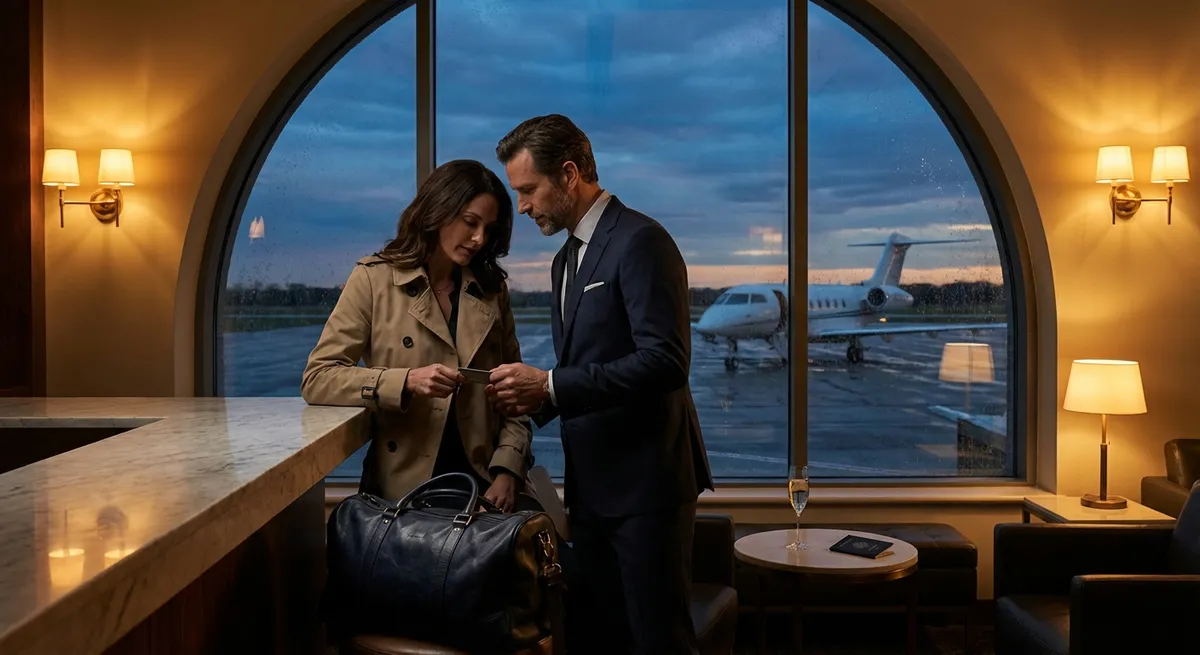
Luxury today is less about what can be seen and more about what is quietly arranged. For the discerning traveler, the true currency is not points or status tiers, but access: to time, to privacy, to experiences that are neither marketed nor mass-produced. At Jet Ready, we recognize that the most memorable journeys are not loud performances of wealth, but finely calibrated expressions of taste. This is where refined travelers operate—at the intersection of discretion, intention, and intelligent planning.
Redefining Luxury: From Opulence to Precision
The contemporary premium lifestyle has shifted away from visible abundance toward elegant precision. It is no longer about collecting destinations, but about curating moments that feel perfectly aligned with who you are and how you wish to move through the world.
This evolution is subtle but decisive. Five-star has become a baseline, not a differentiator. True luxury travelers now evaluate a property or experience based on the smoothness of its orchestration: how well it anticipates needs, how quietly it resolves friction, how seamlessly it adapts to changes without turning them into a spectacle. The question is less “How impressive is this?” and more “How naturally does this fit into the rhythm of my life?”
Technology has amplified this shift. The most refined travelers expect digital ease—frictionless bookings, contactless check-ins, personalized recognition—paired with human nuance. Premium lifestyle is now measured in how well analog and digital touchpoints collaborate: a digital itinerary that updates in real time; a human concierge who understands, instinctively, when not to call.
This redefinition of luxury favors those who value depth over display. It rewards advance thought, informed choices, and a quiet insistence on quality over quantity. For the traveler who understands this, the world opens not as a series of props for social media, but as a well-tuned ensemble of experiences that genuinely serve their life.
Insight 1: Mastering the Art of Invisible Itineraries
The most exclusive journeys often look simple on the surface. A direct flight, a seamless transfer, a room that feels immediately “right.” Yet behind these apparent simplicities is meticulous choreography—what might be called the invisible itinerary.
An invisible itinerary is designed so that the traveler never feels rushed, crowded, or over-scheduled. It’s an approach that favors thoughtfully spaced movements over a manic succession of activities. Flight times are chosen for circadian comfort, not just price or marginal convenience. Connections allow for realistic buffers, especially at complex airports. Ground transfers are treated as an extension of the journey, not a logistical afterthought.
Elite travelers often leverage specialized travel advisors or concierge services to construct these invisible frameworks. The aim is to reduce mental load: immigration expedited without a conversation, luggage handled without visible effort, restaurant reservations secured without negotiations. The day flows, yet nothing feels orchestrated.
This level of refinement also acknowledges recovery as part of the experience. Arrivals are structured with adequate time for recalibration—private transfers, early check-in when possible, a short window for a shower and a quiet meal before any commitments. The luxury, in the end, is not simply in where you go, but in how gently you arrive there.
Insight 2: Private Time as the Ultimate Premium Amenity
For the sophisticated traveler, time is no longer a passive backdrop—it is the primary luxury asset to be protected, structured, and elevated. The question quietly guiding many decisions is: “Does this preserve or dilute the quality of my time?”
This perspective reshapes how one evaluates so-called premium experiences. A lounge with an impressive brand name but predictable crowds may be less appealing than a quieter, lesser-known space with attentive staff and actual calm. Similarly, a storied restaurant might be passed over in favor of a discreet venue where conversation is possible, pacing is unhurried, and the environment supports jet-lagged bodies and busy minds.
Time protection also influences how high-net-worth travelers approach business on the road. Rather than indiscriminately accepting every invitation or meeting request, they design deliberate “availability windows” and preserve blocks of untouched time for recovery, reflection, or simply stillness. A late afternoon reserved for nothing at all can be more valuable than yet another high-profile event that adds little to their priorities.
In this mindset, premium services that return time—such as airport assistance, trusted drivers, or concierge teams that resolve issues before they reach the traveler—are not extravagances; they are strategic tools. The truly luxurious itinerary is not the one that fits the most in; it is the one that leaves the most space around what matters.
Insight 3: Building Quiet Networks Instead of Loud Status
Traditional loyalty programs, tiers, and memberships still have their place, but the most refined travelers understand that true access often comes from cultivated relationships rather than branded statuses. It is the personal network, not the plastic card, that grants entry to the most meaningful experiences.
This might mean establishing an ongoing rapport with a particular hotel brand’s guest relations team, a general manager in a favored city, or a trusted local fixer whose value only becomes clear when plans inevitably shift. Over time, these relationships create a kind of bespoke ecosystem around the traveler: familiar faces at unfamiliar destinations, a sense of continuity even while in motion.
Quiet networks also extend to peer communities. Discreet recommendations from similarly positioned travelers can be more valuable than any searchable list—especially when it comes to emerging destinations, under-the-radar properties, or private experiences that never reach public platforms. Within these circles, reputation matters more than algorithms.
The sophisticated traveler invests in these relationships with the same care they bring to financial or professional networks. Courtesy, reliability, and discretion become strategic assets. In return, routes are smoothed, doors are opened, and options appear precisely when needed—often before they’re requested.
Insight 4: Curating Sensory Consistency Across Continents
At a certain tier of travel, comfort is no longer about abundance but about continuity. The mind and body adjust more gracefully when certain elements remain stable, even as time zones and languages change rapidly. The most attuned luxury travelers curate their own version of this constancy.
This might take the form of a personal “travel signature”: the same scent in a candle or room spray, a preferred style of bedding, a particular tea ritual, carefully chosen loungewear that feels immediately like home. Some travelers work with hotels to standardize requests—pillow types, room temperature preferences, minibar configurations—so that each arrival feels less like entering a new space and more like reconnecting with a familiar one.
There is also a growing appreciation for properties that understand the physiology of travel: circadian-friendly lighting, soundproofing that truly isolates, thoughtful fitness and recovery spaces, and menus that consider the realities of jet lag rather than merely offering indulgence. The refined traveler increasingly values hospitality partners who design with the traveling body and mind in mind—not just the camera lens.
By prioritizing sensory consistency, the traveler preserves a sense of inner stability amidst constant change. It’s a quiet form of luxury that rarely appears in photographs, yet it dramatically shapes the perceived quality of every journey.
Insight 5: Treating Every Journey as Part of a Larger Narrative
For many high-frequency travelers, movement is no longer episodic; it is the fabric of their life. In this reality, each trip is less an isolated event and more a chapter in a continuous narrative they are consciously writing about who they are and how they inhabit the world.
This perspective alters the criteria for what constitutes a “worthwhile” experience. Rather than chasing novelty for its own sake, they seek encounters that deepen existing interests or thoughtfully expand them: an architecturally significant property that aligns with their design sensibilities, a culinary experience that meaningfully connects to place, or a wellness retreat that addresses specific long-term goals instead of generic pampering.
Travel becomes a vehicle for refinement: refining taste, networks, knowledge, and even personal systems. Meticulous travelers maintain evolving notes on what works best—optimal arrival times in certain cities, preferred neighborhoods, trusted local practitioners, favorite corners of specific hotels. Over time, they are not simply accumulating stamps in a passport; they are constructing a personal atlas that reflects their values, priorities, and aspirations.
Viewed through this lens, premium lifestyle is less about static ownership and more about dynamic curation. The aim is not to impress the world, but to move through it with coherence, dignity, and a sense of deliberate authorship.
Conclusion
For the truly discerning traveler, luxury today is not a spectacle—it is a series of finely tuned decisions that protect time, preserve privacy, and elevate the lived experience of movement. It lives in the invisible itinerary, the preserved hour of quiet, the trusted relationship that dissolves obstacles before they surface, the calming rituals that follow you from city to city, and the narrative coherence that binds each journey into a considered whole.
As access becomes more democratized and “premium” labels more common, it is these subtle codes that distinguish the practiced traveler from the merely well-funded one. At Jet Ready, we believe the next era of luxury will belong not to those who travel the most loudly, but to those who travel the most intelligently—and, above all, the most intentionally.
Sources
- [Skift: The Evolution of Luxury Travel](https://skift.com/2019/10/21/the-new-luxury-traveler-and-their-expectations/) - Industry analysis on how luxury travel expectations have shifted toward personalization, privacy, and authenticity
- [McKinsey & Company – The New Dynamics of Personalization](https://www.mckinsey.com/capabilities/growth-marketing-and-sales/our-insights/the-future-of-personalization-and-how-to-get-ready-for-it) - Insights on consumer expectations for tailored experiences, highly relevant to modern premium travel
- [World Travel & Tourism Council (WTTC)](https://wttc.org/research/insights) - Research reports on global travel trends, including changing preferences among high-value travelers
- [Cornell University School of Hotel Administration – Hospitality Research](https://sha.cornell.edu/faculty-research/research/centers-institutes/chr/research.html) - Academic studies on hospitality design, guest experience, and service personalization
- [Forbes Travel Guide – Luxury Consumer Trends](https://www.forbestravelguide.com/about/press-room) - Coverage and reports on how affluent travelers define and seek luxury in hospitality and travel experiences
Key Takeaway
The most important thing to remember from this article is that this information can change how you think about Premium Lifestyle.