Travel, at its most considered, is less about distance and more about calibration—how precisely you tune your environment, your time, and your attention. For the modern luxury traveler, the real upgrade is no longer a bigger suite or a louder label; it is the quiet precision with which every movement, every space, and every interaction has been thought through. This is the new premium: subtle, highly intentional, and deeply personal.
Below, five exclusive insights shaping how discerning travelers are reimagining what it means to arrive, stay, and depart—on their own terms.
1. Curated Transit: Turning the “In-Between” Into the Main Event
For years, luxury focused on where you slept and where you dined. Now, the most considered travelers are redesigning everything that happens in transit—those liminal hours from door to door that used to be an unavoidable compromise.
The new benchmark is curated continuity. A car that’s not simply chauffeured, but temperature-controlled to your preference before you step in, with lighting and music pre-selected to match your circadian rhythm. A flight itinerary where departure and arrival times are mapped not just to local schedules but to your personal energy peaks, minimizing the cognitive cost of time zones and lines.
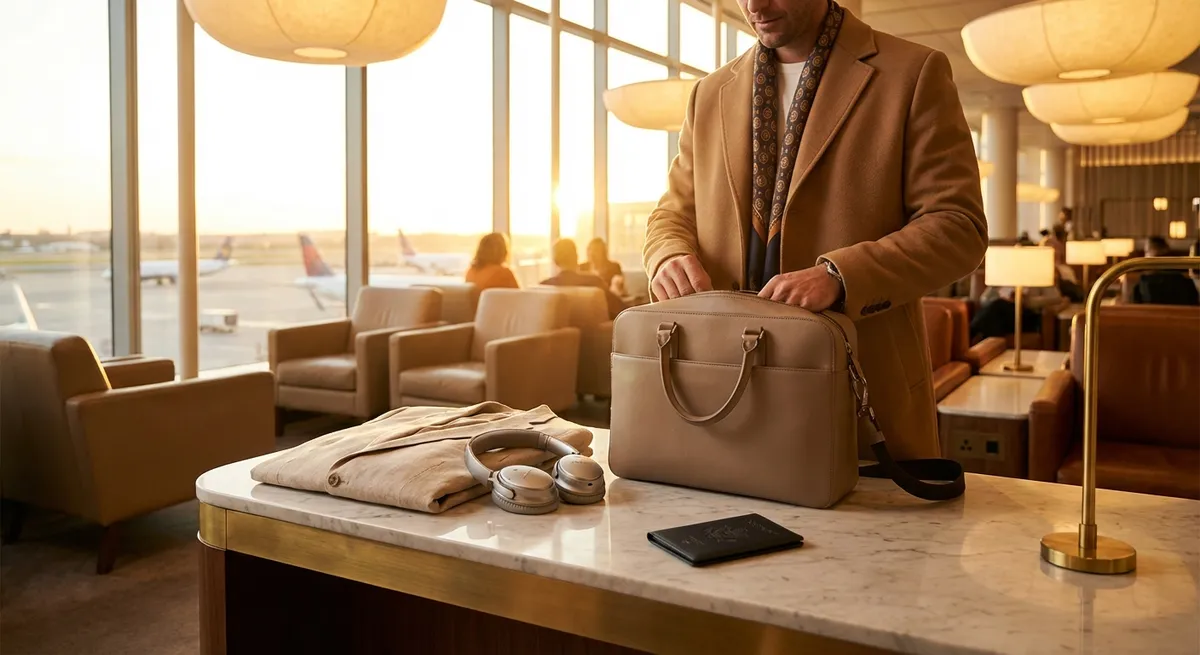
Private terminals and fast-track services are no longer merely about skipping queues; they’re about safeguarding mental bandwidth. From seamless luggage transfers coordinated ahead of time to discreet, pre-cleared immigration escorts where available, the emphasis is on removing frictions you no longer wish to notice.
The most astute travelers treat these arrangements as an integrated ecosystem: ground transfers, lounge environments, onboard configuration, and arrival formalities are orchestrated as a single, continuous experience. The journey doesn’t interrupt your life; it quietly extends it.
2. Sensory Architecture: Designing Your Personal Atmosphere
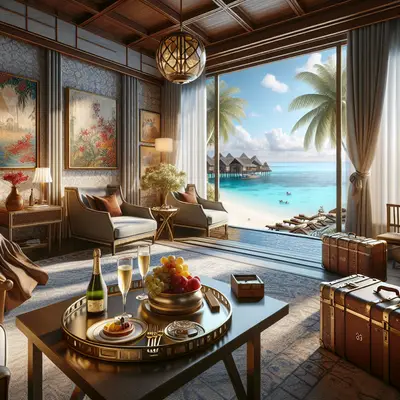
In the premium travel world, the room is no longer the product; the atmosphere is. What feels exclusive now is an environment that unfolds around your senses with precise intentionality.
Lighting is adjusted not just for aesthetics but for physiology: warmer hues in the evening to ease you into rest, cooler tones in the morning to bring clarity. Scent is calibrated to be present yet elusive—more of a memory anchor than a statement. Fine properties and private residences are leveraging this fully, offering scent menus, customizable pillow options, and adaptable acoustic insulation that allows you to choose between complete silence, softened city soundscapes, or curated soundtracks.
Attention is turning to tactility: the handfeel of upholstery, the balance of weight in glassware, the quiet of hinges and door latches. Advanced travelers request specific materials—linen versus sateen, matte versus gloss finishes—not for ostentation, but for how these textures shape their sense of ease.
This sensory architecture is increasingly data-informed. Over time, properties and service teams learn your thresholds—how cool you prefer your bedroom at night, what kind of firmness your shoulders tolerate in a mattress, how bright you like a workspace. The result feels less like checking into a hotel and more like stepping into a traveling version of your ideal home—considered, distilled, and precisely tuned.
3. Discreet Operational Excellence: The Luxury You Don’t See
At the highest tier of travel, the most impressive elements are often invisible. The mark of true refinement is how little you have to ask—and how rarely you are reminded of the machinery behind the scenes.
This is where operational intelligence becomes a luxury in itself. Front-facing staff are supported by deep layers of systems and specialist teams: risk mapping for political or environmental volatility, real-time health and safety monitoring, secure data protocols for handling your personal preferences and documents. The guest sees none of this; they simply experience a stay that feels improbably calm and frictionless, even during global uncertainty.
For frequent travelers, this invisible architecture extends to continuity between stays. Your preferred airport arrival process is quietly replicated across cities. Your favored tea is waiting before your first meeting. Housekeeping understands that your workspace is off-limits during certain hours. These patterns do not have to be re-explained; they are remembered, refined, and re-applied.
What’s increasingly valued is discretion not just in behavior, but in systems: non-intrusive security, softly enforced privacy boundaries, and staff trained to recognize when to step forward—and when to gracefully recede. The effect is a feeling of being both completely looked after and completely left alone.
4. Time as the Ultimate Premium: Precision, Not Excess
Luxury travelers are re-evaluating their relationship with time, and the old paradigm of “packed itineraries” is quietly giving way to a more disciplined elegance: do less, but do it with absolute intentionality.
The most coveted itineraries now are not those with the longest lists, but those with the cleanest focus. One destination, fully explored. One restaurant, properly savored. One afternoon left intentionally unstructured, protected against the temptation to overbook.
This is not minimalism for its own sake; it is optimization. Time zones are considered not just in terms of jet lag, but in terms of how effectively you can think, decide, and restore. Meetings, leisure, and transitions are clustered into distinct segments, allowing for sustained immersion rather than constant cognitive switching.
At the highest level, travelers are also designing “buffer layers” into their journeys—deliberate cushions around arrivals and departures, anchor days for acclimatization, and protected digital quiet zones. Flights are selected not only by class of service but by aircraft configuration, likelihood of delay, and arrival times that align with your ideal sleep cycle.
The goal is not to have more time, but to have cleaner time: hours and days with clear purpose, minimal noise, and maximum return on attention.
5. Intelligent Indulgence: Experiences with a Long Afterlife
The modern premium traveler is rethinking indulgence through the lens of longevity—of health, of memory, and of impact. Experiences are chosen less for their ability to impress others, and more for their capacity to resonate long after the trip ends.
Wellness has moved decisively beyond the spa. Travelers are seeking access to performance-level practitioners: sports physicians, sleep specialists, movement coaches, chefs trained in both gastronomy and nutrition science. Stays are curated to support recovery from demanding professional lives: controlled light exposure, tailored menus that account for circadian rhythms, and quiet spaces designed for deep work as much as deep rest.
Culturally, the emphasis is shifting from spectacle to understanding. Private access to galleries and heritage sites is still valued, but what truly elevates the experience is context—a scholar, curator, or local expert who can connect what you’re seeing to the broader currents of history, design, and culture. The memory becomes layered, textured, and enduring.
Even indulgent dining is becoming more intelligent: long, elaborate meals balanced with days of precise, restorative eating; wine lists curated not just by region and vintage but by your own tolerance preferences and travel schedule.
The net effect is that every premium choice is evaluated not only by how it feels in the moment, but by how it positions you—physically, mentally, and emotionally—when you return home.
Conclusion
For those who travel at the highest level, luxury is no longer defined by volume, spectacle, or visible status. It is defined by alignment: between environment and intention, between movement and energy, between indulgence and longevity.
The emerging code of premium travel is quietly exacting. It asks sharper questions: How should this journey feel hour by hour? How much of myself do I want to spend in transit? What will still matter from this experience six months from now?
When every detail is tuned to those answers, “arrival” ceases to be a single moment when you step into a suite or a lounge. It becomes a continuous state—of readiness, of clarity, and of ease—wherever you choose to go next.
Sources
- International Air Transport Association (IATA) – Travel Information - Provides insight into modern air travel standards, passenger experience considerations, and regulatory frameworks that shape premium transit.
- Forbes Travel Guide – Star-Rated Hotels, Restaurants & Spas - Offers detailed evaluations of high-end properties and services, illustrating current benchmarks in luxury hospitality and guest experience.
- Harvard Business Review – The Essence of Executive Travel - Discusses how senior leaders approach travel efficiency, time management, and the strategic use of transit time.
- Cleveland Clinic – Circadian Rhythm and Sleep - Explains how light, timing, and environment affect sleep and recovery, informing the design of wellness-focused travel experiences.
- MIT Senseable City Lab – Projects on Mobility and Urban Flows - Explores how movement through cities is evolving, offering context for the design of seamless, intelligent door-to-door journeys.
Key Takeaway
The most important thing to remember from this article is that this information can change how you think about Premium Lifestyle.