Luxury travel today is no longer about the loudest suite or the longest wine list. It is about the invisible architecture behind every moment: the way a room feels precisely one degree cooler when you return from a walk, the way a city reveals its quietest corner just as you were about to crave silence. For the traveler who has outgrown spectacle, refinement lies in details so considered they almost disappear.
Below are five exclusive insights shaping how discerning travelers design, experience, and measure true premium journeys.
1. The Art of Being Expected, Not Just Welcomed
Most properties can greet you by name; far fewer can make your arrival feel as though the entire operation has been subtly repositioned around you.
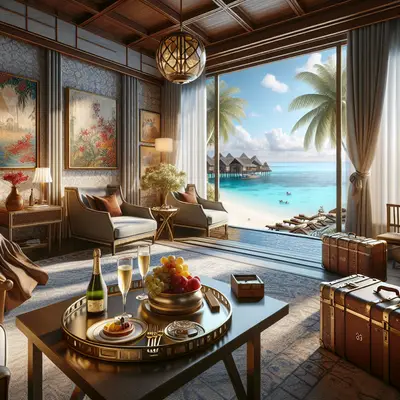
This begins long before check-in. The most capable travel designers and concierges orchestrate a soft landing well in advance—aligning your flight arrival with a room that has already “inhabited” your preferences. It is the difference between a generic fruit plate and an in-room setup that reflects how you actually live: blackout curtains drawn because you arrived from Tokyo, a Dyson or Molekule quietly purifying the air because they noticed your preference for hypoallergenic environments, a small pitcher of oat milk in the fridge because you ordered it once, months ago, in another property within the same portfolio.
In the air, being expected might mean a cabin crew who has already pre-selected your preferred water brand, or arranged the cabin lighting to mimic the time zone of your destination. On the ground, it looks like immigration fast-tracking coordinated to the minute, a driver who knows your preferred in-car temperature, and a property that understands your threshold for interaction on arrival—whether that’s a discreet escort straight to the suite or a more ceremonial welcome.
True luxury is not in the greeting itself; it is in the sense that every touchpoint has been quietly calibrated in anticipation of you.
2. Intelligent Itineraries: Designing Around Your Energy, Not Your Calendar
Sophisticated travelers have long abandoned the idea of “seeing everything.” Today’s premium journey is designed around energy curves rather than sightseeing lists.
An intelligent itinerary reads like a conversation with your future self. It accounts for how your body will feel after an ultra-long-haul flight, where your mental bandwidth will be mid-week, and when you will crave stillness over spectacle. High-end travel advisors and in-house concierges now routinely use circadian rhythm research, jet lag mitigation techniques, and performance tracking insights (sleep cycles, HRV, recovery metrics) to match experiences with your likely energy state.
Instead of stacking marquee experiences back-to-back, your schedule might place a museum’s private before-hours opening the morning after a light dinner, with a restorative hammam or low-light spa experience following an intense day of meetings. Lunch reservations will recognize your patterns—plant-forward at midday if you tend to fatigue after heavy meals, or protein-centric if you are combating jet lag.
The most advanced itineraries also build in “elastic time”: curated windows with no fixed obligations, but with pre-vetted options held quietly in reserve—a boat on standby, a gallery ready to open early, a sommelier available for an impromptu tasting. You are never rushed, yet never bored; your days are structured loosely enough to breathe, tightly enough to feel intentional.
3. The New Lexicon of Discreet Wellness
Wellness in luxury travel has matured from spa menus and juice bars into a quiet, deeply personalized layer that runs underneath the entire journey.
The most refined properties now move beyond generic wellness branding to create environments that stabilize you physiologically and mentally, especially when crossing time zones. This can include advanced air and water filtration systems, circadian lighting that gradually shifts color temperature throughout the day, menu design built on low-inflammatory, high-nutrient options, and optional integrations with your existing health ecosystem—nutritionists, trainers, or even concierge physicians.
For the frequent traveler, it is no longer indulgent to request magnesium-rich turndown amenities, blue-light–minimizing lamps, or menu alternatives without seed oils. It is considered, deliberate self-preservation. Recovery-focused offerings—infrared saunas, cold-plunge access, compression therapies, and guided breathwork—are increasingly positioned not as spa novelties, but as essential tools for performance and clarity.
The true luxury is subtle: a hotel that notes you slept poorly one night (via your voluntary device data or simple communication) and adjusts housekeeping timing, in-room dining suggestions, or spa slot availability accordingly. Wellness becomes less about “treatments” and more about an adaptive environment that returns you to equilibrium without fanfare.
4. Private Access Without Performative Exclusivity
For the genuinely discerning, exclusivity has shifted from who is excluded to how gracefully access is delivered. The premium traveler is less interested in velvet ropes, more interested in doors that open quietly without needing to be knocked on.
This might take the form of early or after-hours entry to a major cultural institution, not as a bragging right but as a way to experience art or history without distraction. It could be a chef closing a small section of a restaurant so that your conversation can unfold without neighboring tables, or a boutique organizing a pre-opening appointment where the focus is on thoughtful curation rather than pressure to purchase.
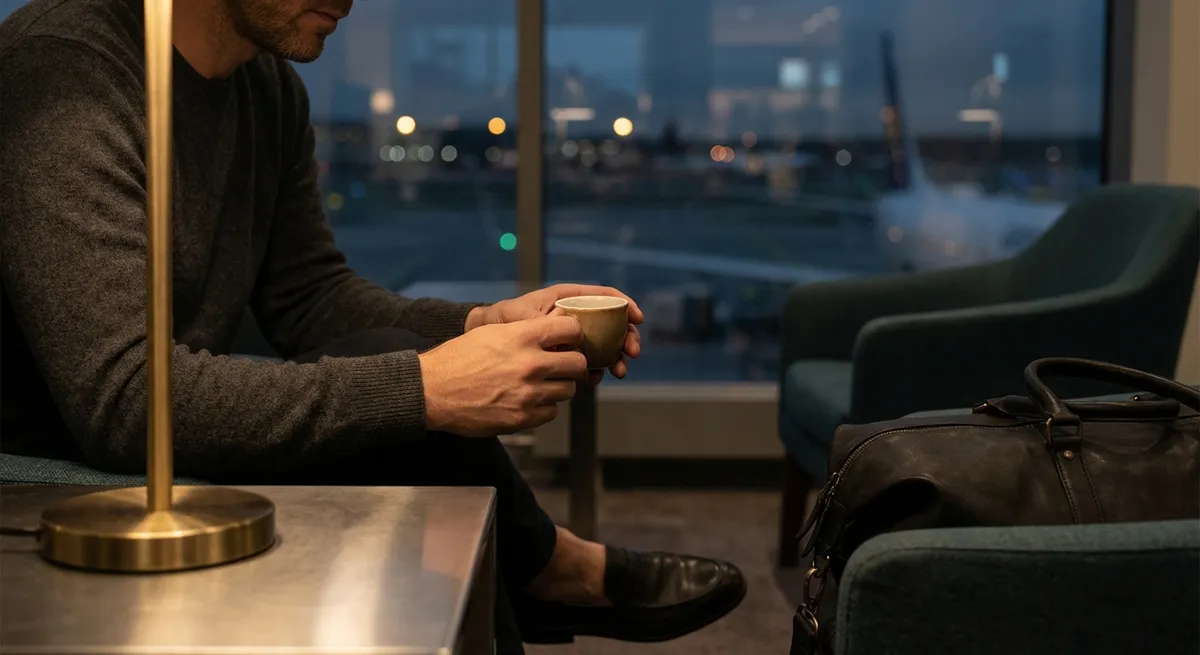
In transportation, private access increasingly means time and predictability rather than ostentation: assured runway access, intelligent routing around congested hubs, or advanced airport suites and transfer services that dissolve the public aspect of travel without becoming a spectacle. Similarly, yacht charters and villa stays are evolving toward more anonymous, service-led models—where confidentiality, quiet competence, and professional distance are prioritized over theatrics.
The new benchmark is whether you feel both entirely taken care of and entirely unobserved.
5. Curated Local Intelligence Over Generic Luxury Footprints
Among seasoned travelers, the question is no longer “What is the best hotel?” but “Who holds the sharpest local intelligence?” The rarest luxury is access to a city or region that unfolds through nuance rather than checklist landmarks.
This is where the value of a world-class concierge, local fixer, or independent travel consultant becomes clear. They are not merely arranging reservations; they are translating context. They know which gallery opening is quietly reorienting the city’s art scene, which restaurant is at its best on a Monday night, which neighborhood café owner can open a back room for a discrete lunch meeting, and which day a coastal road is best avoided due to local patterns, not just apps.
Premium travelers increasingly favor properties and partners who invest deeply in local relationships—art advisors who live in the destination, cultural historians available for one-on-one walks, or chefs who can orchestrate a private meal in a location that typically never hosts diners. Experiences are chosen not for their Instagram impact, but for their sense of place and emotional resonance.
The measure of success is subtle: you depart with the feeling that you did not simply visit a destination, but joined its rhythm, however briefly.
Conclusion
For those who live much of their lives in motion, luxury is no longer a layer added on top of travel—it is the operating system underneath it. Being expected rather than merely welcomed, having your energy rather than your calendar dictate your days, inhabiting wellness rather than visiting it, accessing privacy without drama, and drawing on deep local intelligence—these are the elements that now define a truly premium journey.
The refinement is in the quiet coherence of it all. When each part of your itinerary seems to understand the others, when service feels anticipatory rather than reactive, when a destination reveals itself with grace instead of urgency, you are not just traveling well; you are moving through the world on your own considered terms.
Sources
- [U.S. Department of Transportation – Long-Haul Travel and Jet Lag](https://www.transportation.gov/airconsumer/long-flights) - Background on the physiological impact of long flights and practical considerations for traveler comfort
- [Harvard Medical School – Resetting Your Internal Clock](https://www.health.harvard.edu/staying-healthy/resetting-your-internal-clock) - Explains circadian rhythms and strategies that underpin intelligent, energy-aware itineraries
- [World Travel & Tourism Council – Luxury Travel Report](https://wttc.org/research/insights/luxury-travel) - Industry perspective on evolving definitions of luxury and premium travel behavior
- [Mayo Clinic – The Role of Sleep and Recovery](https://www.mayoclinic.org/healthy-lifestyle/adult-health/in-depth/sleep/art-20048379) - Details the importance of sleep and recovery practices that inform discreet wellness offerings
- [UNESCO – Sustainable and Cultural Tourism](https://www.unesco.org/en/tourism) - Context on culturally sensitive, locally informed travel experiences that align with curated local intelligence
Key Takeaway
The most important thing to remember from this article is that this information can change how you think about Premium Lifestyle.