There is a moment, just before the cabin door closes, when the ambient noise fades and the world tilts slightly in your favor. The glass is placed on its linen coaster, the jacket is whisked away, and the choreography of a life lived in the premium lane begins again. For the genuine luxury traveler, this is not about spectacle; it is about precision. The true currency is not visibility, but control—of time, of space, of atmosphere. What follows are five discrete insights drawn from the upper tiers of global travel, designed for those who prefer their privilege rendered in whispers rather than headlines.
The Silent Power of Time-Shifting
Among frequent travelers at the highest tiers, the most coveted upgrade is not a better seat or a larger suite—it is reclaimed time. The art lies in time-shifting: not simply flying faster, but manipulating the experience so that the journey yields more utility than it consumes.
Elite travelers schedule long-haul flights to become deliberate “quiet blocks”—hours assigned to deep thinking, uninterrupted strategy work, or complete digital disconnection. Instead of fighting jet lag, they work with it: arriving early to step into dimly lit spa facilities rather than boardrooms, allowing circadian rhythms to recalibrate before visibility begins. Airport hotels are chosen not for proximity alone but for soundproofing quality, blackout curtains, and pillow menus that align with personal sleep rituals.
At this level, peak departure and arrival times are not accidents; they’re decisions that consider traffic patterns at both ends, operational reliability of specific carriers, known congestion windows at major hubs, and even crew reputations on particular routes. Time isn’t merely scheduled—it is curated, with the same intentionality one reserves for a private tasting or gallery viewing.
Beyond the Suite: Curating Your Sphere of Control
In a world where “upgrade” language is overused, sophisticated travelers think less about room category and more about environmental control. The most discernible luxury is the ability to shape the microclimate around you—light, sound, temperature, scent, and movement.
Rather than asking for the “best room,” experienced guests request specific attributes: corner suites with double exposure for natural light, layouts that separate work and sleep zones, rooms away from service elevators and event floors, or particular building wings known for privacy. The smartest travelers maintain a private “environmental dossier” with preferred mattress firmness, room fragrance profiles, minibar stocking preferences, and even favored tea varietals and glassware. Shared once with the right properties, that information silently follows them from stay to stay.
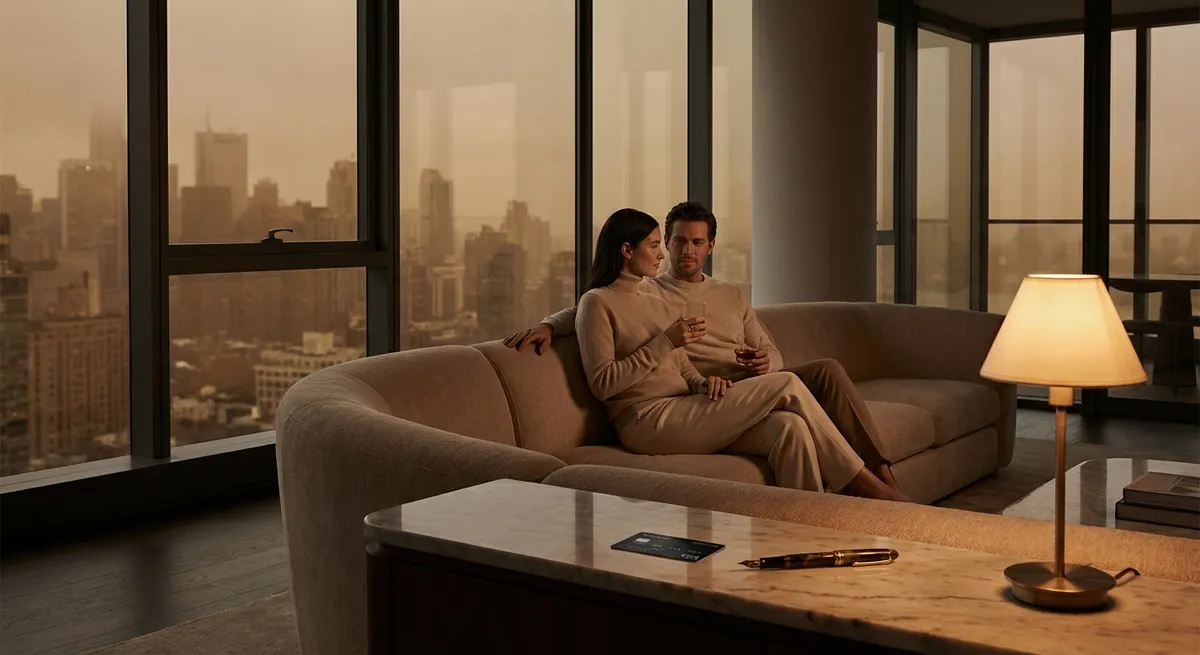
What appears effortless—the perfectly drawn bath at 11 p.m., the espresso made exactly to your taste after a red-eye, the precise temperature in your suite—is rarely accidental. It is the result of quietly investing in relationships with key staff: the guest relations manager who notes your preferences, the butler who understands your morning routine, the concierge who knows you will never accept a table in the center of the room. Over time, your world ceases to be generic; it becomes a traveling ecosystem calibrated to your specific comfort.
Micro-Exclusivity: Choosing Spaces Within Spaces
Premium travelers increasingly understand that exclusivity is no longer defined only by price or star-rating, but by micro-environments concealed within broader public spaces. Rather than chasing the most obvious “best,” they look for controlled pockets of stillness, access, and anonymity.
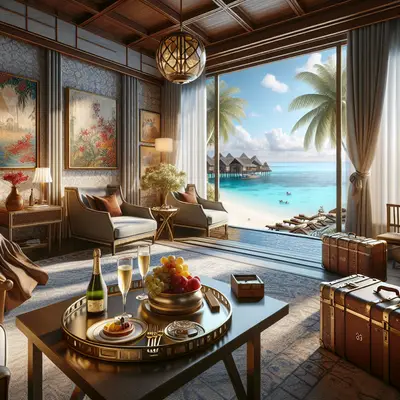
On aircraft, that might mean selecting a specific row in a premium cabin known for lower foot traffic, reduced galley noise, or proximity to a particular lavatory configuration. In hotels, it can mean opting for floors with limited key-card access, private elevator banks, or residential-style wings that keep you out of the main guest flow. In resorts, the real luxury may be a villa positioned out of view lines, where the soundscape is dominated by wind and water rather than other guests.
Even in cities, savvy travelers seek out “nested spaces”: members-only lounges within public hotels, private dining rooms within celebrated restaurants, invite-only speakeasies behind otherwise conspicuous venues. The aesthetic may be discreet, but the effect is profound: your world contracts, the noise lowers, and the experience becomes not simply premium, but personally contained.
Intelligent Discretion: Managing Visibility as a Luxury Asset
For those accustomed to elevated tiers of service, visibility is no longer about being seen—it is about choosing when, where, and by whom you are seen. Intelligent discretion has become its own form of luxury management.
This begins with small decisions: using separate digital identities for travel bookings, loyalty accounts, and personal communication; ensuring reservations are handled through trusted human channels rather than generic platforms when privacy is essential; and maintaining a narrow circle of preferred carriers, hotels, and DMCs known for rigorous data protection and discreet service culture.
Public spaces are navigated with similar intention. Rather than conspicuous logos or ostentatious luggage, refined travelers favor quiet, recognizable codes—a particular luggage brand known for durability rather than flash, a tailored but unbranded wardrobe that passes through airports and lounges without attracting unnecessary attention. Even social media becomes a curated, delayed mirror: journeys are documented but posted well after departure, destinations are implied rather than mapped in real time, and intimacy is reserved for private circles.
In this world, discretion is leveraged not as withdrawal, but as a form of control. You are present everywhere you choose to be, and almost nowhere you do not.
Bespoke Infrastructure: Building a Personal Travel Architecture
The rarest luxury is not a single experience but an infrastructure—a personal architecture of services, relationships, and systems that travels with you, invisible yet always functioning. The most seasoned luxury travelers invest in this architecture deliberately.
This might include a tightly curated network of independent advisors: a private banker versed in cross-border needs, a travel specialist with deep local relationships in a few key regions rather than superficial reach everywhere, a legal advisor familiar with immigration nuances, and a health concierge capable of coordinating care across cities and time zones. Each is selectively activated according to the contours of a given trip.
There is also the invisible scaffolding of digital tools: encrypted communication for sensitive coordination, password managers and travel vaults that store document scans and policy numbers, subscription services for airport transfers, vetted on-demand drivers, and in-city security when warranted. Even something as simple as a pre-packed “international kit”—with multi-region SIM or eSIM solutions, global charging setups, and essential medications—becomes part of a personal system that reduces friction at every border.
What distinguishes this from mere convenience is coherence. Every element—human, digital, logistical—aligns to one central idea: your life should feel continuous, even when your geography is not.
Conclusion
True premium living in motion is not about excess; it is about exquisite calibration. The world’s most discerning travelers are not chasing the loudest expressions of status, but the quietest evolutions of control—of time, environment, visibility, and structure. The journey becomes less a disruption to life than an alternate setting in which life continues, unbroken, at its chosen level of refinement.
For those willing to think beyond upgrades and branded tiers, the path forward is clear: design your own invisible architecture, curate your own micro-exclusivities, and treat each movement across the map as an opportunity not just to arrive, but to refine the way you inhabit the world.
Sources
- [U.S. Department of Transportation – Airline Consumer Protection](https://www.transportation.gov/airconsumer) - Information on passenger rights, delays, and operational reliability that informs smarter time-shifting and carrier choices
- [International Air Transport Association (IATA) – Jet Lag and Travel Health](https://www.iata.org/en/publications/health/jet-lag/) - Guidance on managing jet lag and optimizing long-haul travel for well-being
- [Cornell Center for Hospitality Research](https://scholarship.sha.cornell.edu/chrreports/) - Research on hotel guest preferences, service personalization, and the value of environmental control in hospitality
- [Forbes Travel Guide – Verified Luxury Standards](https://www.forbestravelguide.com/forbes-travel-guide-standards) - Insight into the criteria that define high-end service, discretion, and experience design in premium properties
- [Harvard Business Review – Managing Yourself Across Time Zones](https://hbr.org/2016/06/managing-yourself-managing-across-distance) - Practical strategies for maintaining performance, structure, and continuity while traveling frequently
Key Takeaway
The most important thing to remember from this article is that this information can change how you think about Premium Lifestyle.