Luxury travel today is less about spectacle and more about calibration—precise distances between you and the crowd, between you and the clock, between you and the expected. The most discerning travelers are not simply upgrading cabins or room categories; they are redesigning the contours of time, privacy, and experience. What emerges is a quieter, more exacting standard of luxury: one defined as much by what you don’t see and don’t endure as by what you do.
Below are five exclusive, under‑discussed insights that increasingly define how the most refined travelers move through the world.
1. The Art of Invisible Time Management
At the highest tiers of travel, “fast” is no longer the goal—frictionless is. The true luxury is never feeling rushed, yet never waiting.
This begins long before departure. Elite flyers and private clients now expect itineraries built around latent time: those hidden pockets where delays naturally occur—security, immigration, transfers, check‑in, boarding, baggage. Sophisticated travel planners choreograph these friction points so they disappear into curated experiences: private check‑in salons that resemble living rooms more than counters, off‑peak immigration clearances coordinated with airport authorities, or boarding windows designed so you simply walk on without queuing or announcements.
The most refined itineraries are also built around circadian integrity. Rather than chasing the cheapest or shortest route, luxury travelers increasingly prioritize departures that align with personal sleep patterns, light exposure, and minimally disruptive layovers. Behind the scenes, this involves close reading of aircraft types, cabin configurations, and even specific flight numbers known for operational reliability, minimizing the micro‑stress of uncertainty.
Invisible time management is the new first class amenity. When executed well, it feels as though the world has adjusted itself to your natural rhythm—never the other way around.
2. Privacy by Design, Not by Accident
Privacy in luxury travel is no longer a matter of simple seclusion; it is architectural, procedural, and intentional.
Architecturally, high‑end hotels and villas are investing in spatial privacy rather than mere square footage. It’s the orientation of terraces so neighboring sightlines never intersect; sound‑engineered doors and corridors; service routes that keep staff movement out of guest view; pool placement that protects you from being observed, photographed, or overheard. The most sophisticated travelers now ask not just what the view is, but who can see them from where.
Procedurally, the most elevated experiences are defined by low‑visibility service: private entrances, direct‑to‑suite check‑in, secure garages, coded elevator access, and staff trained to recognize faces rather than rely on room numbers or surnames. At certain properties, your itinerary can be coordinated entirely via encrypted messaging with a single point of contact, eliminating public interactions at desks and counters.
Digitally, privacy is becoming its own currency. High‑net‑worth travelers increasingly value properties and travel partners that publish clear data policies, minimize unnecessary information collection, and understand the etiquette of discretion—no geotagged social media without permission, no use of guest names in public spaces, and no visible logging of preferences (dietary, medical, or personal) where they might be observed.
In this new paradigm, privacy isn’t about hiding; it’s about the quiet assurance that your life in motion remains solely yours.
3. The Curated Micro‑Climate: Comfort Beyond the Cabin
Premium cabins and top suites have long focused on comfort, but the emerging standard is more exacting: a micro‑climate tuned around your physiology, not just your preferences.
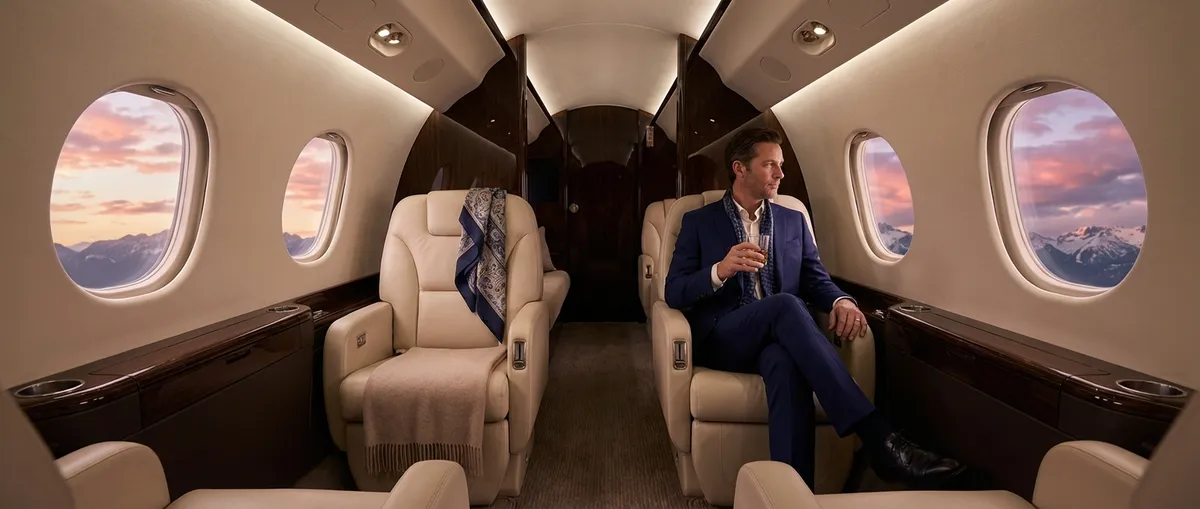
On aircraft, that means paying attention to more than seat pitch and champagne labels. Elite travelers increasingly select routes by aircraft type and configuration: choosing jets with advanced air‑filtration systems, higher cabin humidity, and lower cabin altitude—all of which meaningfully reduce fatigue and jet lag. Combined with carefully timed light exposure and meal service, the flight becomes less a disruption and more a controlled environment for recovery or productivity.
On the ground, similar principles apply. Refined properties now extend their concept of comfort beyond thread count to thermal mapping of rooms, ensuring consistent temperatures; intelligent blackout systems that calibrate to your wake‑up time rather than a simple “open” or “closed” setting; and quiet‑grade engineering that reduces low‑frequency mechanical noise from elevators, HVAC systems, and nearby roads.
The most attuned travelers also factor climate intelligence into destination choice: shoulder seasons with gentler temperatures, locations with clean air indices, and resorts where humidity and breeze combine to create naturally comfortable outdoor living. The subtle result is a journey where your body never feels like it is fighting the environment—a form of luxury that reveals itself only when it is absent.
4. Depth Over Drama: The New Semi‑Private Experience
The era of performative luxury—where experiences were chosen to be photographed rather than felt—is quietly being replaced by something more restrained: smaller radiuses, deeper engagement, and semi‑private access to the exceptional.
Instead of collecting destinations, sophisticated travelers increasingly collect depth of understanding: working with local experts, historians, curators, marine biologists, or vintners for extended, focused time. These are not off‑the‑shelf tours but highly customized sessions in which the traveler’s prior knowledge, curiosities, and pace shape the encounter.
The defining feature is semi‑privacy: not closing a site to the public, but accessing it differently. Entering a museum collection before opening hours with the curator who shaped it. Diving a marine reserve from a small, research‑oriented vessel rather than a tourist boat. Walking a heritage district with the architect responsible for its restoration rather than a generic guide.
Luxury, in this context, is the right to linger—over a single painting, a single vineyard parcel, a single reef. The journey becomes less about how much you can see and more about how deeply you can connect with what you’ve chosen.
5. The Quiet Architecture of Contingency
What separates a pleasant trip from a truly elevated journey is often invisible: intelligent contingency.
At the highest levels, luxury travel is engineered not just for what should happen, but for what might happen—without ever exposing the traveler to the machinery of plan B, C, or D. This quiet architecture can include buffer nights discretely placed at the beginning or end of complex itineraries, alternative routes pre‑approved and costed, and backup guides or pilots on standby during weather‑sensitive experiences.
The most trusted travel advisors and concierge services maintain real‑time intelligence: monitoring strikes, weather systems, local events, health advisories, and even legislative changes that might disrupt a route. They proactively resequence your journey so that, from your perspective, nothing “goes wrong”—your wine tasting simply moves to a different estate, your coastal day transfers to a sleek urban interlude, your seaplane becomes a well‑timed helicopter transfer.
Contingency also extends to wellness and security: relationships with private medical providers at the destination, secure ground transport vetted well beyond standard checks, and access to embassies or consular services if required. The traveler experiences only the smooth surface of the itinerary; beneath it lies a carefully built safety net that allows for genuine relaxation.
Conclusion
For the most discerning travelers, luxury is no longer a matter of visible excess. It is the precision with which time is orchestrated, privacy is shaped, comfort is engineered, experiences are deepened, and contingency is quietly prepared. The result is a journey that feels uncrowded, unhurried, and profoundly personal—where every transition is softened, every detail considered, and every moment allowed to unfold at its natural pace.
In this refined landscape, the true marker of premium travel is simple: not how much is offered, but how little you have to think about while the world rearranges itself, just so, around your movement.
Sources
- [International Air Transport Association (IATA) – Premium Travel Trends](https://www.iata.org/en/publications/store/premium-travel/) - Industry data and analysis on premium and business travel patterns
- [Boeing – Cabin Environment and Passenger Well-Being](https://www.boeing.com/commercial/cabin-air-quality.page) - Technical insights into cabin altitude, humidity, and air quality on modern aircraft
- [U.S. Department of State – Travel Advisories](https://travel.state.gov/content/travel/en/traveladvisories/traveladvisories.html) - Authoritative information on global risk, security, and contingency considerations
- [Cornell University School of Hotel Administration – Hospitality Research](https://sha.cornell.edu/faculty-research/research/centers-institutes/chr/research/) - Academic research on hotel operations, guest experience, and service design
- [UNESCO World Heritage Centre – Sustainable and Authentic Site Engagement](https://whc.unesco.org/en/sustainabletourismtoolkit/) - Guidance on deeper, more responsible engagement with cultural and natural sites
Key Takeaway
The most important thing to remember from this article is that this information can change how you think about Luxury Travel.