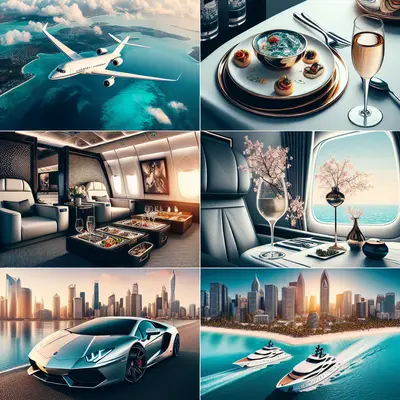
Luxury travel no longer announces itself with gold-plated spectacle. It moves quietly—through orchestrated time, unshared access, and details that feel almost telepathic. For the modern luxury traveler, the true indulgence lies not in being seen, but in being perfectly understood. This is a world calibrated to nuance, where every decision—destination, dining, transfer, even the silence between experiences—is deliberate.
Below, five exclusive insights reveal how discerning travelers are quietly redesigning what “luxury” means in motion.
1. The New Status Symbol: Impeccable Time, Not Impressive Itineraries
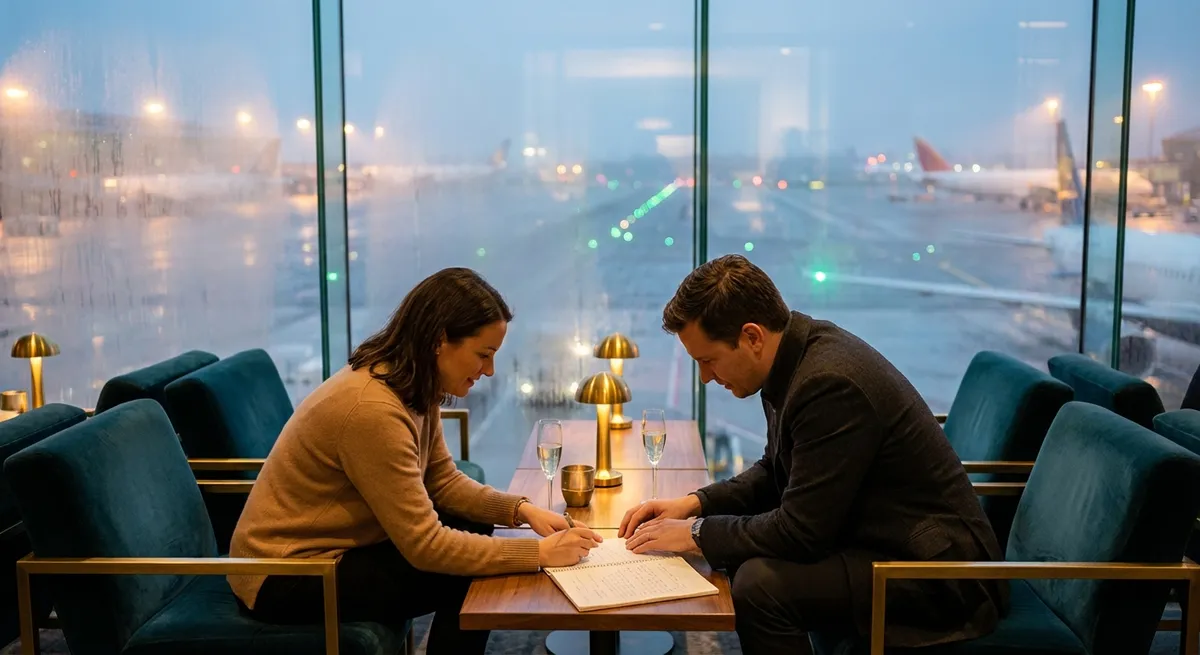
In an age of instant access and infinite choice, the rarest luxury is controlled time—unhurried, unfragmented, and fiercely protected.
High-end travelers are increasingly rejecting overstuffed itineraries in favor of journeys with fewer, deeper moments. Rather than racing through three countries in seven days, they are dedicating entire weeks to a single region, or even a single property, with curated experiences brought to them rather than pursued at a frantic pace.
This shift is quietly reshaping how premium travel is designed. Private aviation is not simply about a faster flight; it is about compressing friction—security lines, delays, connection stress—so that time on the ground expands. Similarly, airport meet-and-greet services, VIP customs fast-tracking, and chauffeured transfers are less about convenience and more about continuity: a seamless narrative from home to hotel suite.
What distinguishes the truly elevated itinerary is intentional negative space. Built-in hours—or days—without fixed programming allow for spontaneous decisions guided by mood, weather, or a single inspired suggestion from a trusted concierge. The new benchmark is not “How much can we fit in?” but “How elegantly can we protect what matters?”
2. Invisible Infrastructure: The Luxury You Never Have to Ask For
The most sophisticated journeys feel almost eerily premeditated. Preferences do not have to be repeated; irritations do not have to be voiced. The luxury infrastructure is present, but never obtrusive.
Top-tier hotels and private travel services now maintain detailed guest profiles that go far beyond pillow types and dietary notes. They anticipate lighting preferences, water temperature routines, workout habits, even the time of day a guest is most receptive to conversation or planning. The artistry lies in applying this information sparingly and gracefully—never in a way that feels surveilled or over-curated.
Invisible infrastructure shows up in details that quietly absorb friction before it appears. Think luggage that is checked only once, then discreetly trails the guest across multiple destinations without rehandling. Or transfers that account for road closures and local events without burdening the traveler with last-minute changes—just a car that arrives at precisely the right moment.
In the most refined settings, staff communication is orchestrated like a private language. A single, well-placed note in a property’s internal system ensures that when you move from suite to spa to restaurant, you are never reintroducing yourself. Luxury is no longer the number of people at your service; it is how little you have to ask of them.
3. Curated Privacy: Access Without the Performance of Visibility
Where luxury once thrived on visibility—corner tables, front rows, marquee suites—it now flourishes in selective absence. The premium traveler increasingly values access that does not require performance.
This is shaping a quiet evolution in how destinations and experiences are structured. Private museum viewings at odd hours, early-morning access to heritage sites, or after-hours gallery tours are less about exclusivity for its own sake than about experiencing culture without the crowd’s noise. The reward is intimacy: the ability to stand in front of a work of art or a historic landmark and simply be present.
Similarly, high-end resorts and villas are investing in architectures of discretion: separate arrival points, private elevators, sound-buffered suites, and subtly partitioned dining areas. The most coveted spaces are those where one can fully inhabit a setting—ocean, city, desert, vineyard—without being on display within it.
This curated privacy extends to digital life. Properties designed for a premium clientele are increasingly attentive to cybersecurity, secure networks, and protected communication spaces. For guests whose work and personal lives exist under constant scrutiny, the promise is simple yet profound: your world can continue, uninterrupted and unseen, while you travel.
4. Deep-Access Localism: When the Destination Meets You Halfway
For discerning travelers, “authenticity” has become an overused and underdelivered word. What they seek instead is depth—meaningful interaction with a place that respects its complexity and their time.
In this elevated context, a destination is not merely seen; it is interpreted. Localism, at the luxury level, means access to individuals who are custodians of a place’s culture: archivists, artisans, conservationists, private chefs, gallery founders, winemakers, or historians. It is a vineyard tour not with a guide, but with the owner whose family has tended the land for generations. A city walk not with a generalist, but with an architect who helped shape the skyline.
This level of engagement requires more than budget; it demands relationships and discretion. The most refined journeys are brokered through trusted intermediaries—concierges, specialized travel advisors, or destination fixers—who understand that a guest is not there to collect experiences, but to encounter substance.
The hallmark of deep-access localism is reciprocity. Luxury travelers increasingly expect their presence to be low-impact and high-respect: supporting local enterprises, contributing to conservation projects, and engaging in experiences that are sensitive to cultural nuance. In return, places reveal themselves more fully—beyond the tourist gaze and into the lived reality that locals choose to share.
5. Senses as Design Tools: Crafting Atmosphere, Not Just Spaces
In premium travel, design is no longer confined to what is seen. The most sophisticated properties orchestrate the entire sensory field—sound, scent, touch, light, even temperature—to create an atmosphere that feels bespoke.
Soundscapes, for instance, are intentionally curated. There is an emerging focus on acoustic privacy: softened corridors, quiet HVAC systems, carefully insulated doors, and public spaces where conversation can exist without echo. The absence of background noise becomes as important as the presence of music in the right moments.
Scent has become an invisible signature. Many high-end hotels and private clubs commission custom fragrances that subtly differentiate lobby, spa, and suite, guiding mood through olfactory memory. Textiles are chosen not only for appearance but for tactile and thermal comfort: linen that breathes in tropical climates, cashmere throws at alpine chalets, bathrobes engineered for both structure and softness.
Light is treated as a dynamic element rather than a switch: circadian-friendly in-room systems, dimly lit hallways that protect the night sky, and layered lighting in suites that can shift from work mode to evening calm with a single control. Temperature is not just about air conditioning; it extends to heated floors, cooled stone, warmed pools at precise degrees.
This level of sensory orchestration signals a deeper shift: luxury is less about the catalogued features of a place and more about how one feels moving through it. The most memorable journeys are not recalled as lists, but as atmospheres—coherent, enveloping, and quietly unforgettable.
Conclusion
Today’s luxury travel is a discipline of refinement rather than excess. It privileges time over spectacle, precision over display, and depth over density. The travelers shaping this world are not simply collecting destinations; they are curating the way they inhabit them.
Impeccable time, invisible infrastructure, curated privacy, deep-access localism, and sensory design form the new grammar of grandeur. For those attuned to its language, every journey becomes less a departure and more a carefully composed state of being—where movement itself feels like a privilege, not a demand.
Sources
- [Condé Nast Traveler – The Future of Luxury Travel](https://www.cntraveler.com/story/the-future-of-luxury-travel) – Explores evolving expectations and behaviors among high-end travelers
- [Skift Research – The State of Luxury Travel](https://research.skift.com/report/the-state-of-luxury-travel-2023/) – Industry analysis on trends in premium travel demand and experience design
- [Forbes – Why Time Is the Ultimate Luxury](https://www.forbes.com/sites/theyec/2021/08/18/why-time-is-the-ultimate-luxury/) – Discusses the growing value of time and experience over material display
- [Virtuoso – Luxury Travel Trends](https://www.virtuoso.com/curated/luxury-travel-trends.aspx) – Insight from a global network of luxury travel advisors on emerging preferences
- [Harvard Business Review – The New Science of Customer Emotions](https://hbr.org/2015/11/the-new-science-of-customer-emotions) – Examines how emotional drivers and sensory design shape premium experiences
Key Takeaway
The most important thing to remember from this article is that this information can change how you think about Luxury Travel.