The most discerning travelers are not chasing more; they are curating better. For them, luxury is no longer a catalog of recognizable brands or predictable upgrades—it is a precise calibration of space, time, and attention. A premium lifestyle emerges not from conspicuous displays, but from a quiet, deliberate edit of what is allowed into one’s orbit. This is the new language of luxury in motion: precise, understated, and deeply personal.
Redefining Luxury as Control Over Tempo
At the highest levels of travel, luxury is less about where you are and more about the tempo at which your life unfolds. The most refined experiences introduce a sense of unhurried continuity, regardless of time zone or geography.
Control over tempo starts before departure. A tightly orchestrated day—where transfers, check-ins, and transitions are measured in minutes, not guesswork—creates an atmosphere of calm competence. When your schedule is engineered to absorb minor disruptions without visible friction, you begin to experience time as an asset rather than a variable.
In-flight, this control extends to your own circadian rhythm: meal timing aligned to your destination, cabin lighting that mimics natural light patterns, and sleep windows that are protected rather than merely permitted. On arrival, transition time—those first critical hours when many travelers stumble through fatigue and disorientation—is deliberately safeguarded. A proper premium lifestyle in motion feels like a single, continuous narrative, not a series of disconnected chapters.
For luxury travelers, tempo is the new status symbol. Anyone can purchase a better seat; fewer can purchase the feeling that the entire journey has fallen into quiet, frictionless alignment.
Insight One: The Architecture of Seamless Transitions
The most exclusive luxury isn’t the suite—it’s the space between the suite, the aircraft seat, and the car door. Sophisticated travelers invest attention not in isolated moments, but in the connective tissue of their journeys.
This begins with transition architecture: knowing that every handoff point (airport arrival, immigration, luggage, ground transfer, check-in) has already been accounted for, often by a single coordinating professional or team. The objective is not mere speed, but emotional continuity—never feeling “dropped” into the chaos of a public environment without a clear path through it.
A refined approach to transitions includes pre-cleared documentation, strategic flight times chosen for their operational reliability rather than just convenience, and ground transportation tailored to the city’s specific rhythms, not just its traffic patterns. The rarest luxury is walking through an international terminal and realizing you are observing the rush rather than participating in it.
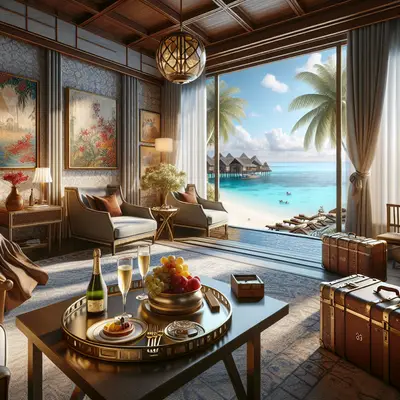
This architecture extends inside the hotel or villa: pre-arrival preferences subtly honored, key cards ready without formalities, and the room calibrated to your habitual environment—lighting, temperature, even scent—before you cross the threshold. A premium lifestyle in motion is defined by how gently you are moved from one context to the next.
Insight Two: Curated Sensory Consistency Across Continents
Elite travelers understand that the body is constantly negotiating with its surroundings. At a certain level of travel, the pursuit is no longer novelty for its own sake, but a curated sensory consistency that maintains one’s internal equilibrium.
This consistency might appear in a personal “travel palette”: the same fragrance in your hotel room diffuser from Paris to Dubai, the same style of cashmere wrap or travel blazer, the same playlist for ascent, cruise, and landing. These seemingly minor repetitions act as anchors, telling your nervous system that you are not starting from zero in each new city.
Light is curated with equal intentionality. Blue-light filtering glasses, portable travel lamps that simulate gentle dawn in dim hotel rooms, and pre-selected window seat positions to control natural light all work in concert to maintain internal balance. Sound becomes another layer of design—noise-cancelling systems, high-fidelity in-cabin audio, and a preferred set of sleep sounds or silence that travels with you.
This is not about stripping away local character; it is about building a stable, personal sensory core from which you can appreciate each location more fully. When the constants are deliberately chosen, the variables become a pleasure rather than a stressor.
Insight Three: Strategic Minimalism as a Marker of Confidence
At the upper echelons of travel, over-preparedness can read as anxiety; elegant minimalism, by contrast, reads as mastery. The most sophisticated travelers carry less, but each item has been elevated to the level of a tool.
Wardrobes are built around modularity and fabric intelligence—wrinkle-resistant wools, technical cotton blends that travel elegantly, and pieces that move from aircraft to boardroom to tasting menu with nothing more than a change of shoes. Luggage is reduced, not expanded: a single, impeccably organized case and one personal item with a clear internal architecture.
Digital minimalism matters just as much. An edited suite of travel apps—concierge, loyalty, secure messaging, curated guides—replaces a clutter of uncoordinated tools. Boarding passes, reservations, and confirmations are invisible until needed, surfacing only at the precise moment of relevance. The effect is an absence of digital noise, leaving room for actual experience.
This minimalism signals a deeper truth: the traveler trusts their own systems, relationships, and access. They are not packing for every contingency; they are confident they can solve problems at the highest level if and when they arise.
Insight Four: Quiet Access Over Visible Privilege
For many luxury travelers, the most valuable experiences are not necessarily the most lavish, but the least public. The true currency is quiet access: reservations that never appear online, galleries opened after hours, or meetings in spaces that never cross a typical visitor’s radar.
This form of luxury is built on discretion and relationships rather than price alone. It could be a private tasting with a winemaker before a label’s global release, a design house opening its archive for a single client, or a guided visit to a cultural institution before official opening hours. The common thread is the absence of spectacle; there is no need to broadcast what is happening, because the experience is designed for the person who is present, not for an imagined audience.
Quiet access also extends to information. A trusted advisor who understands your taste profile and curates opportunities you would never have the time or inclination to research personally is increasingly valuable. They sift through a world overwhelmed by options and present only what is truly aligned with your sensibilities, schedule, and current interests.
The most refined travelers understand that real exclusivity is rarely advertised. It is negotiated quietly, delivered smoothly, and remembered long after the journey ends.
Insight Five: Health and Recovery as a Non-Negotiable Luxury
Once travel becomes a constant rather than an exception, performance—mental, physical, and emotional—becomes a primary asset. Premium lifestyles now integrate health not as an add-on, but as a non-negotiable structural element of every journey.
Flight choices might be influenced less by aircraft type and more by cabin pressure and humidity levels, knowing the impact these have on hydration, sleep quality, and cognitive clarity. Hydration becomes a discipline: electrolyte blends, carefully managed alcohol and caffeine intake, and a deliberate approach to in-flight nutrition that respects both circadian rhythms and personal metabolic patterns.
On the ground, the luxury property is assessed less by superficial opulence and more by recovery infrastructure: high-quality gyms with intelligent equipment, access to trusted medical or wellness practitioners, cryotherapy or contrast therapy options, and quiet spaces for genuine mental decompression. Some travelers travel with their own micro-wellness kit: portable resistance bands, compact recovery devices, sleep masks tested over time for consistent comfort.
Advanced travelers go further, integrating biometric feedback into their travel planning—adjusting departure times, sleep strategies, and even meeting schedules around objectively measured recovery metrics. The end goal is simple but rare: to arrive not just presentable, but genuinely functional and fully prepared for the next demand.
Conclusion
A premium lifestyle in motion is no longer defined by how much one can accumulate along the way, but by how precisely one can orchestrate the experience of movement itself. The modern luxury traveler curates transitions as carefully as destinations, favors quiet access over visible privilege, and treats health and tempo as strategic assets rather than afterthoughts.
These five insights—seamless transitions, sensory consistency, strategic minimalism, discreet access, and structured recovery—form a subtle but powerful framework. They allow travel to become not an interruption of one’s best life, but its most refined expression: a continuous, calibrated experience where every detail supports clarity, presence, and ease.
Sources
- U.S. Department of Transportation – On-Time Performance Data - Provides insight into flight reliability, useful for planning seamless transitions and choosing routes with fewer disruptions.
- Harvard Business Review – Manage Your Energy, Not Your Time - Explores the strategic value of energy management, aligning with the focus on tempo, recovery, and performance for frequent travelers.
- National Sleep Foundation – Travel and Sleep - Offers research-backed guidance on circadian rhythms, jet lag, and sleep strategies essential for luxury travelers prioritizing health.
- Mayo Clinic – Jet Lag Disorder - Medical overview of jet lag’s effects and mitigation approaches, supporting insights on tempo, light, and recovery.
- Cornell University School of Hotel Administration – The Hospitality Industry’s Impact on Sleep Quality - Academic perspective on how hospitality environments influence rest, relevant to the design of premium recovery-focused stays.
Key Takeaway
The most important thing to remember from this article is that this information can change how you think about Premium Lifestyle.