Travel at the highest level is not defined by logos, square footage, or even price. It is defined by cadence—how seamlessly your life moves from one setting to the next without friction, noise, or performance. For those who live in motion, the true premium is not simply access, but orchestration: the artful choreography of time, attention, and discretion.
In this world, the most memorable experiences rarely appear on public itineraries. They are stitched quietly into the margins of a schedule, noticed only by those fluent in its details. Below, five exclusive insights into how refined travelers increasingly design their journeys—not around spectacle, but around precision.
The Luxury of Protected Time
For discerning travelers, the rarest amenity is not a suite upgrade but uninterrupted time.
At the uppermost tier of travel, itineraries are engineered around cognitive and emotional bandwidth, not just logistics. Flights are selected not only for convenience, but for their alignment with natural energy cycles: late departures to preserve a full working day, dawn landings calibrated for fast circadian recovery, and mid‑haul segments chosen to create “thinking corridors” in the air.
Protected time is further cultivated through layered privacy. This could mean reserving a secondary room purely as a silent workspace, booking a car and driver on standby to eliminate micro‑decisions, or coordinating hotel housekeeping, in‑room dining, and spa appointments to ensure the suite functions as a quiet, uninterrupted ecosystem. The result is a sense of temporal sovereignty—days that feel long, spacious, and intentional, rather than fragmented by constant negotiation.
Those attuned to this rhythm often treat time buffers as non‑negotiable design elements: thirty minutes of stillness between a meeting and a dinner, a half‑day without obligations after a long‑haul flight, an unpublicized “empty day” mid‑trip. In such a framework, luxury is measured not in how much is accomplished, but in how little feels rushed.
Curated Micro‑Environments, Not Just Destinations
Premium travelers increasingly value the feel of a space over its fame.
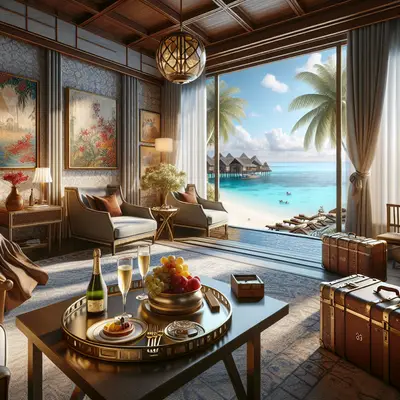
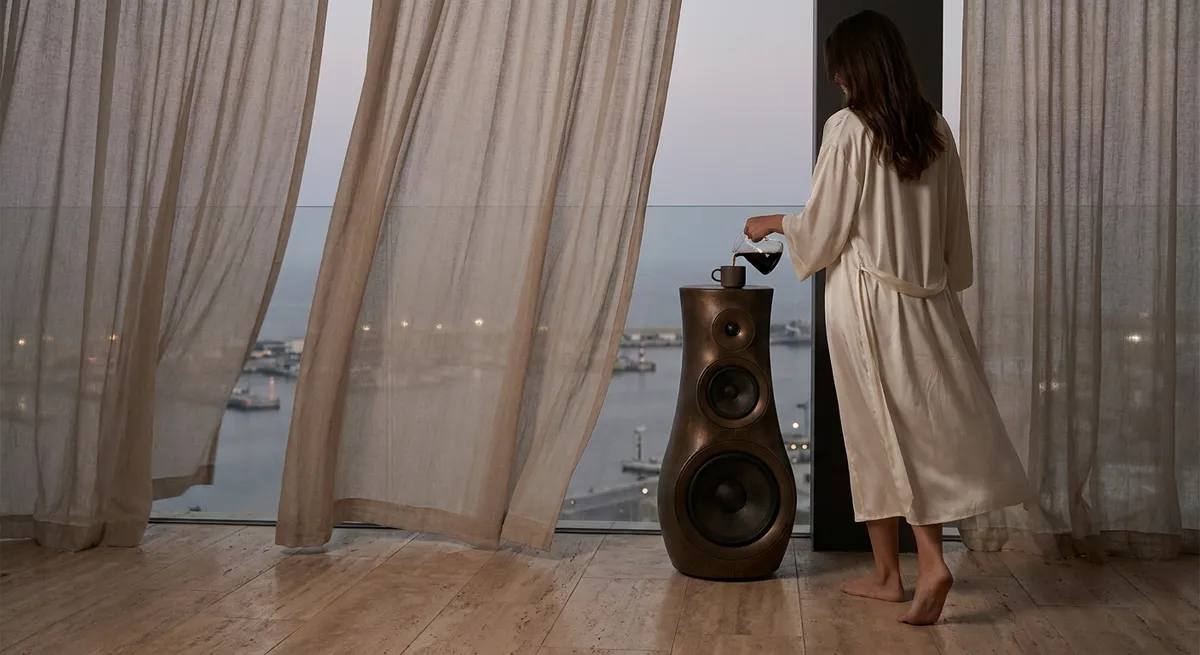
Beyond glossy views and iconic addresses, the real differentiator is the micro‑environment: air quality, acoustics, lighting, textures, and even scent. A well‑curated environment should lower the body’s tension the moment one enters—quiet hinges, softened transitions between spaces, well‑placed dimmers, tactile materials that invite touch but never overwhelm the eye.
Highly attuned guests often request rooms or villas based not on size, but orientation and quiet: morning light rather than direct afternoon glare; garden courtyards instead of main‑pool proximity; higher floors for cleaner soundscapes. They note the presence of adjustable blackout shades, intuitively placed outlets, and seating that encourages both work and contemplation.
The most refined properties now act as “sensory editors,” tailoring everything from mattress firmness and pillow density to humidity levels and aromatherapy profiles. Over time, loyal travelers build a personal atlas of micro‑environments worldwide—a lakeside suite in Zurich that doubles as a jet‑lag recovery cocoon, a discreet riad in Marrakech ideal for creative reset, an urban penthouse renowned not for its skyline, but for its astonishing stillness.
Private Intelligence: The New Concierge Standard
At the premier end of travel, the role of the concierge has evolved into something closer to private intelligence.
Rather than simply securing reservations, top‑tier lifestyle teams now function as quiet curators of context. They track not only preferences—room temperature, allergies, favored wines—but patterns: when you tend to fatigue, which types of experiences energize you, how much social exposure you prefer in a given city. Over repeated stays, an invisible dossier emerges, enabling them to anticipate needs without intrusion.
This intelligence extends beyond the property. Well‑connected concierges maintain discreet networks of local experts: gallery directors who will open an exhibit early for a private viewing; chefs willing to create off‑menu menus anchored in a guest’s culinary history; artisans who can customize a piece overnight. The emphasis is not on “VIP treatment” as performance, but on relevance—experiences that feel uncannily, almost impossibly aligned with who you are.
For the seasoned luxury traveler, the most valuable relationships are often with these quiet orchestrators: the front‑of‑house director who knows precisely when to shorten a transfer, the butler who pre‑packs luggage according to the next city’s climate, the travel advisor who understands that a three‑hour lunch with a local thought leader is more precious than any standard tour. Their work is rarely visible, but its absence is instantly felt.
Wellness as a Precision Craft, Not an Amenity
Wellness, at this level, is no longer a scheduled spa appointment; it is an underlying operating system for the entire journey.
Elite properties and bespoke travel planners are increasingly integrating evidence‑based wellness design into each stage of the trip. Flight selection is optimized for minimal circadian disruption, with pre‑trip recommendations for sleep, hydration, and light exposure. Upon arrival, some hotels now offer in‑room light therapy, tailored minibar configurations (electrolytes instead of sugary snacks), and guided breathing or stretching sessions designed specifically for recovery from the exact route flown.
Nutrition and movement are treated as customized tools rather than generalized advice. Menus quietly offer anti‑inflammatory options and low‑glycemic pacing for those managing demanding cognitive workloads. Fitness spaces adapt to the traveler’s rhythm—24‑hour access, equipment arranged to encourage short, efficient sessions, and, in some cases, tech‑enabled assessments that translate into micro‑routines deployable in any room or jet cabin.
For many high‑performing travelers, constant movement is a given; the differentiator is how gently the body is carried through it. The most advanced itineraries integrate blood‑panel‑informed recommendations, wearable data, and specialist consultations to create a continuum of care that follows the traveler across borders. The journey becomes not a disruption to wellness, but a laboratory for its refinement.
The Quiet Economy of Trust and Discretion
In a world saturated with visibility, the highest luxury remains the option to remain unseen.
Trust now carries its own currency. From private aviation to boutique hotels and specialist travel advisors, the most valued partners are those who handle information with absolute discretion and act as guardians of both schedule and identity. Names are kept off manifests when possible, stays are booked under holding entities, and staff are trained not simply in service, but in silence—knowing when not to ask questions, when not to document, and when to gently reroute attention away.
Discretion also shapes how experiences are framed. Many ultra‑high‑net‑worth travelers prefer unbranded, low‑signal environments: villas with minimal external signage, restaurants where staff recognize them by presence rather than name, yachts whose aesthetic codes whisper understatement rather than spectacle. Photos are limited, social media is either tightly controlled or entirely absent, and the real luxury becomes the sensation that a moment belongs only to the people inside it.
This quiet economy of trust is built slowly and defended fiercely. Travelers return to the same properties and service providers year after year not merely because of familiarity, but because those partners have proven they can absorb complexity, shield them from unnecessary exposure, and preserve the integrity of their inner lives. At this altitude, the ultimate amenity is the ability to move through the world lightly—fully supported, yet softly outlined.
Conclusion
Luxury, for the truly seasoned traveler, is no longer a static set of symbols. It is a living architecture made of time, silence, intelligence, and trust. It appears in the way an itinerary breathes, the way a room quiets the mind upon entry, the way a hotel remembers not just what you like, but how you think.
As global mobility becomes ever more accessible, the distinction shifts from who can go where to how one moves through that space. Those who understand this hidden rhythm—who prioritize precision over display, calibration over accumulation—are crafting a new standard of premium living in motion: one where the most valuable moments feel not public, but exquisitely, delicately one’s own.
Sources
- McKinsey & Company – The Future of Luxury: Bouncing Back from COVID-19 - Analysis of evolving luxury consumer expectations, including personalization, wellness, and discretion
- Boston Consulting Group – True-Luxury Global Consumer Insight - Research on high-end travelers’ preferences for experience, privacy, and tailored service
- Harvard Business Review – The Experience Economy - Foundational framework on experiences as a premium offering, relevant to modern luxury travel design
- International WELL Building Institute - Standards and insights on wellness-centric environment design, applicable to premium hospitality and travel spaces
- World Travel & Tourism Council – High Net Worth Travelers Report - Industry-level perspective on trends shaping the behaviors and expectations of affluent travelers (search “High Net Worth Travelers” on WTTC site)
Key Takeaway
The most important thing to remember from this article is that this information can change how you think about Premium Lifestyle.