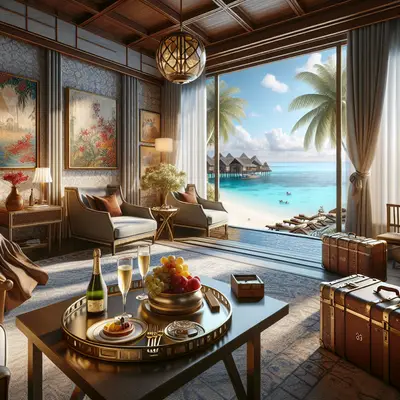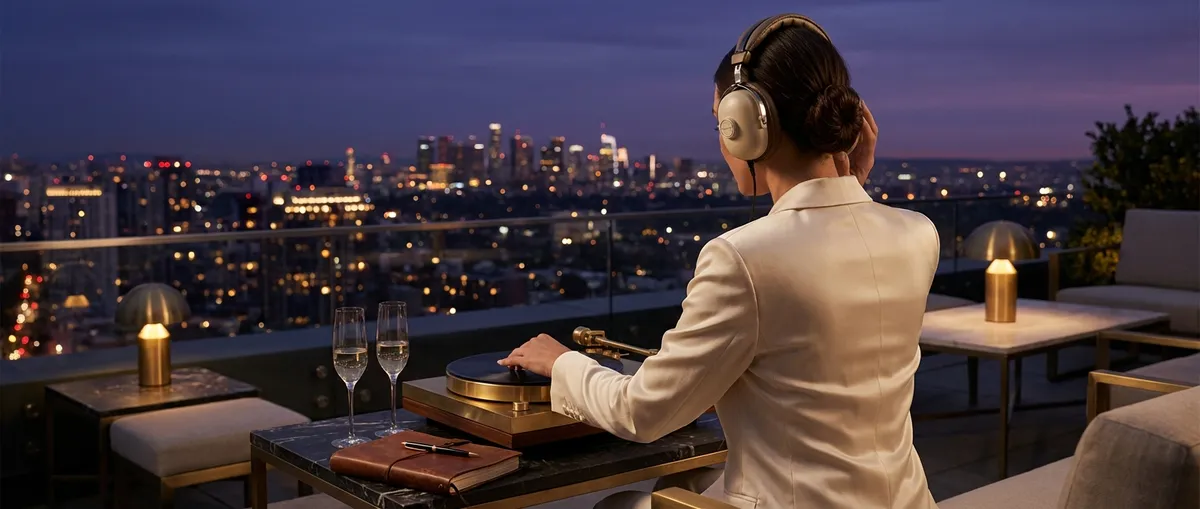
Travel, for the genuinely discerning, is no longer about arrival. It is about calibrating a life that moves—effortlessly, quietly, with an internal rhythm that remains intact regardless of time zone or terminal. Premium living in motion is not a spectacle; it is a choreography of details that most travelers never notice, but connoisseurs insist upon.
What follows is an exploration of five exclusive, often unspoken insights that shape the way sophisticated travelers design their journeys—subtly, precisely, and always on their own terms.
The Architecture of Time: Designing Your Own Travel Tempo
Those who travel well understand that time is their most valuable currency, and they treat it with the same discretion as their capital. Instead of surrendering to standard check-in times and airline schedules, they design an independent temporal architecture around their trips.
This begins long before departure. Premium travelers often work with advisors—or maintain personally tailored frameworks—that map flights, transfers, meetings, and meals around their body’s natural cadence rather than arbitrary timetables. Red-eye flights are chosen not because they are efficient, but because they align with one’s circadian rhythm and calendar on arrival.
Layovers become intentional intermissions rather than necessary inconveniences: an airport lounge with natural light and quiet zones may be favored over the closer connection, because 90 minutes of true mental reset is more valuable than arriving 45 minutes earlier, exhausted and unfocused. Late check-out and early check-in are not perks to be requested casually but negotiated as part of a seamless temporal envelope—so that your day unfolds without the awkward “dead time” so many accept as inevitable.
Ultimately, the true marker of premium travel is not how much one does in a day, but how unhurried the day feels, no matter how much it contains.
The Private Layer: Curating an Invisible Support Network
At the highest levels of travel, the most valuable amenities are rarely listed on websites. They exist in the private layer: networks of trusted individuals and services that quietly hold a journey together.
This might include a dedicated ground handler in key cities who understands your preferences for cars, routes, and personal space; a personal contact at a preferred airline who can advise on aircraft types and seat configurations beyond what a booking engine ever reveals; or a hotel’s director-level contact who understands that your definition of “quiet room” is not simply “high floor,” but distance from service elevators, late-night bar traffic, and early-morning housekeeping routines.
Luxury travelers often maintain a short, carefully cultivated list of such individuals worldwide: a florist who can arrange a room exactly as one prefers upon arrival; a local chef who can prepare a late private tasting after regular service; a discreet concierge who knows which galleries can be visited outside public opening hours. These relationships take years to build, but once established, they form an invisible exoskeleton of reliability and refinement.
What appears to outsiders as effortless access is, in fact, the accumulated equity of relationships—nurtured with courtesy, consistency, and thoughtful reciprocity.
The Texture of Comfort: Elevating Micro-Details Others Overlook
Premium comfort is not an abstract concept; it is an accumulation of micro-decisions that shape the sensory texture of a journey. Sophisticated travelers rarely leave these details to chance.
They know the difference between various cabin layouts on the same aircraft model, and will choose a route or departure time to secure a configuration that supports real rest rather than mere transport. They travel with a personal “comfort kit” that might include a familiar pillowcase scent, a specific fabric eye mask, or a compact travel humidifier for dry hotel rooms and cabins—small items that dramatically upgrade sleep quality.
Clothing is selected not only for appearance but for how it behaves over a 16-hour day: crease resistance, temperature regulation, discretion of branding, and ability to transition from aircraft to boardroom to dinner without looking fatigued. Materials matter—merino, cashmere blends, supima cotton, technical wools—all curated with attention to both tactile pleasure and performance in transit.
Even the digital side of comfort is curated: playlists designed for ascent, work, and descent; offline reading lists that nourish rather than numb; device settings adjusted to minimize blue light before sleep. Where others see travel as a disruption of routine, premium travelers see it as a movable sanctuary, engineered through thousands of small, deliberate choices.
The Discreet Palette: Experiencing a Destination Without Performing It
For the truly discerning, luxury is not found in simply consuming the “best” restaurants, suites, and experiences that a city can offer, but in engaging with a destination in a way that feels proportionate and authentic to one’s own sensibilities.
This begins with an almost curatorial approach to experiences. Instead of ticking off the most famous establishments, premium travelers look for the right balance of recognition and quiet. A city’s three-Michelin-star institution might be reserved for a single, deliberate evening, paired with another night at a low-profile, chef-driven counter where the experience is as intimate as it is refined.
Cultural engagement is treated similarly. Rather than private tours that rush through closed museums for the sake of exclusivity, some opt for early-access hours with a particularly insightful guide, or choose smaller institutions where one can stand in silence before a single artwork without being jostled.
This is not about avoiding the iconic, but about resisting performance. There is no compulsion to document everything for an audience. The most memorable experiences tend to be those that are not photographed at all: a conversation with a local winemaker in their cellar, a pianist playing to an audience of five, a late-night walk through an empty square. The premium traveler’s standard is not “Is this impressive?” but “Is this deeply, quietly satisfying?”
The Continuity of Self: Maintaining Identity Across Time Zones
The ultimate luxury is continuity—being recognizably yourself no matter where in the world you land. While many travelers accept that life “on the road” will be a diluted, compromised version of their true lifestyle, premium travelers design their habits so that their core identity travels with them.
This often manifests in non-negotiable rituals. A traveler devoted to fitness will ensure access to suitable equipment or bring compact tools to train in their suite before dawn. Someone who values mental clarity will maintain their meditation practice across continents, using noise-canceling headphones or room atomizers to recreate the conditions of home. Nutrition is calibrated: room service menus are navigated with the same intention as a trusted restaurant list, exercising discernment over preparation methods, timing of meals, and sugar or alcohol intake on long flights.
Even in high-pressure, high-mobility lifestyles, sleep becomes sacred. Sophisticated travelers learn their own sleep architecture and protect it with precision: caffeine cut-off times, melatonin or light exposure strategies, and consistent pre-sleep rituals that signal to the body, “We are home now,” even in yet another unfamiliar suite.
This is the subtle paradox of premium travel: the more you move, the more essential it becomes to protect a stable inner world. The true hallmark of an elevated traveler is not how far they go, but how intact they remain when they return.
Conclusion
Premium lifestyle, when placed in motion across terminals, penthouses, and private lounges, is not defined by spectacle but by structure. It is the architecture of time, the invisible network of trusted support, the tactile refinement of micro-comforts, the quiet integrity with which one meets each city, and the fierce protection of personal continuity.
For those who travel at the highest level, the journey is neither escape nor performance. It is simply life—executed everywhere with the same precision, calm, and understated grace.
Sources
- Harvard Business Review – Manage Your Energy, Not Your Time - Explores how high-performers structure time and energy, relevant to designing a personal travel tempo
- National Sleep Foundation – Travel & Sleep - Offers evidence-based guidance on jet lag, circadian rhythms, and sleep strategies for frequent travelers
- Mayo Clinic – Jet Lag Disorder - Medical overview of jet lag and practical recommendations for maintaining continuity across time zones
- International Air Transport Association (IATA) – Business Travel Insights - Provides data and analysis on premium travel behavior and expectations
- UNESCO – World Heritage Centre - Authoritative resource on cultural sites worldwide, valuable for travelers seeking meaningful, context-rich experiences
Key Takeaway
The most important thing to remember from this article is that this information can change how you think about Premium Lifestyle.