Fine dining at the highest level is no longer about white tablecloths and hushed rooms alone. For the well-traveled guest, it is an evolving language of intent: in how a menu is structured, how service appears and disappears, how a single course can recall a coastline or a harvest. Luxury travelers aren’t simply collecting reservations; they are curating moments that feel precise, personal, and quietly unforgettable.
This is where the real distinction lies: not in price point, but in the depth of thought behind every detail. Below are five exclusive insights that seasoned travelers recognize instantly, and that transform dinner into a finely tuned experience rather than a performance.
The Architecture of the Menu: Reading Beyond the Courses
At premier restaurants, the menu is not a list; it is a narrative arc. Understanding that architecture changes how you experience the evening.
You will often see a deliberate progression in energy rather than in portion size: opening bites that awaken but do not overwhelm, followed by dishes that shift between tension and relief—acidity and richness, crunch and silk, warmth and chill. The best tasting menus feel composed like a piece of music, with recurring notes of herbs, aromatics, or regional ingredients that create an almost subconscious sense of coherence.
Luxury travelers know to read these cues. A menu heavy in technique but absent of clear seasonal markers may be impressive, but it rarely becomes memorable. In contrast, a menu that references the local market that morning, the catch from a specific bay, or a fleeting ingredient at its peak tells you that the chef is cooking in dialogue with place and time.
Treat the menu as an invitation, not a script: ask why a certain ingredient appears three ways across the night, or why a mid-course is served chilled after a hot entrée. The answer is often where the restaurant’s philosophy quietly reveals itself.
The Orchestration of Service: Precision Without Performance
In world-class dining rooms, service is choreography—every movement considered, every silence intentional. But the most elevated experiences feel strangely effortless, as if every detail has simply aligned on its own.
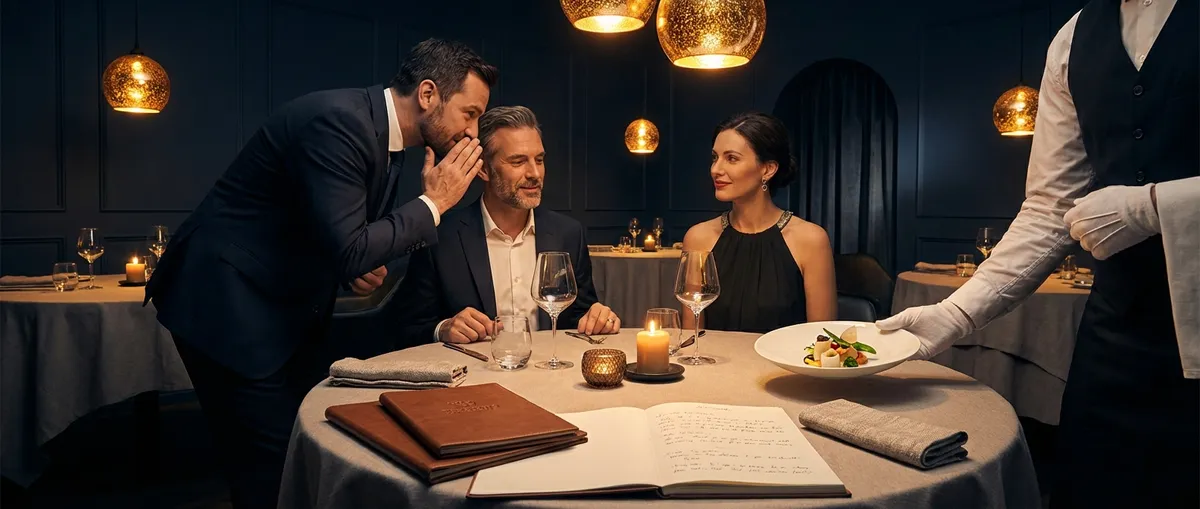
Luxury travelers notice the discretion: how a sommelier reads the table’s energy before approaching, how a server adjusts pacing in response to a lingering conversation, how plates arrive at the same micro-second without visible signaling among staff. This is not theatrics; it is coordination honed over years.
More telling than a flawless wine presentation is how the team handles fracture points. An overcooked course, a corked bottle, or a misaligned dietary request becomes an opportunity. In exceptional dining rooms, these moments are resolved with speed, sincerity, and often a quiet, unexpected gesture—an additional course, a considered pairing, an unprompted adjustment to the bill.
Look for service teams that anticipate rather than react: the extra chair that appears for a handbag before you seek a hook, the napkin refolded while you’re away from the table, the dishware changed not for show but because the next course demands a different canvas. That is where genuine refinement lives.
The Conversation Between Plate and Place
At the highest tier, fine dining is site-specific. The experience should not be replicable two countries—or sometimes even two neighborhoods—away. This goes beyond sourcing ingredients locally; it is about making the surrounding environment inseparable from what is on the plate.
Elite travelers increasingly seek restaurants that engage with their geography: sea herbs from the nearby shoreline, vegetables from a singular farm, spices used in a way that acknowledges local tradition while reframing it. When executed with respect, the result is both intellectually compelling and deeply comforting—familiar flavors in unexpected forms.
Attention to place also extends to design choices: the way daylight softens across a dining room overlooking vineyards, how a coastal restaurant uses reflective surfaces to echo water, or how table settings reference regional craft. These details may be subtle, but together they shape your sensory memory of the evening.
Ask where a signature ingredient comes from and how long the restaurant has worked with that producer. In top-tier establishments, these aren’t generic relationships; they are long-term collaborations. The chef’s relationship with a single fisherman or farmer often defines an entire chapter of the menu.
The Art of Pairing: Beyond Wine, Toward Atmosphere
Wine pairings have evolved from simple accompaniments to an integral part of the fine dining narrative. For luxury travelers, the true beauty lies not in labels alone, but in the thought behind balance and contrast.
The most compelling pairings are those that respect the architecture of the menu: a delicate, saline white that amplifies an oceanic course without overshadowing it; a mature red poured in a smaller volume, designed to echo the earthiness of a single, concentrated dish. Increasingly, world-class dining rooms are applying the same precision to non-alcoholic pairings, using house-fermented juices, teas, and infusions to create a parallel journey.
Pay attention to how your sommelier speaks about a pairing. Are they listing tasting notes, or are they explaining why this particular wine or infusion was chosen for this moment in the progression? The latter suggests a restaurant thinking holistically about your experience.
The most refined travelers will sometimes request a modified pairing—perhaps focusing on older vintages, rare half-bottles, or a combination of wine and non-alcoholic options. In exceptional establishments, this is welcomed as a collaboration rather than a deviation.
The Luxury of Tempo: Owning the Rhythm of the Evening
In the world’s most thoughtfully run dining rooms, time is the ultimate luxury. It is not about how long a meal lasts, but about how under control it feels—never rushed, never stalled.
Elite diners recognize that pace is a form of hospitality. A three-hour tasting menu can feel weightless when energy is managed correctly: brief, bright courses interspersed with slightly more contemplative dishes, small intervals that allow conversation to breathe, and staff who adjust timing in response to your body language rather than a rigid schedule.
This control of tempo extends even before and after the meal. A welcome drink at the bar while your table is prepared, a brief kitchen visit that doesn’t interrupt the flow, a final, unhurried digestif offered in a quieter corner—these transitions shape your perception of the evening as much as any single course.
Luxury travelers often communicate their preferred rhythm subtly: mentioning a later engagement, signaling a desire to linger over a particular course, or expressing interest in an abbreviated tasting option. In the best houses, such cues are registered instantly and woven into the service pattern without visible disruption.
When evaluating a destination restaurant, consider not just what you ate and drank, but how the passing of time felt. If the hours seemed to suspend, the team has mastered one of the rarest dimensions of hospitality.
Conclusion
Fine dining, at its most elevated, is an exercise in intention. It is present in the way a menu is structured, the quiet alignment of a service team, the way a single herb can anchor a course to a coastline, and how an evening can stretch gracefully without ever feeling long.
For luxury travelers, recognizing these subtleties turns dinner from an impressive reservation into a personal ritual. It allows you to choose not simply where you dine, but how you wish to feel while doing so—energized or contemplative, challenged or comforted, anchored in place or gently transported.
In a world where access to best-in-class restaurants is increasingly democratized, distinction is no longer about exclusivity alone. It is about the sophistication of choices—yours, and the restaurant’s—and the shared pursuit of experiences that resonate long after the last glass is poured.
Sources
- The World’s 50 Best Restaurants – Official List and Insights - Provides an overview of global fine dining trends and philosophies from top-ranked restaurants
- Michelin Guide – About the Guide and Inspector Criteria - Explains the standards and considerations used to evaluate high-end restaurants worldwide
- Harvard T.H. Chan School of Public Health – The Art and Science of Tasting - Offers insight into sensory perception and how flavor, aroma, and texture interact in dining
- Cornell University School of Hotel Administration – Restaurant Service Quality Research - Discusses how service design and execution shape guest satisfaction in upscale restaurants
- Wine & Spirit Education Trust (WSET) – Principles of Food and Wine Pairing - Outlines foundational concepts for pairing beverages with fine dining menus
Key Takeaway
The most important thing to remember from this article is that this information can change how you think about Fine Dining.