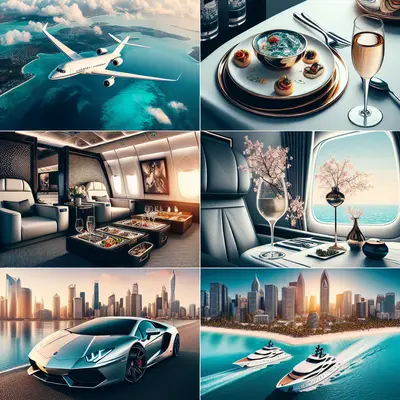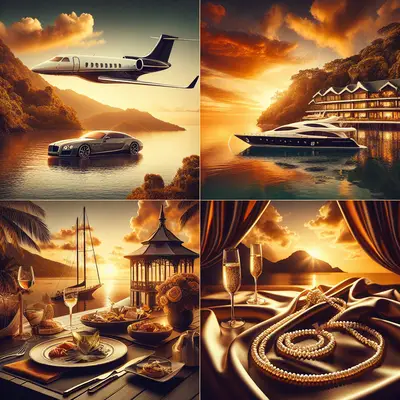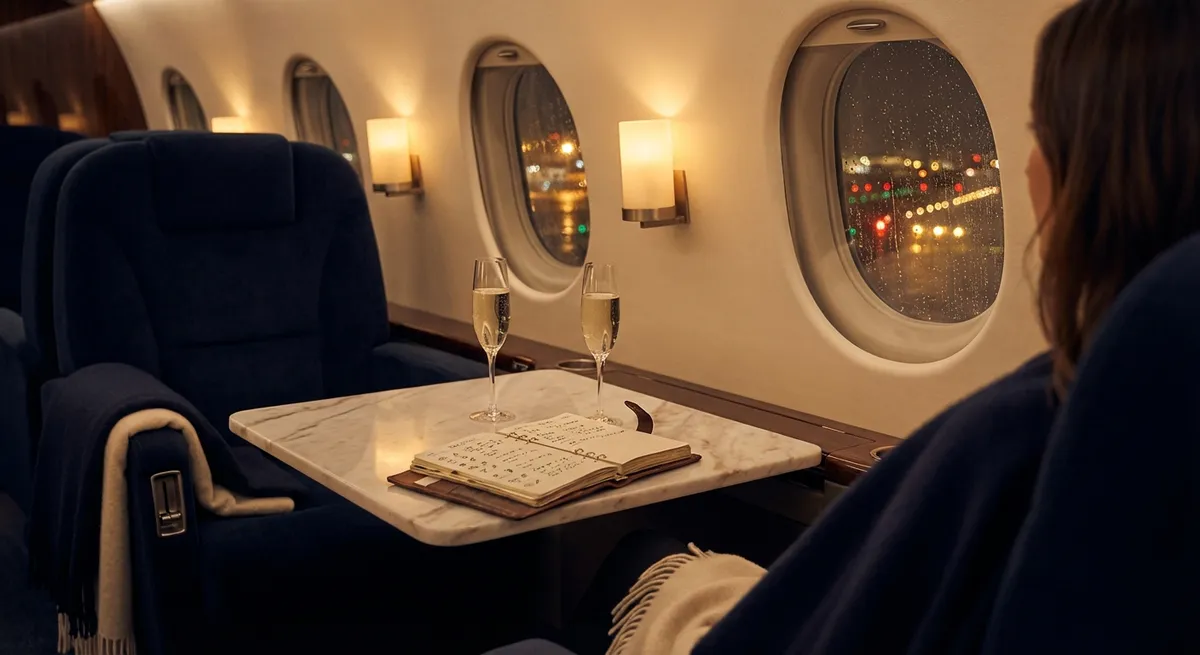
Luxury travel today is less about being seen and more about knowing where to look. It unfolds in hushed corridors, at off-hour openings, in the quiet confidence of details that never need to announce themselves. For the genuinely discerning traveler, the difference between a fine trip and a rarefied one lies in nuances: how a destination is accessed, how time is choreographed, how privacy is curated, and how meaning is layered into every hour away from home.
This is a world built on invisible decisions that most guests never notice—and that is precisely the point. Below are five exclusive insights that define how the most astute luxury travelers are reimagining their journeys.
1. The New Luxury Is Measured in Frictionlessness, Not Square Footage
For seasoned travelers, true indulgence is the absence of effort. Suite size and marble count matter far less than how seamlessly a journey moves from curb to pillow.
The most sophisticated itineraries are engineered around eliminating micro-frictions long before the traveler arrives. Private airport transfers timed to avoid bottlenecks, fast-track immigration services, hotel teams pre-briefed with preferences down to pillow density and coffee order, luggage that “teleports” between destinations without ever touching the carousel—these are the new benchmarks. The guest is never confronted with process; only with outcome.
Elite travelers increasingly assess brands by their choreography of transitions: how quickly can one move from the door of the aircraft to the first sip of a welcome drink, from the end of a meeting to a restorative spa ritual, from one city to the next without feeling the seams? In this paradigm, time is not just money; it is the ultimate design material. Those who master the removal of friction are those who command loyalty at the very top of the market.
2. Privacy Has Evolved from Seclusion to Curated Invisibility
Once, privacy meant remoteness: islands, villas, gated compounds. Now, the most sophisticated travelers seek something more nuanced—experiences where they are present, but not on display.
Curated invisibility is about occupying prime locations without being folded into the spectacle. It’s the penthouse with a private elevator that opens directly into the suite, the restaurant where a discreet side entrance leads to a table shielded from the main room’s sightlines, the yacht that can berth in the heart of a glamorous harbor while preserving the sense of being entirely elsewhere.
Security is no longer just about physical barriers; it is about controlling layers of exposure. This includes data minimization in guest profiles, hotels that refrain from public social media tags without explicit consent, and itineraries designed to avoid predictable routines. At the highest levels, luxury travel partners understand that their guests value being known perfectly—and seen barely.
3. Access Now Outranks Aesthetics
Design still matters, but in rarefied travel, it is access that distinguishes a pleasant stay from a privileged one. The most coveted journeys are no longer defined solely by where one sleeps, but by what one is quietly allowed to experience.
This can take the form of private hours in museums before doors open to the public, after-dark access to heritage sites, or behind-the-scenes encounters with conservators, curators, and artisans whose work usually lives in the footnotes. In wine regions, it might mean tasting from barrels not yet allocated to market, or exploring parcels of vineyards normally reserved for family. In cities, it might be a dinner cooked in an artist’s studio rather than a restaurant, or a performance in an opera house on a night when no performances are scheduled.
The most valued intermediaries in this world are not “agents” in the traditional sense, but cultural interpreters: people who can unlock doors, vouch for guests, and construct experiences that feel less like transactions and more like introductions into private worlds. Aesthetics create beauty; access creates belonging—and it is belonging that lingers.
4. Hyper-Personalization Is Shifting from Preference to Perspective
Preferences—room temperature, floral allergies, favorite champagne—are now the baseline. The new frontier of personalization lies in calibrating not just what a traveler likes, but how they perceive and process a destination.
For some, a perfect day in Kyoto might be anchored in architectural history and garden design; for others, in contemporary art and emerging culinary talent. The most advanced luxury operators are beginning to map itineraries not around standardized “must-sees” but around cognitive and emotional profiles: introvert or extrovert, observer or participant, collector or minimalist, ritualist or explorer.
Increasingly, itineraries are built like bespoke narratives rather than checklists. A traveler with a deep appreciation for craftsmanship might move through a city via ateliers, workshops, and restoration labs; another more attuned to sound and rhythm may be introduced to a place through rehearsals, soundscapes, and local music traditions instead of typical nightlife.
This shift demands more listening than selling. It rewards brands that invest in long-term guest dossiers not as databases, but as evolving portraits—subtle, respectful, and used to design experiences that feel uncannily aligned with the guest’s inner life.
5. Sustainability at the Top End Is Quiet, Precise, and Deeply Local
For luxury travelers who are both globally mobile and acutely aware of their footprint, sustainability is no longer a marketing angle—it is a moral precondition. Yet, in the premium space, the most meaningful sustainability efforts tend to be understated rather than loudly branded.
The most discerning guests look beyond optional “green cards” on linen changes. They are asking who owns the land, who benefits from the development, and whether local communities are partners rather than backdrops. They notice whether seasonal menus are a genuine reflection of nearby producers or just a decorative phrase. They pay attention to whether staff development includes education pathways, not only service training, and whether heritage architecture is preserved with rigor rather than aesthetic approximation.
True luxury, for this cohort, involves participating in destinations without eroding them. They gravitate toward properties that invest in conservation not just of landscapes, but of languages, old trades, and disappearing skills. The most sophisticated travelers understand that the rarest experience of all is returning to a beloved place years later and finding it not overrun, but quietly, respectfully thriving.
Conclusion
At the highest levels of travel, luxury is no longer a static aesthetic—it is a dynamic relationship between traveler, place, and time. The rarest experiences leave no fingerprints: no sense of effort, no trace of orchestration, no imprint beyond what the destination can comfortably bear.
For those attuned to its subtleties, modern luxury travel reveals itself not in the obvious markers of status, but in five quiet coordinates: frictionless movement, artful invisibility, meaningful access, deeply attuned personalization, and a precise, respectful approach to place. Master these, and every journey becomes less an escape and more a finely tuned extension of how one chooses to live.
Sources
- [UNWTO – Tourism in the Green Economy](https://www.unwto.org/tourism-in-the-green-economy) - Insight into how sustainability is being integrated into high-end tourism globally
- [Virtuoso – 2024 Luxe Report](https://www.virtuoso.com/travel/articles/2024-virtuoso-luxe-report) - Industry perspective on evolving preferences among luxury travelers, including personalization and access
- [Condé Nast Traveler – How the Ultra-Wealthy Are Traveling Now](https://www.cntraveler.com/story/how-the-ultra-wealthy-are-traveling-now) - Exploration of current trends in elite travel behavior and expectations
- [Forbes Travel Guide – What Defines Luxury in Travel Today](https://www.forbestravelguide.com/stories/what-defines-luxury-in-travel-today) - Discussion of modern luxury benchmarks such as service, privacy, and experiential depth
- [Harvard Business Review – The Future of Customer Experience](https://hbr.org/2017/11/the-future-of-customer-experience) - Framework for understanding hyper-personalization and frictionless service, applicable to premium travel experiences
Key Takeaway
The most important thing to remember from this article is that this information can change how you think about Luxury Travel.