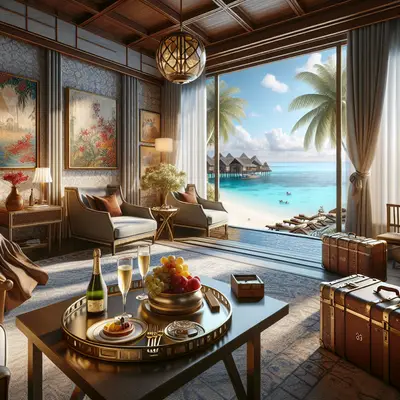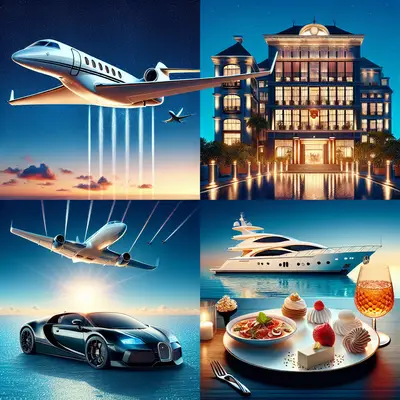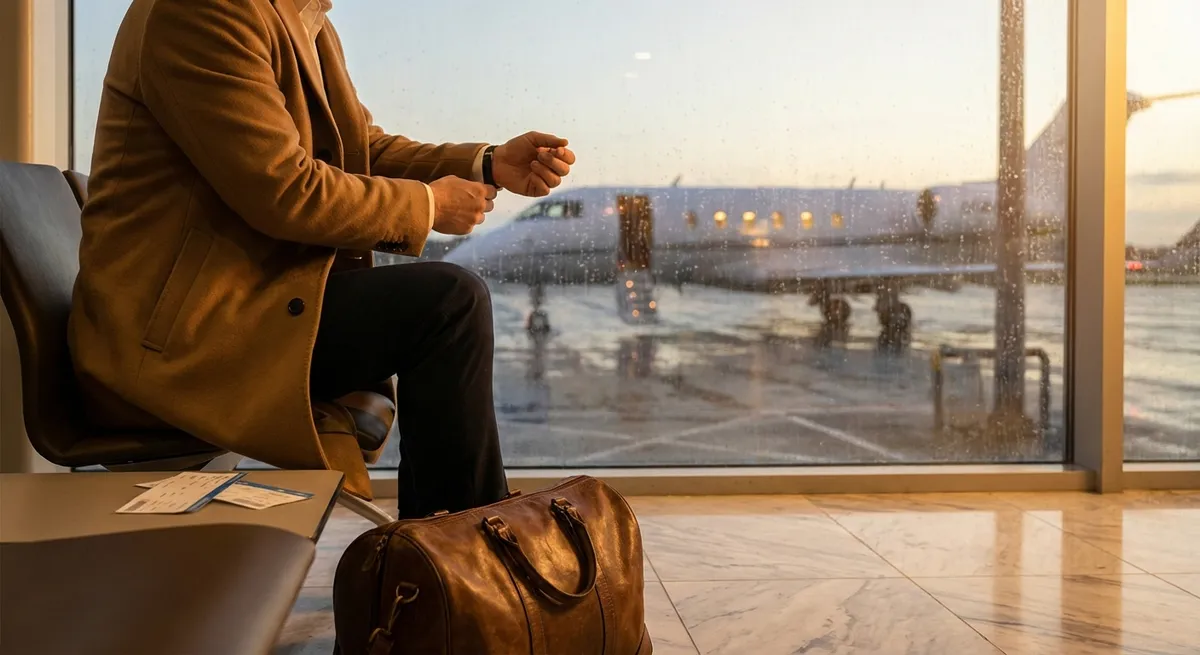
In the most considered lives, luxury is less about accumulation and more about subtraction. The modern premium traveler is not chasing more; they are curating less—but better. Between gate lounges and private terminals, between villa stays and discreet urban suites, a quieter revolution is unfolding: an “invisible edit” of habits, spaces, and experiences that makes every journey feel both rare and deeply personal.
This is not about spectacle. It is about density—of meaning, of comfort, of precision—woven through every decision. Below, five exclusive, often unspoken insights that the most discerning travelers already live by, and that define a truly elevated way of moving through the world.
1. The New Status Symbol: Seamless Time, Not Visible Wealth
For the genuinely well-traveled, the most prized luxury is not an object but an absence: the absence of friction. Time that feels unbroken, unrehearsed, and impeccably held together is today’s quiet status symbol.
This begins long before departure. It’s reflected in the traveler who never waits in a check-in queue because their loyalty data is already working in the background, who navigates airport security via known traveler programs, and whose itineraries are orchestrated around natural energy rhythms rather than airline convenience. Their schedules rarely feel crowded; instead, they are layered with intentional pauses—30 minutes in a lounge for a proper shower and espresso, a car transfer that allows for a silent reset between city and suite.
To reach this level, premium travelers invest more in systems than in showpieces. Dedicated travel concierges, elite status with a select few airlines, and pre-clearance programs become invisible scaffolding. What others see as spontaneity is, in reality, deeply choreographed ease. The true signal isn’t how loudly one arrives, but how little strain the journey leaves behind.
2. Quiet Tech: Digital Minimalism in a Hyper-Connected World
Luxury once meant having the latest device first; now it means being able to put it away without cost. High-net-worth travelers are increasingly practicing “quiet tech”: a deliberate, pared-back relationship with digital tools that protect focus, privacy, and presence.
Their devices are optimised, not cluttered. A small set of secure apps manage everything—boarding passes, encrypted communications with their hotel, discreet driver arrangements, curated local recommendations. Notifications are aggressively edited. Screens are there to serve the journey rather than steal it; they are used for a well-mastered playlist during a night flight or a thoughtfully downloaded film, not an endless scroll of distraction.
This approach extends to privacy. Premium travelers understand digital footprints as clearly as they understand luggage weight. They favor secure Wi-Fi solutions, VPNs, and privacy-focused browsers when transiting. Their boarding passes are never casually shared on social media; geotagging is used sparingly, often after departure rather than in real time. The result: travel that feels calmer, more intentional, and less like a performance.
3. Scent, Sound, and Light: The Underrated Architecture of Comfort
The most refined travelers think in atmospheres, not just amenities. While others obsess over room size or Instagrammable moments, they are attuned to three subtler dimensions: scent, sound, and light.
Scent is the first layer. A personal travel fragrance—sometimes a custom blend, sometimes a tightly edited rotation—becomes a portable anchor of familiarity. Many premium travelers carry a small atomizer of room spray or essential oil for hotel suites and aircraft cabins, creating a consistent olfactory signature wherever they land.
Sound is the second dimension. Rather than relying on whatever the airline offers, they curate their own private soundscape: noise-cancelling headphones, a selection of playlists calibrated to phases of the journey (taxi, takeoff, crossing time zones, arrival), and sometimes guided sleep tracks for long-haul flights. Silence is not an accident; it is engineered.
Light is the third, and perhaps most powerful. Those who move frequently between time zones are increasingly strategic about light exposure. Window seats are chosen not just for views, but for circadian control. In-suite, they adjust curtains and lamps to mimic natural daylight cycles, and some carry compact travel lamps calibrated to support wakefulness or rest. When scent, sound, and light are treated as design elements, even an overnight flight can feel more like a private cocoon than a compromise.
4. The Art of the Micro-Collection: Traveling with Signature Objects
At a certain level, the goal is no longer to own everything, but to travel with the right almost-nothing. The most sophisticated travelers often maintain a “micro-collection” of objects that move with them from destination to destination—a personal, portable mise-en-scène.
This might include a perfectly broken-in cashmere wrap, a slim leather folio that becomes both travel wallet and meeting companion, a compact fountain pen with a specific ink shade, or a folding frame that always displays a single, cherished photograph in hotel rooms. To the untrained eye, these items seem unremarkable. To their owner, they are stabilizing rituals in object form.
These micro-collections are edited ruthlessly. Every piece earns its place through utility and emotional resonance. Materials matter: natural fibers that regulate temperature, leather that patinas rather than wears out, metal hardware that feels substantial in the hand. The cumulative effect is subtle but profound; in a world of generic luxury, these objects render each space intimately, undeniably “theirs.”
5. Discreet Cultural Fluency: The New Global Politeness
The most privileged access in the world—whether it’s a chef’s table not listed on any website, a private gallery viewing, or an invitation-only club evening—rarely comes from wealth alone. It comes from a nuanced, respectful way of moving through other people’s cultures.
Premium travelers invest time in understanding the textures of etiquette before they land: how to greet properly, when to tip and when not to, what topics are best left unspoken, how to dress in a way that is aligned with local sensibilities rather than merely stylish. They may consult local concierges, cultural briefings, or well-researched guides, not as a formality but as a non-negotiable part of preparation.
Language, even in shards, becomes a quiet key. A correctly pronounced “thank you,” a short greeting in the local tongue, or the ability to order coffee in the language of the place often unlocks a generosity that money cannot command. This discreet cultural fluency signals something rare: that the traveler is not simply passing through, but willing to meet the destination on its own terms. The return on this respect is often extraordinary access wrapped in extraordinary graciousness.
Conclusion
The future of premium lifestyle—on the road and at home—is moving away from spectacle and toward calibration. The invisible edit of time, tech, atmosphere, objects, and cultural intelligence defines a new standard: one where luxury is experienced as effortlessness, not excess.
For those who travel well and often, these five insights are less a checklist and more a quiet manifesto. They suggest that the highest form of luxury is not what others can see, but what only you can feel: a life that moves seamlessly between destinations, held together by a thousand almost-invisible decisions that make every departure, and every return, feel impeccably your own.
Sources
- [U.S. Department of Homeland Security – Trusted Traveler Programs](https://www.dhs.gov/trusted-traveler-programs) – Overview of Global Entry, TSA PreCheck, and related programs that streamline airport security and border control
- [Harvard Medical School – Blue Light Has a Dark Side](https://www.health.harvard.edu/staying-healthy/blue-light-has-a-dark-side) – Explores how light exposure affects circadian rhythms and sleep, relevant to managing jet lag and travel comfort
- [The New York Times – The New Luxury Is Having Peace of Mind](https://www.nytimes.com/2021/12/08/style/luxury-peace-of-mind.html) – Discusses how modern luxury is shifting toward privacy, security, and ease rather than overt display
- [BBC Culture – Why Scent Is the Most Powerful Trigger for Memory](https://www.bbc.com/culture/article/20150212-why-scent-is-so-powersul) – Explains the connection between scent, memory, and emotional experience, underpinning the role of fragrance in travel
- [MIT Sloan Management Review – Digital Minimalism: Choosing a Focused Life](https://sloanreview.mit.edu/article/digital-minimalism/) – Examines the concept of digital minimalism and its impact on well-being and focus in an always-connected world
Key Takeaway
The most important thing to remember from this article is that this information can change how you think about Premium Lifestyle.