For the discerning traveler, luxury is no longer a single stunning suite or headline-making restaurant. It is the orchestration behind the scenes: the way your luggage appears as if by instinct, the way a city feels familiar on arrival, the way time itself seems to expand between departures and boardings. This is the invisible itinerary—where every movement is premeditated, yet nothing feels forced. For those shaping a premium lifestyle around travel, the true privilege is not excess, but ease.
Below are five exclusive, quietly powerful insights that elevate movement into an art form—and transform travel from logistics into a lived philosophy.
1. The Architecture of Effortless Transitions
The most luxurious part of a journey is often the part no one photographs: the transfer from aircraft door to city life. Sophisticated travelers think in transitions, not just destinations.
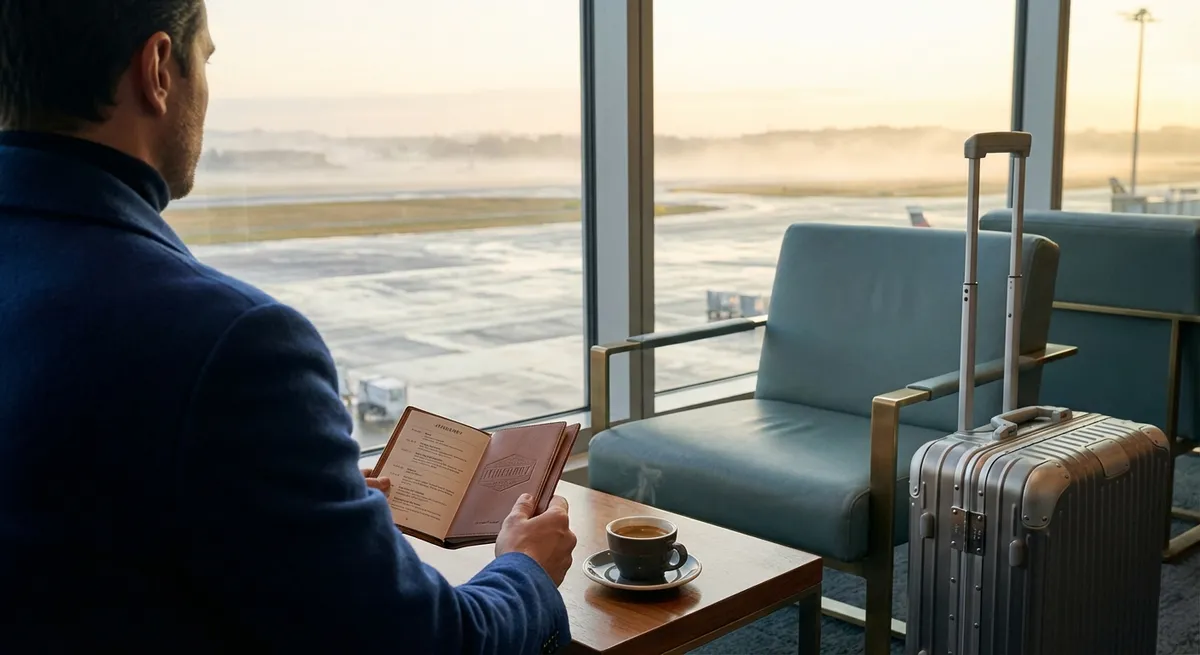
This begins with curated arrival protocols. Private or semi-private terminals, fast-track immigration services, and chauffeured transfers are not mere conveniences; they are the architecture of mental clarity. You are not only saving minutes—you are preserving cognitive bandwidth. From pre-clearing immigration where available, to partnering with vetted local ground operators, your aim is to design a glide path rather than a series of frictions.
The invisible itinerary also means rehearsing logistics before you depart. Confirm Wi‑Fi in the car, ensure your driver knows your preferred route type (scenic vs. fastest), arrange hotel pre-check-in so your suite is ready on arrival. The most seasoned travelers engineer the first two hours post-landing with almost military precision, then allow everything after that to feel beautifully unplanned.
2. Curated Time Zones: Designing Your Personal Rhythm
Abundant travel can fracture your sense of time—or refine it. The premium approach is to treat time zones as a material you sculpt, not a constraint you endure.
Rather than fighting jet lag, strategize around your own chronotype. Night-focused travelers may favor late departures and twilight arrivals, designing itineraries that align with their peak cognitive windows. Day-focused travelers may anchor long-haul flights to allow a full reset on arrival day, scheduling only low-stakes engagements and building in light, movement, and hydration as deliberate tools.
The elevated detail is not just “adjust your watch,” but “curate your hours.” That might mean reserving the first morning in a new city for analog quiet—a book, a terrace, a view—while your devices stay on airplane mode for a final, intentional pause. The very wealthy are not those with the most possessions, but those who can afford exactly the tempo they prefer. Luxury travelers emulate that by designing each journey around their personal rhythm, not the default schedules of carriers and meetings.
3. The Private Atlas: Building a Personal Network of “Known” Places
Beyond loyalty programs and algorithms lies something far more refined: a private atlas of spaces—cafés, lobbies, corner suites, quiet streets—that feel instinctively yours, even continents away.
This is not a checklist of “best ofs” from guides; it is a living archive built over years. A discreet hotel bar in Singapore where the staff know your preferred aperitif. A flower shop in Paris that understands your taste in understated arrangements. A coastal walking path in Cape Town that you return to every visit, no matter the reason for the trip.
The sophistication lies in cataloging these spaces and relationships, then layering them into future itineraries. The next time you transit through a familiar city, you are not “traveling” in the conventional sense—you are moving within an extended home. Over time, the planet becomes a series of interlinked familiarities; you trade the spectacle of novelty for the comfort of selective recognition. For serious travelers, this quiet cartography is more valuable than any VIP label.
4. Discreet Services: The Art of Invisible Assistance
Truly premium travel isn’t about being seen receiving special treatment; it’s about systems so refined you barely notice them operating. The art lies in cultivating discreet services that anticipate rather than react.
This begins with carefully chosen advisors: a travel designer who understands your thresholds for risk, spontaneity, and structure; a concierge who remembers that you prefer gallery visits in the morning and tasting menus only if the chef is present. It includes memberships or services that remove friction—airport meet-and-greet, luggage forwarding, private physician networks—deployed not as status symbols but as safeguards of continuity.
Invisible assistance also extends to digital curation. Encrypted communication channels, cloud-based document vaults with all essential travel records, and privacy controls for bookings and reservations form a kind of digital concierge layer around your physical movements. The goal is not maximal service—it is precise, quiet, need-specific support that never announces itself, yet never fails.
5. The Aesthetic of Preparedness: Packing as a Language
For the advanced traveler, luggage is not a container; it is a language. What you carry—and just as importantly, what you choose not to carry—signals how you intend to move through the world.
The aesthetic of preparedness is about modularity and restraint. A wardrobe that can shift from terrace breakfast to boardroom to gallery opening with only a change of shoes or a single accessory. Fabric choices that respect climate, culture, and security checks. A travel kit that includes analog backups—printed reservations, a slim notebook, a classic pen—alongside encrypted digital copies. Preparedness is not about overpacking; it is about anticipating context.
There is also grace in redundancy where it matters: an extra phone charger gifted to a colleague who forgot theirs, an additional tailored shirt in case of an unexpected invitation, a silk scarf that doubles as protection from overzealous air-conditioning or an impromptu cover in conservative spaces. In this quiet preparedness, you communicate an unspoken message: you are at ease in movement, and you bring that ease to those around you.
Conclusion
A premium lifestyle in motion is not defined by how far you travel, but by how intentionally you move. The truly elevated journey is composed of expert transitions, time curated to your internal rhythm, a personal atlas of familiar spaces, discreet networks of support, and a precise aesthetic of preparedness. These are not theatrics; they are refinements.
In the end, the invisible itinerary is less about spectacle and more about sovereignty—over your time, your energy, and your experience of the world. As the skies become more crowded and destinations more exposed, the rarest luxury remains the same: to move through it all with quiet command.
Sources
- [U.S. Customs and Border Protection – Global Entry](https://www.cbp.gov/travel/trusted-traveler-programs/global-entry) - Official information on expedited entry programs that can streamline international arrivals
- [International Air Transport Association (IATA) – Travel Regulations](https://www.iata.org/en/youandi/travelers/) - Guidance on travel requirements, health measures, and documentation for international travelers
- [Harvard Business Review – How to Manage Your Energy, Not Your Time](https://hbr.org/2007/10/manage-your-energy-not-your-time) - Explores principles of energy and rhythm that can be applied to structuring travel schedules
- [Condé Nast Traveler – Airport Guides and Tips](https://www.cntraveler.com/airport-guides) - Curated insights on airport navigation, lounges, and services that enhance transitions
- [MIT Sloan Management Review – Digital Resilience](https://sloanreview.mit.edu/article/building-digital-resilience/) - Discusses digital resilience and security, relevant to travelers managing documents and privacy while in motion
Key Takeaway
The most important thing to remember from this article is that this information can change how you think about Premium Lifestyle.