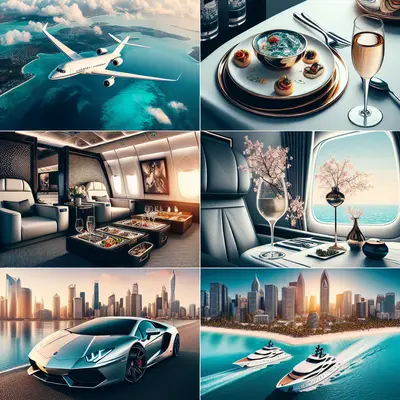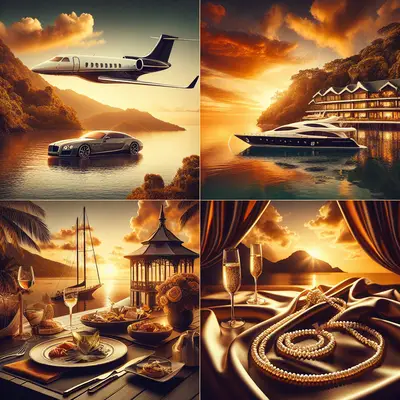
Luxury travel today is less about being seen and more about moving through the world with a kind of considered effortlessness. Destinations matter, of course—but for discerning travelers, the true luxury lies in what doesn’t appear on the brochure: the unlisted rooms, the off-menu experiences, the quiet choreography that makes every detail feel inevitable rather than arranged. This is the realm where time is curated, privacy is art-directed, and access becomes a subtle language of its own.
Below, five exclusive insights shaping how sophisticated travelers are redefining what “luxury” actually means when they step onto the jet bridge.
1. The Rise of Time-Rich Itineraries
For the genuinely affluent traveler, the most precious asset is no longer location but tempo. The question is less “Where are you staying?” and more “How have you structured your time?”
Time-rich itineraries resist the industry pressure to “do it all.” Instead, they privilege depth over density. A four-night stay may focus on a single neighborhood in a major city, explored at walking pace, with a single exceptional dinner anchored by a chef’s table, rather than a carousel of reservations. Globally mobile clients increasingly ask their concierges not for lists, but for filters: two experiences that feel surgically aligned with their tastes, and everything else quietly removed.
Private aviation and flexible check-in schedules, once about convenience, now serve a different purpose: protecting the cadence of a trip. Arrivals are timed to avoid rush-hour traffic and lobby crowds; departures are adjusted to allow one last unhurried breakfast rather than a rushed farewell. The itinerary becomes less a sequence of activities and more a thoughtfully edited score, with the most luxurious element being the empty pages within it.
2. Privacy as a Designed Experience
In the upper tiers of hospitality, privacy is no longer simply “not being disturbed.” It is actively designed and beautifully choreographed. This can mean villas and suites with layered thresholds—private driveways, discrete entrances, internal courtyards—so that movement through a property feels almost cinematic, without ever crossing a public corridor.
Elite travelers are also paying close attention to data privacy and digital discretion. Anonymous profiles, restricted data-sharing between partner brands, and invisible check-in processes (where identification happens once, quietly, and never resurfaces at the bar or spa) have become quiet status markers. In certain circles, the most desirable properties are those whose staff know everything that matters—and nothing that doesn’t.
Guests with higher privacy needs often request “quiet service patterns”: turndown at specific times, in-person interactions limited to key moments, and seamless digital communication for everything else. The aim is an environment where one feels meticulously cared for without ever feeling surveilled. In this new interpretation of luxury, the ultimate amenity is the ability to inhabit a place without leaving a visible trace.
3. Access Beyond the Algorithm
As mass tourism platforms have democratized recommendations, the truly premium experience now sits outside the algorithm. In-the-know travelers are less interested in what is “top rated” online and more in what is almost entirely absent from public discourse.
This might mean after-hours access to a museum through a private foundation, with a curator who speaks not just about the art, but about acquisition histories and conservation debates. It could be a tasting in a winemaker’s personal cellar, where no photography is encouraged and nothing is poured that appears on the standard list. In some cities, it’s a supper club with no website or public-facing name, accessed only via a trusted introducer.
Crucially, this access is not purely transactional. Luxury travelers understand that true exclusivity often operates on social capital rather than financial capital alone. They cultivate relationships with specialized travel advisors, local cultural brokers, and independent curators rather than relying solely on hotel concierges. The result is an ecosystem of experiences that feels unmarketed, unrepeatable, and quietly unshareable—at least in any explicit way.
4. The Aesthetic of Understatement
The most sophisticated travelers are moving away from logo-driven luxury and towards a more restrained, contextually aware aesthetic. The goal is not to import a globalized “premium” look into every destination, but to inhabit a place in a way that feels both elevated and attuned.
Instead of glossy lobbies, they seek materials that reflect the local climate and craft: limewashed walls in the Mediterranean, handwoven textiles in the Andes, dark wood and paper screens in Kyoto. The design language is minimal but not cold—light, texture, and acoustics are curated as carefully as furnishings. For many, the most beautiful suite is not the one with the largest television, but the one where the view is framed like a painting and the soundproofing allows the city to exist as an elegant murmur rather than a constant intrusion.
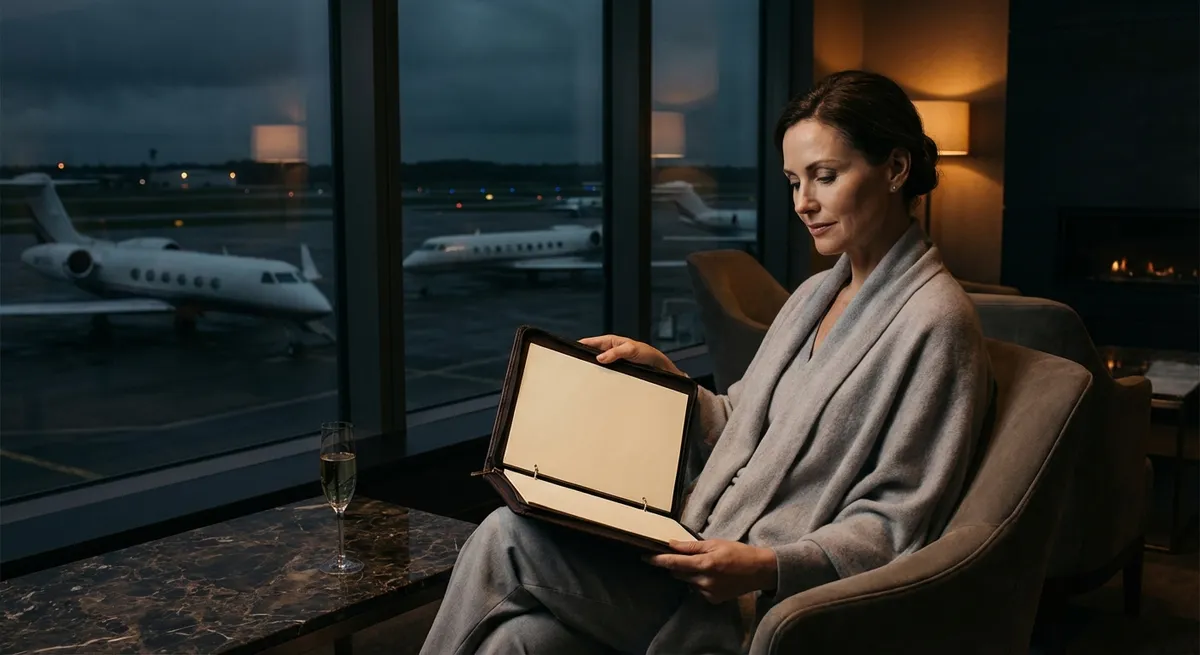
Wardrobe choices follow the same code of understatement. Neutral palettes, refined fabrics, and pieces without obvious branding allow travelers to move fluently across environments: private jet terminals, contemporary galleries, rural retreats. The visual signal is clear to those who can read it: sophistication without spectacle, refinement without the need for announcement.
5. Intelligent Sustainability, Quietly Embedded
For the high-end traveler, sustainability has evolved from a performative checkbox to a non-negotiable baseline—provided it is executed intelligently and without self-congratulation. The expectation is not a lecture, but a seamless integration of responsibility into the stay.
Guests at the top of the market now inquire not just about carbon offsets, but about supply chains: Where does the hotel source water? Who owns the land? Which local artisans or producers are meaningfully supported by their presence? They may prefer properties with robust environmental certifications, but what they truly value is transparency—detailed, verifiable information rather than vague language about “green initiatives.”
On the ground, this plays out as discreet choices. Electric or hybrid transfers instead of standard SUVs. Hotels that generate their own power, capture rainwater, and invest in local conservation projects. Menus that highlight seasonal, regional ingredients not as buzzwords, but as quietly confident expressions of place. The luxury is in knowing that one’s comfort and pleasure exist in conscious dialogue with the environment and community, rather than at their expense.
Conclusion
Luxury travel is entering a more nuanced, more intelligent era—one defined less by spectacle and more by subtlety. The true markers of privilege are no longer the obvious upgrades, but the invisible ones: itineraries that respect your internal clock, properties that protect your privacy without performance, access that bypasses the algorithm, aesthetics that whisper instead of shout, and sustainability practiced with rigor rather than marketing gloss.
For those who move frequently and far, the ultimate indulgence is not abundance, but precision. The journey feels luxurious not because everything is possible, but because everything unnecessary has been expertly removed.
Sources
- UN World Tourism Organization – Tourism and Sustainability - Overview of global standards and evolving expectations around sustainable travel
- Virtuoso – 2024 Luxe Report - Insights from a leading luxury travel network on emerging preferences among high-end travelers
- Condé Nast Traveler – How Luxury Travel Is Changing - Editorial perspective on the shift from ostentatious to experience-led luxury
- World Travel & Tourism Council – Powering Travel & Tourism - Data and reports on trends among premium travelers and global travel patterns
- Forbes – The New Rules of Luxury Travel - Discussion of evolving guest expectations in the high-end hospitality sector
Key Takeaway
The most important thing to remember from this article is that this information can change how you think about Luxury Travel.